
Why you should attend a BSc (Blended) camp
Science begins with curiosity. It is the key to understanding and answering the biggest issues we face today. Scientists explore the world around us – from the smallest scale to the widest expanses of our universes and everything in between. Through strong industry collaboration and state-of-the-art facilities, we are training the next generation of scientists and finding solutions to the issues that matter most.
The BSc (Blended) camps are designed to give high-achieving BSc (Blended) students the opportunity to participate in a rich program of academic activities, research workshops and social events run by leading academics within the Faculty of Science at The University of Melbourne.
Past research camps
Research camp 2025
Students and academics from partner institutions across India travelled to Melbourne for the 2025 India Research Camp. Held from 22–29 November, the Camp gave high-achieving third-year BSc (Blended) students and second-year BSc Advanced (Honours) students the opportunity to experience life at the University of Melbourne and take part in a dynamic program of academic activities and social events hosted by the Faculty of Science. Participants from Savitribai Phule Pune University, Modern College – Shivajinagar and Modern College – Ganeshkhind were joined for the first time by peers from Bharathiar University and Shoolini University.
Research camp 2024
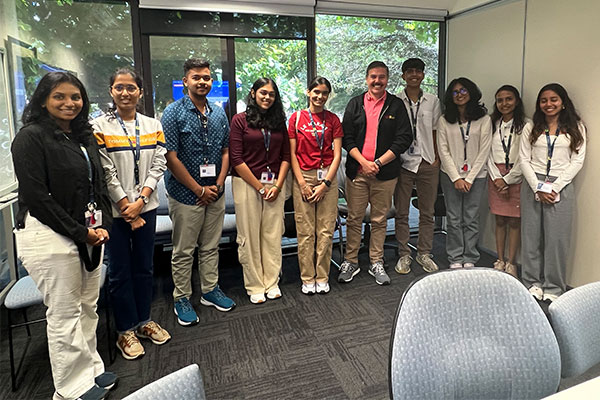
High-achieving BSc (Blended) students visited the Parkville campus from 19-25 November for the third, in-person iteration of the BSc (Blended) Research Camp, giving them the opportunity to immerse themselves in world-class research and teaching at the University of Melbourne. Twenty-one students and five supporting academics from partner institutions, including Pune University, Modern College – Shivajinagar, Modern College – Ganeshkhind, and the University of Madras attended the eight-day camp, hearing from academics in chemistry, physics and many other disciplines.
Research camp 2022
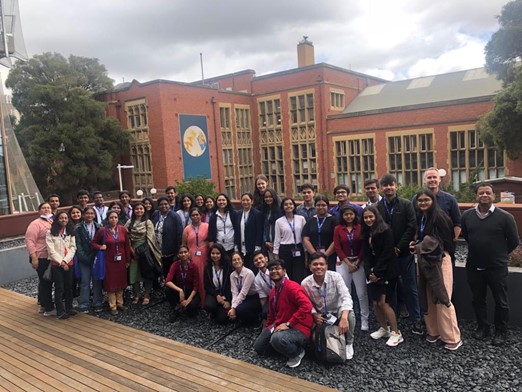
The University was pleased to welcome students and teachers from partner organisations across India for the second, in-person iteration of the BSc (Blended) Research Camp. Running 19-27 November, the Camp provided high-achieving third-year BSc (Blended) students with the opportunity to experience life at the University of Melbourne and participate in a rich program of academic activities and social events run by the Faculty of Science.
Virtual Workshop 2020
In 2020, the University hosted a virtual student experience due to the COVID-19 pandemic. The BSc Blended 2020 Virtual Workshop provided the opportunity for students enrolled in the BSc (Blended) program to connect with academics and learn about the cutting-edge research being undertaken within the Faculty of Science through a series of masterclasses spanning the areas of biology, chemistry, and environmental science.
Students also had the opportunity to explore possibilities for postgraduate study in Science and connect with recent BSc (Blended) graduates who are now undertaking the Master of Science (BioSciences) at The University of Melbourne.

Research Camp 2018
In 2018, the University hosted a special Research Camp ‘Applications of Cell and Molecular Biology in the Biological Sciences’ for students enrolled in the first two cohorts of the BSc (Blended) at SPPU’s affiliated Modern College of Arts, Science, and Commerce.
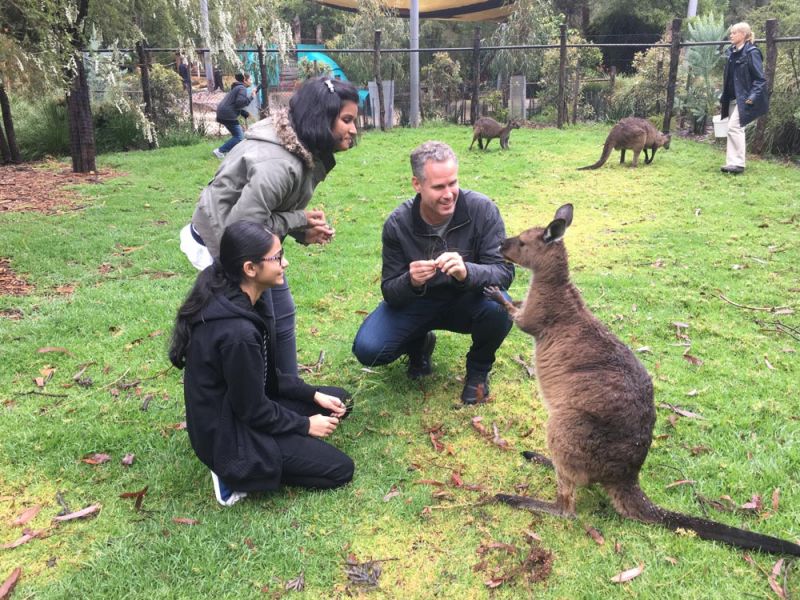
The students enjoyed engaging academic sessions, met with Australian animals at a national park and experienced Melbourne culture. They also had a once in a lifetime meeting with the President of India who visited the University to give a lecture on ‘Australia and India as knowledge partners’. The students reported that their experiences during the camp helped them to discover exciting new areas of research and inspired their next chapters in science.