Discover the winners of the 2025 Show us your Science image competition, open to all Faculty of Science staff and students.
“We asked entrants for surprising, beautiful, or intriguing images of their scientific interests or activities, so we can show the extraordinary range of our research from the microscopic to the macro universe, and why it matters – not only to the image maker, but also to our communities, ecosystems, industries or governments."
- Professor Moira O'Bryan, Dean of Science.
Student winners
First place: Ada Kong, Doctor of Veterinary Medicine
Second place: Aaron Agostini, PhD (BioSciences)
Click on an image to learn more about it.
-
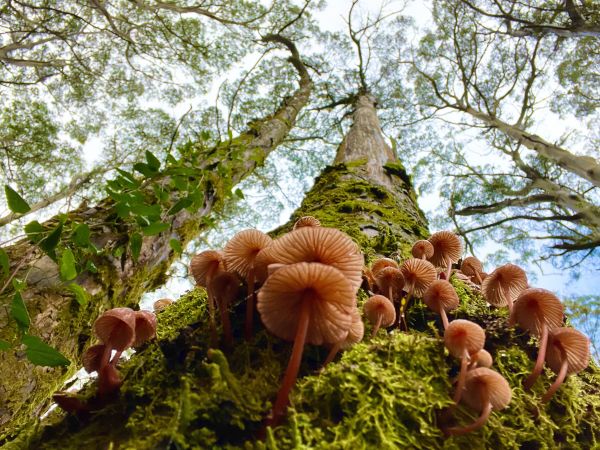
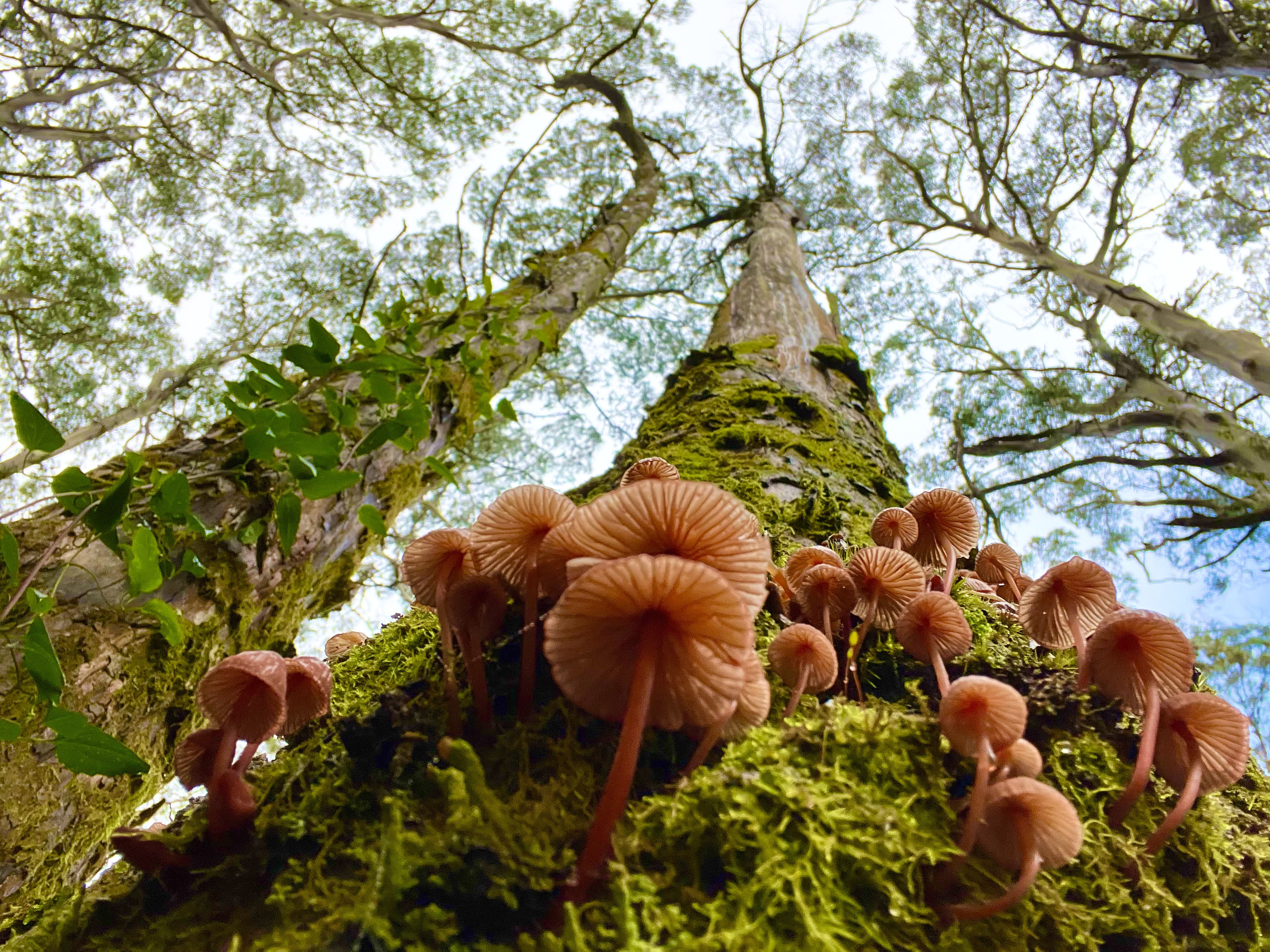
1st Place: Ada Kong, Doctor of Veterinary Medicine. "This photograph was taken on a fungi foray tour in Mt. Macedon during winter, when mushrooms and moss thrive in the cool and damp weather. The tour was led by a fungi expert who introduced us to iNaturalist, an app for sharing photographs, seeking IDs, and participating in citizen science." -
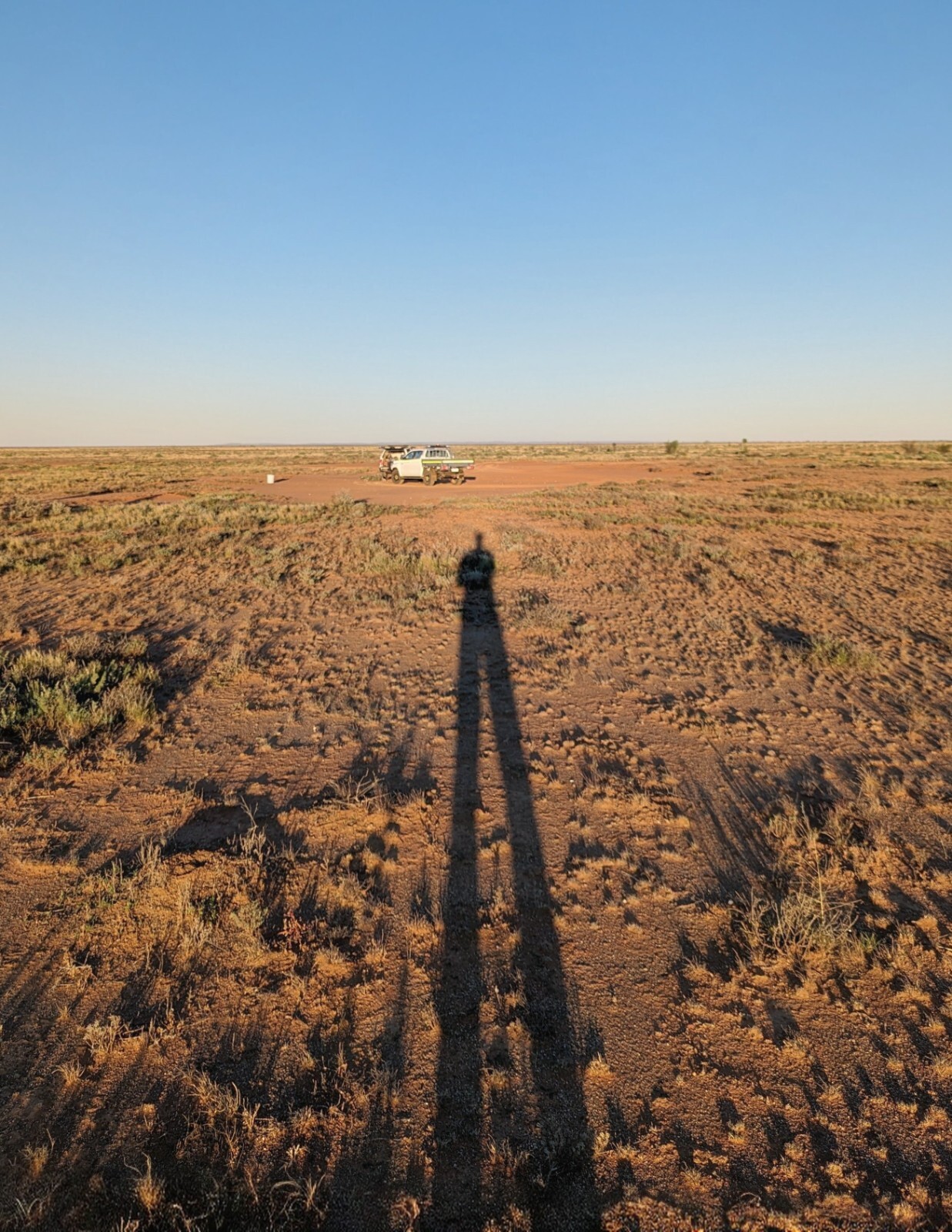
2nd Place: Aaron Agostini, PhD (BioSciences). "I am not an ecologist; I am a developmental biologist who loves air-conditioning and sitting indoors. But sometimes I get the lovely opportunity to volunteer on fieldwork, like this trip to Broken Hill, NSW, where we pitfall-trapped for dunnarts. With no tall structures to break the horizon, the light lingers until the exact moment the sun slips away, stretching shadows across the landscape. This photo is of my shadow at day’s end: a developmental biologist caught outdoors."
Staff winners
First place: Tharaka D. Liyanage, Melbourne Veterinary School
Second place: Michele Trenti, School of Physics
Click on an image to learn more about it.
-
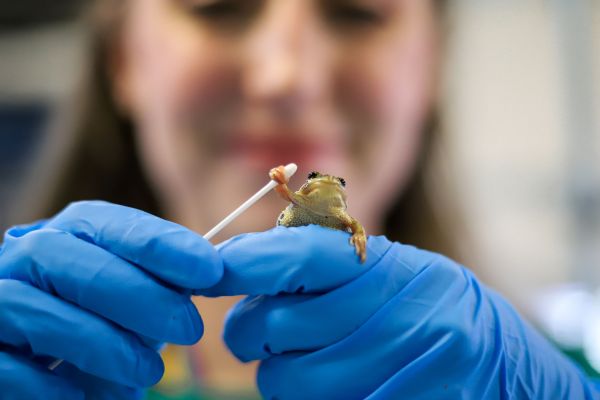
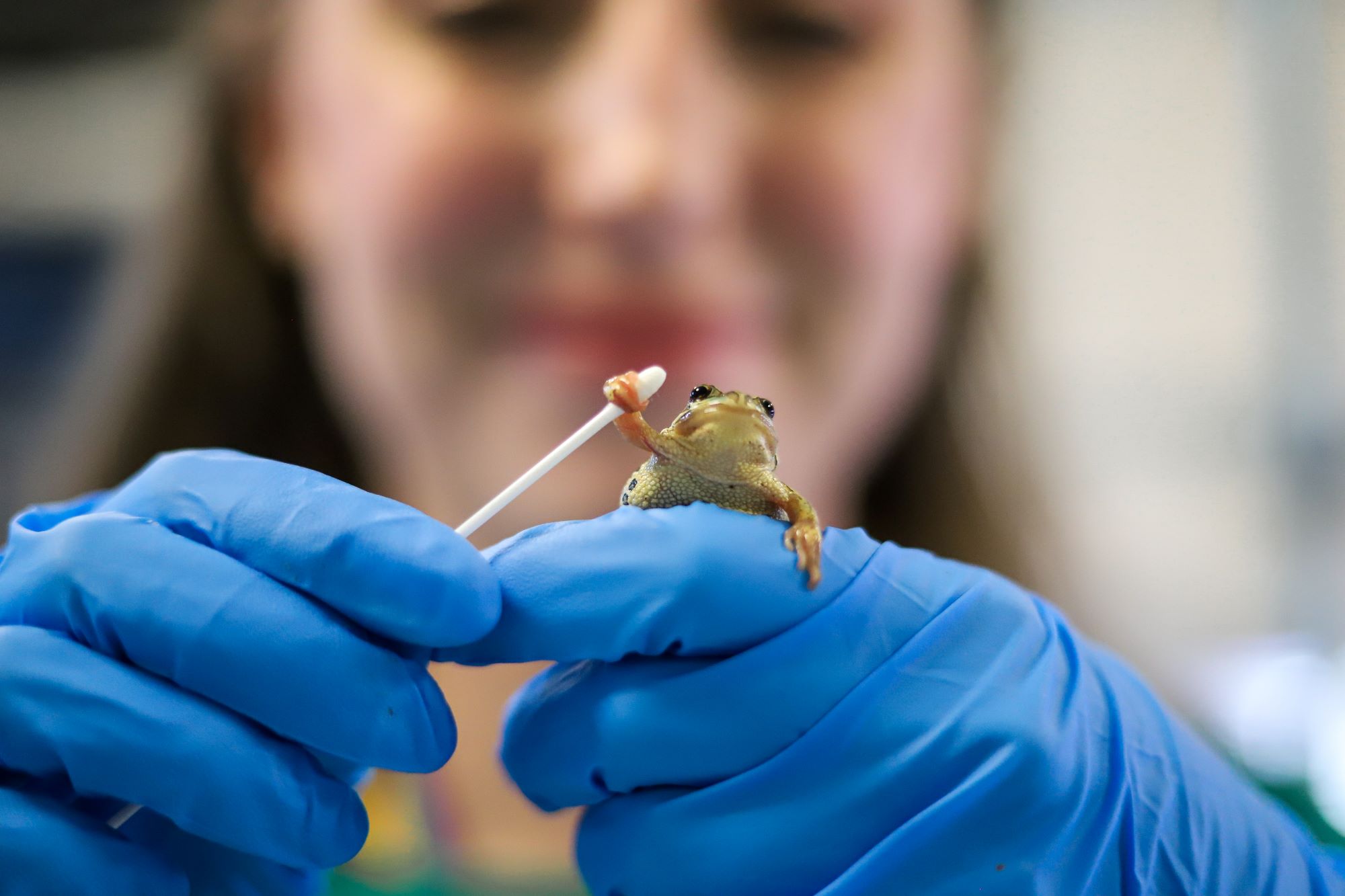
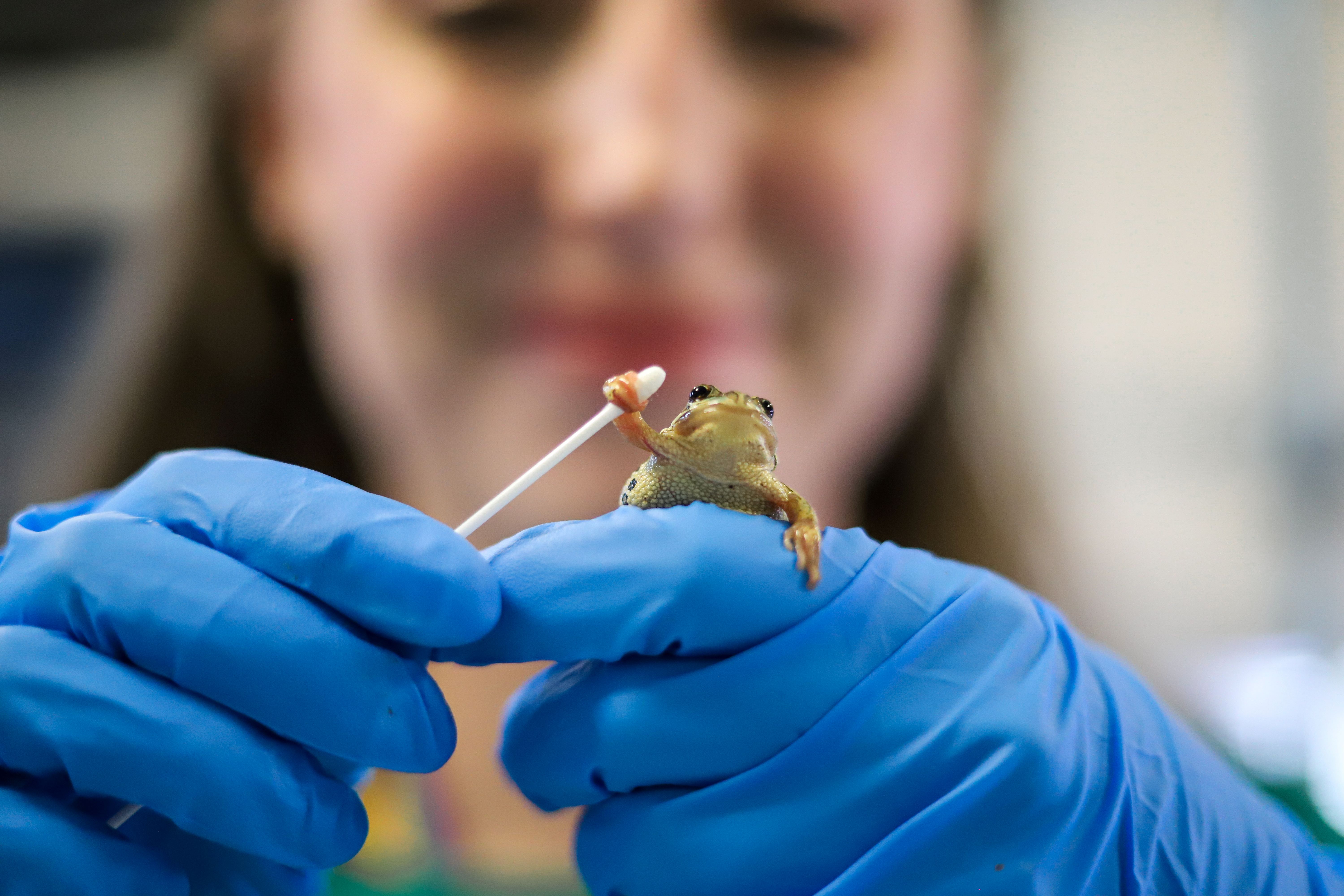
1st Place: Tharaka D. Liyanage, Melbourne Veterinary School. "Fighting Extinction: Chytrid fungus is lethal to many frog species, including the critically endangered Alpine tree frog (Litoria verreauxii alpina). This photo was taken in the One Health Research Group Lab at the Werribee campus, where my friend and colleague, Danielle Wallace, holds an Alpine tree frog while collecting skin samples to test for chytrid fungus. Her PhD research uncovered a remarkable finding: once infected, these tiny frogs appear to increase their reproductive efforts, a possible strategy to boost the survival of their species." -
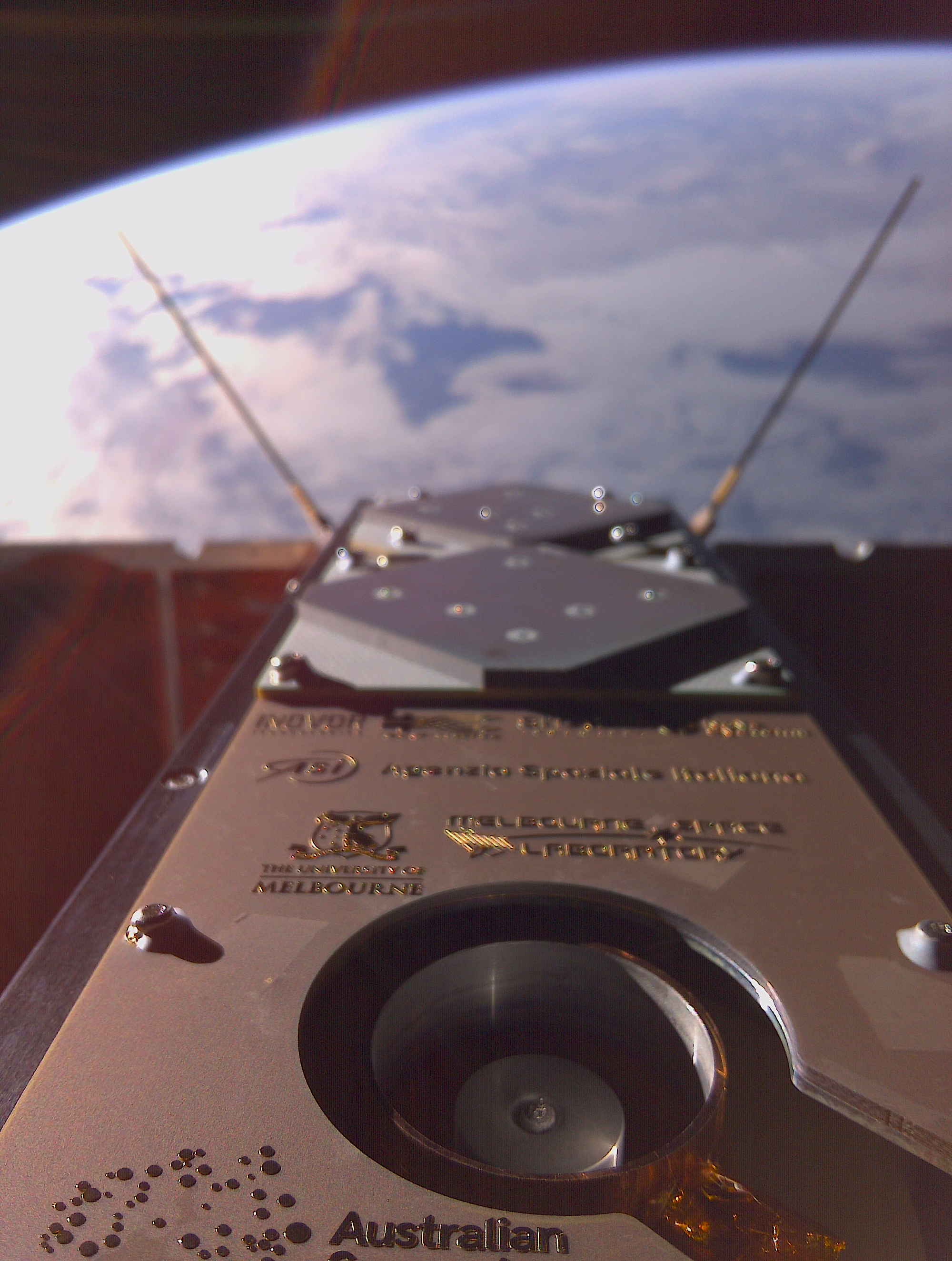
2nd Place: Michele Trenti, School of Physics. "The first image by the selfie camera mounted on the University of Melbourne SpIRIT satellite, acquired from about 450km above Earth over New Zealand on 14 July 2025. The camera captures the underside of the SpIRIT satellite, where mission participant logos are printed. The image includes the electric propulsion thruster payload of SpIRIT (cylindrical aperture near the bottom) and telecommunication transceivers (diamond patches and antennae). The backs of the solar panels are also visible."
People's Choice Award winners
The People's Choice Award went to the most popular entries voted on the @SciMelb Instagram channel.
Student category: Skye A. Mackenzie (PhD Melbourne Veterinary School), Isabella Rao (Master of Science, Earth Sciences)
Staff category: Tiffany Kosch (Melbourne Veterinary School), Darren Hocking (School of Geography, Earth and Atmospheric Sciences)
Click on an image to learn more about it.
-
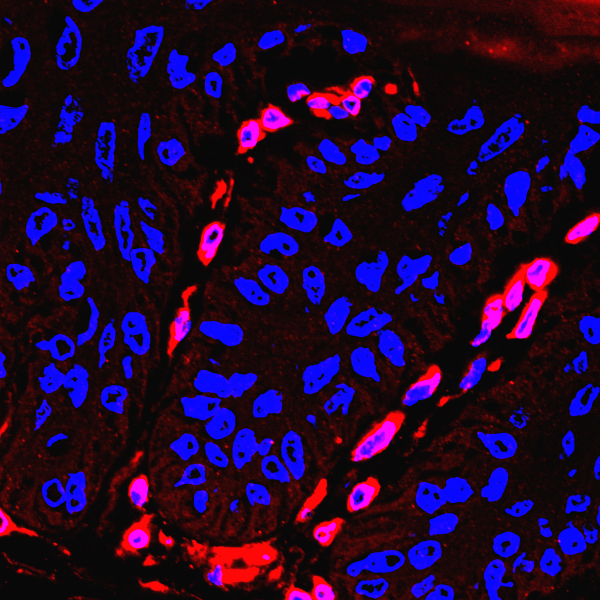
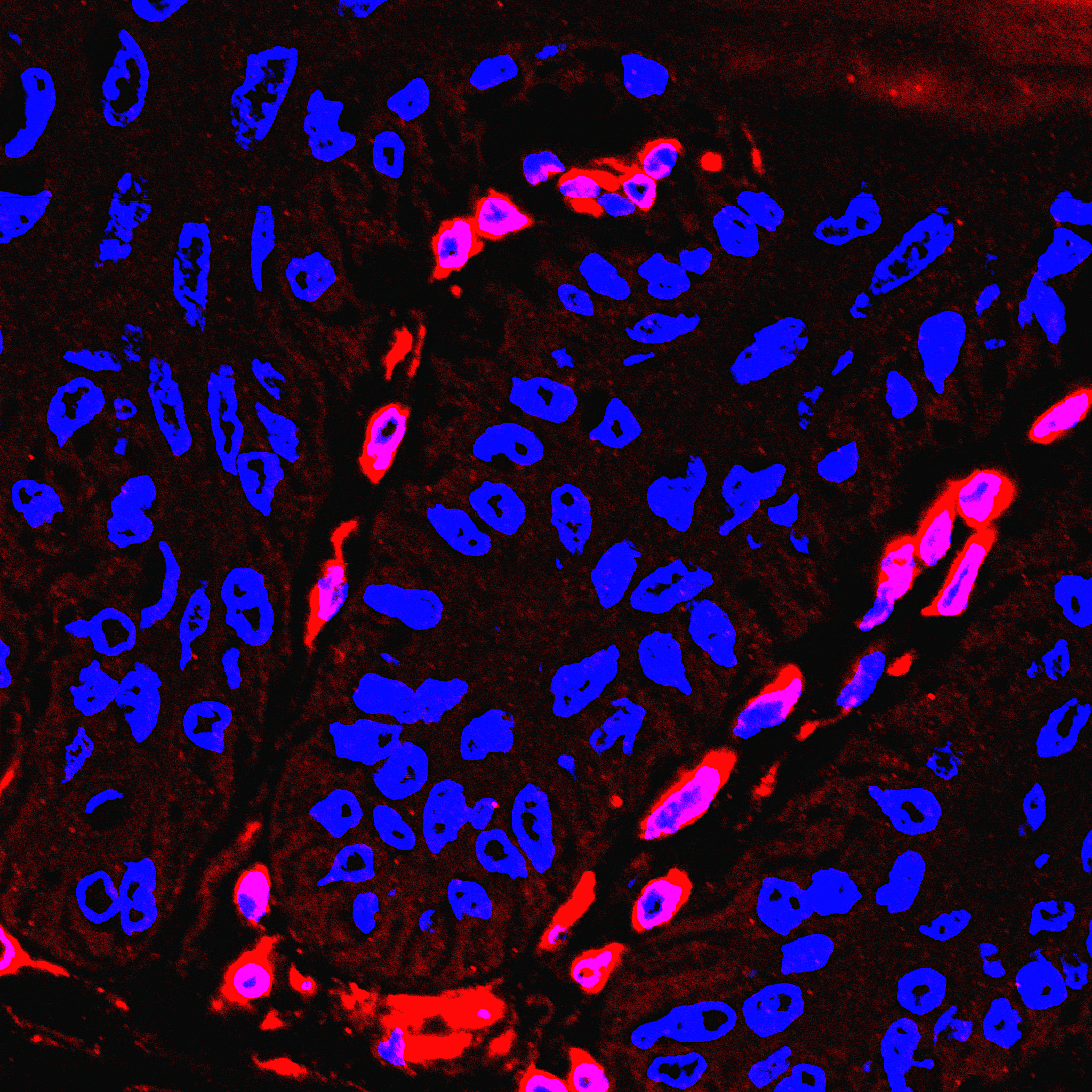
1st place, student category: Skye A. Mackenzie, PhD Melbourne Veterinary School. "This confocal microscope image shows equine lamellar tissue from the hoof of a horse with sepsis. Invading neutrophils are present within the secondary dermal lamellae (red, F-actin stain), surrounding the epidermal lamellae (blue, DAPI nuclear stain). The image highlights the cellular architecture and inflammatory response associated with sepsis in the equine foot." -
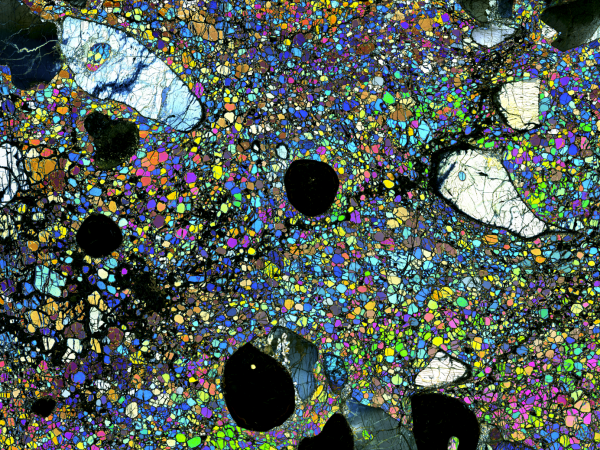
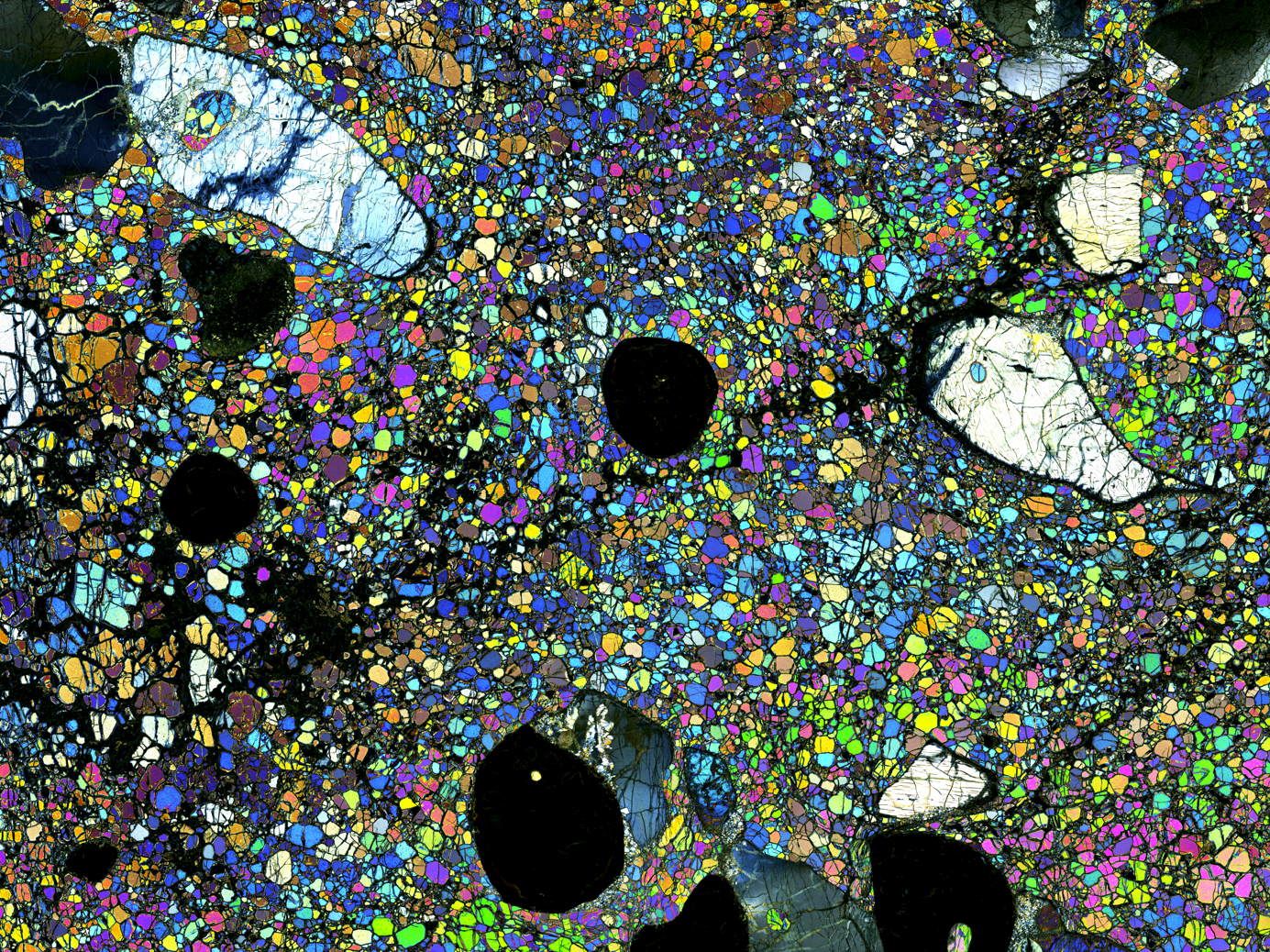
2nd place, student category: Isabella Rao, Master of Science (Earth Sciences). "Geological thin sections are thin slices of rock stuck to glass which are used in a number of applications. This is one of my rock samples seen through a petrographic microscope - it uses cross-polarised light to help identify minerals. The image is made up of about 500 close-up pictures that have been stitched together for an image of the whole sample (roughly 5 cm across). This rock is called a garnet lherzolite, coming from the mantle underlying South Africa; it was brought to the surface by a magma originating from as deep as 200 km into the Earth!" -
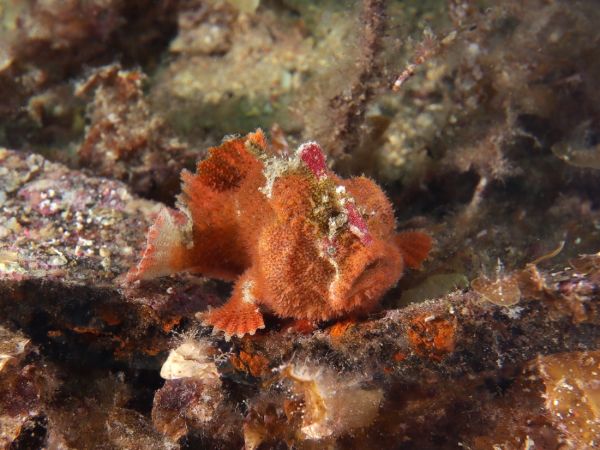
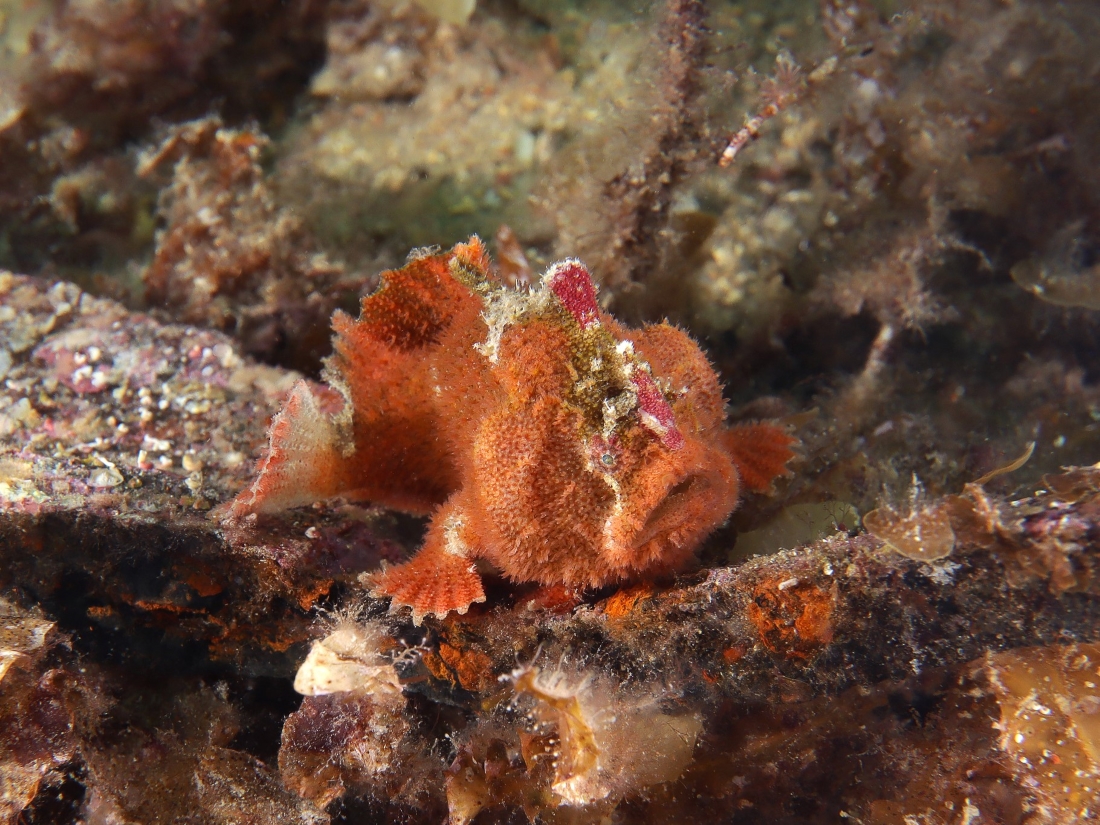
1st place, staff category: Tiffany Kosch, Melbourne Veterinary School. "Prickly Anglerfish (Echinophryne crassispina) in Rapid Bay, South Australia." -
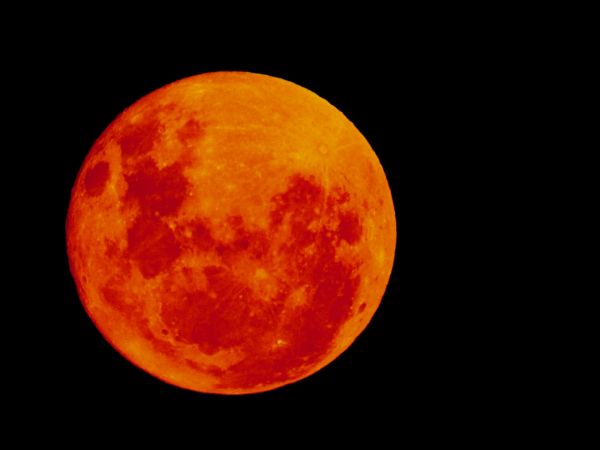
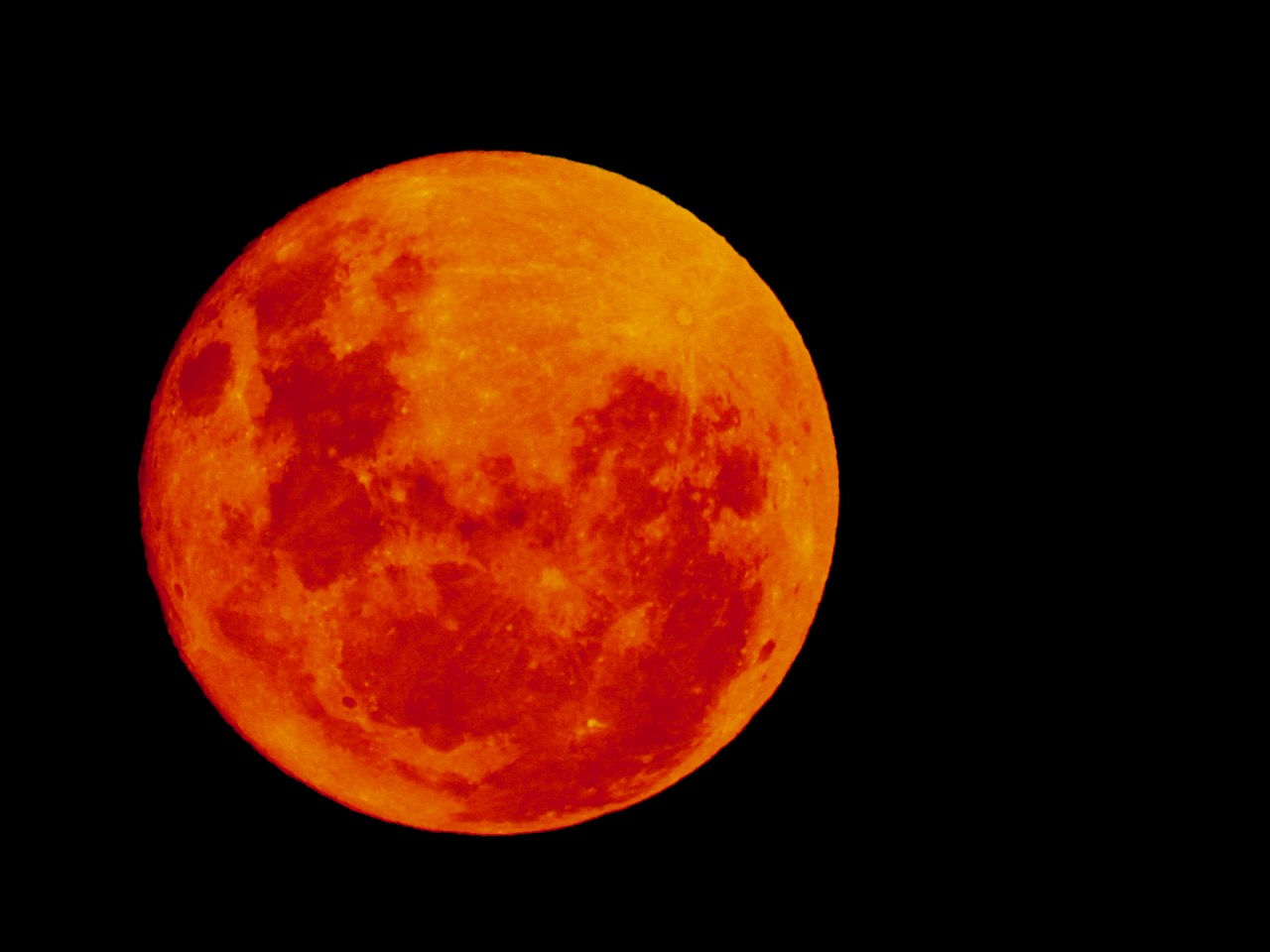
2nd place, staff category: Darren Hocking, School of Geography, Earth and Atmospheric Sciences. "Full moon through smoke haze from prescribed burns. Caring for country has traditionally included vegetation management using fire. We teach and research how traditional owners use of fire can be valuable to reduce excess fuel, maximise biodiversity and minimise carbon emissions."
Honourable mentions
Student category: Yuhan Liao (Master of Science, Mathematics and Statistics), Aaron Agostini (PhD, BioSciences)
Staff category: Baobao Pan and Shu Kee Lam (School of Agriculture, Food and Ecosystem Sciences), Geoffrey McFadden (School of BioSciences)
Click on an image to learn more about it.
-
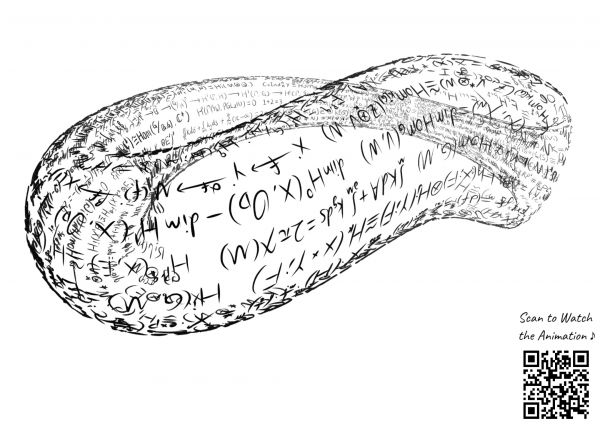
Honourable mention, student category: Yuhan Liao, Master of Science (Mathematics and Statistics). "In pencil’s hush and paper’s glow, formulas march in ordered rows. Yet hidden lies the elegant grace, an unseen beauty fills the space. Numbers align, the proofs rise, whispered realms beyond our eyes. Shapes pirouette beyond the plane, where echoes of pure thought remain. Behold the Klein bottle’s embrace, a ribbon curled in hidden space. Two-dimensional, yet freed by four, to glide unbent, to wander more. Should mind pierce this veiling screen, pass beyond the seen, unseen — A fourth dimension opens wide, realities there softly guide. Allow your mind its daring flight, through unseen lands of vast delight. Seek the vision deeper than designs, feel the unseen where wonder shines." -
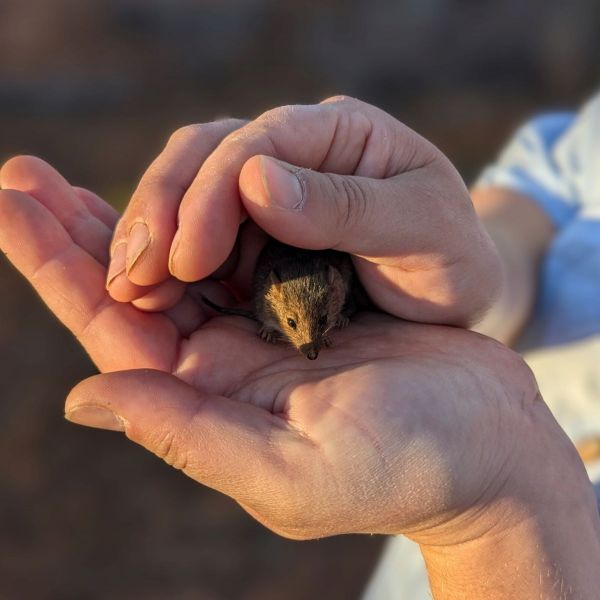
Honourable mention, student category: Aaron Agostini, PhD candidate (BioSciences). "A friend of a friend: One of my favourite parts of science is meeting new people; so imagine my surprise meeting a ningaui for the first time, a tiny carnivorous marsupial. I took this photo while volunteering for fieldwork at Calperum Station, SA. This photo reminds me how wonder works both ways: what’s precious to me might be ordinary to someone else. Though to be fair, I don't think the ningaui was nearly as excited to see me." -
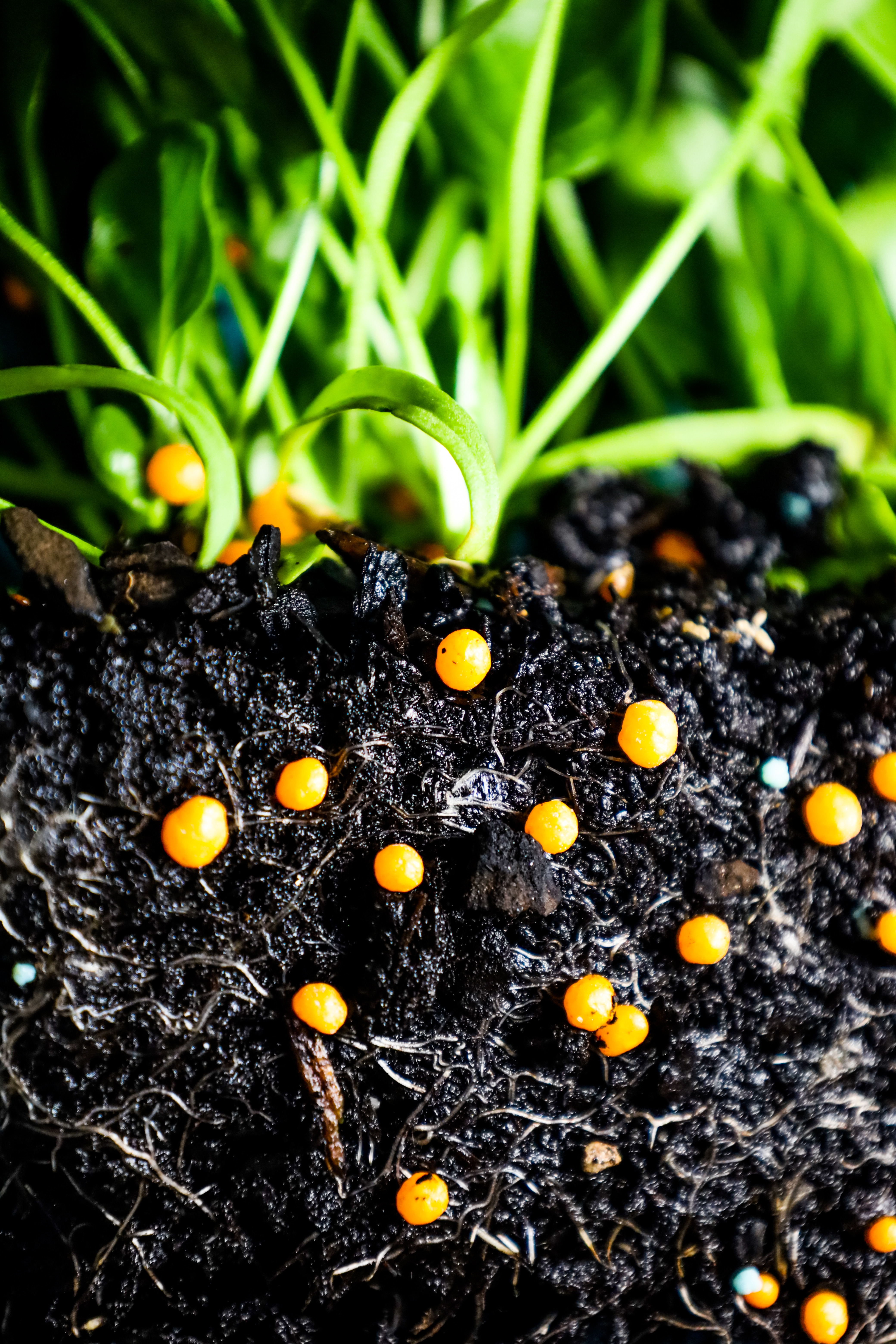
Honourable mention, staff category: Baobao Pan and Shu Kee Lam, SAFES. "Green seedlings: This close-up photograph captures young green seedlings emerging from nutrient-rich soil, interspersed with bright orange granules of controlled-release fertiliser (CRF). These CRFs are designed to synchronise nutrient release with plant growth cycles, enhancing nitrogen use efficiency and reducing environmental losses." -
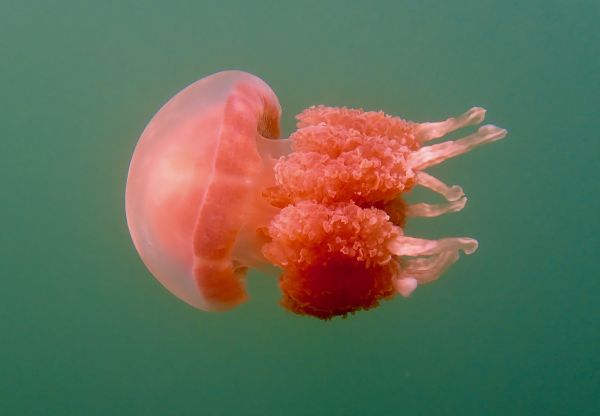
Honourable mention, staff category: Geoffrey McFadden, School of BioSciences. "The jellyfish in the seawater lake Ongeim'l Tketau in Palau survive solely by photosynthesis. These peculiar ‘animals’ host dinoflagellate algae to provide their energy. The jellies have no stingers and catch no prey. They swim to follow the sunlight, congregating at the western edge of the lake at dawn to harvest the day’s early rays, then track eastwards throughout the day to catch the setting sun. During the night, they traipse back to the eastern end to start another day of photosynthesis. The symbiotic relationship between these jellies is like that of their close relatives the corals."

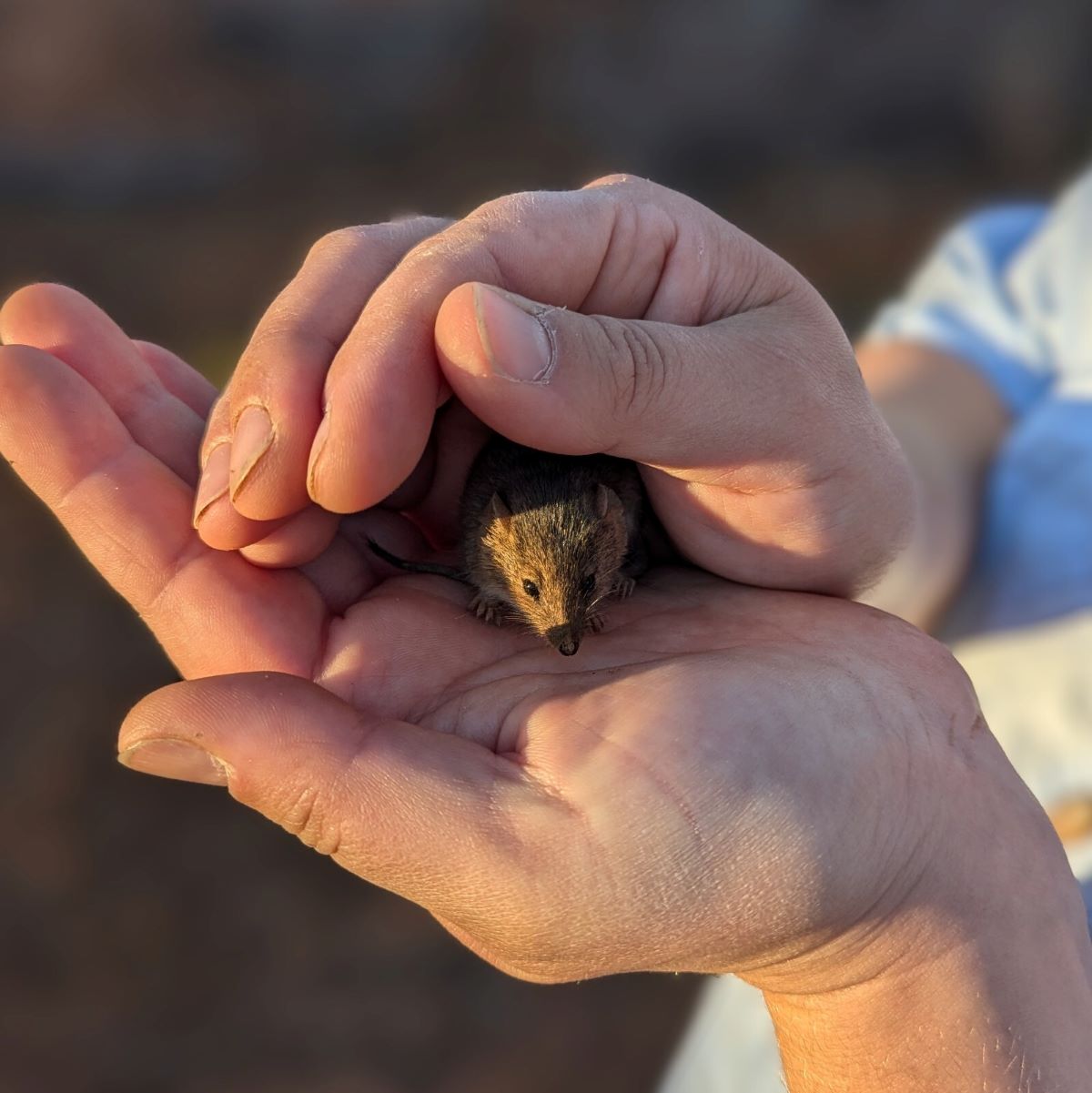
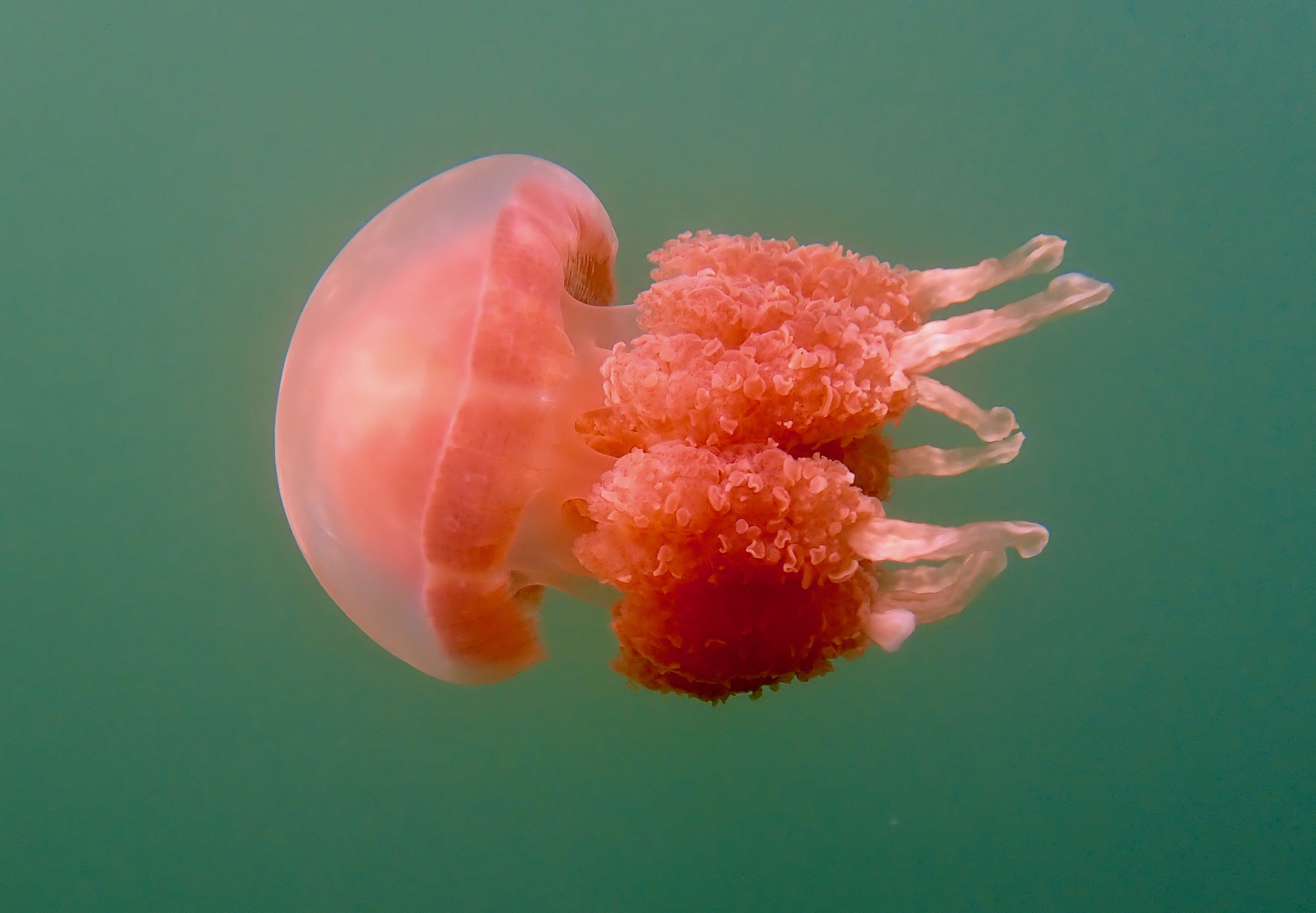
Image of the month winners
Introduced in 2025, Image of the Month prizes were awarded to entries that best represented a monthly theme. These prizes were open to both staff and students, and did not exclude them from winning an overall prize.
Monthly themes
June - Environment, Climate and Biodiversity
Winner: Carol Li, School of Mathematics and Statistics
July - Discovery and Understanding our World
Winner: Sepideh Valimehr, Bio21 Institute
August - One Health and the Future of Food
Winner: Tharaka D. Liyanage, Melbourne Veterinary School
September - Frontiers of Data and Technology
Winner: Michele Trenti, School of Physics
Click on an image to learn more about it.
-
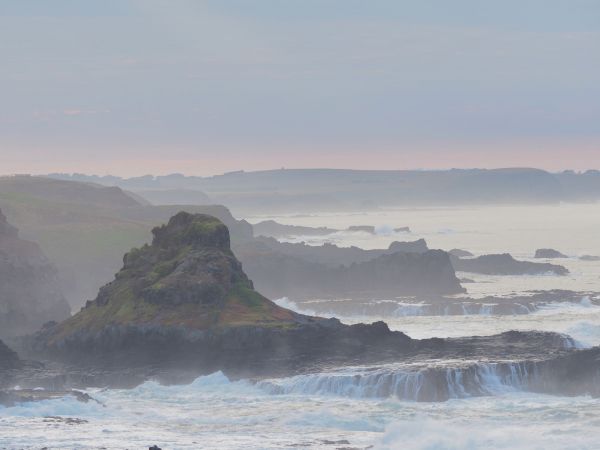
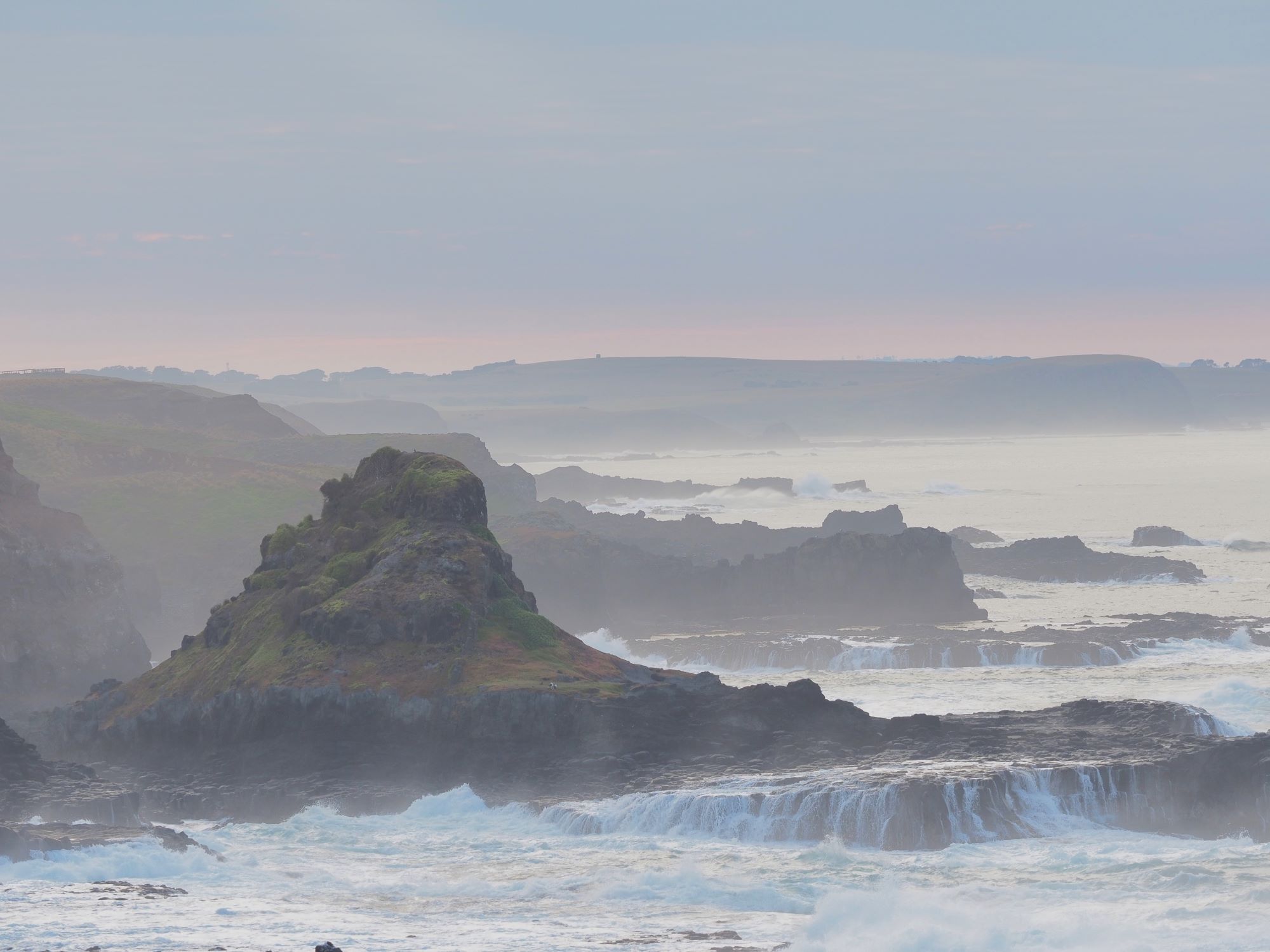
June winner: Carol Li, School of Mathematics and Statistics. "Morning mist rises over the wave-battered cliffs below South Point Lookout on Phillip Island, the traditional land of the Bunurong People. Dark rocks stick out of the water as waves crash and white foam spreads along the shore. The ocean looks endless and meets the cloudy sky in the distance. This coastline is home to fur seals, seabirds and other animals that live around these cold southern waters. I often come here to enjoy this peaceful yet raw and powerful scenery. It reminds me how special and worth protecting our coastlines are." -
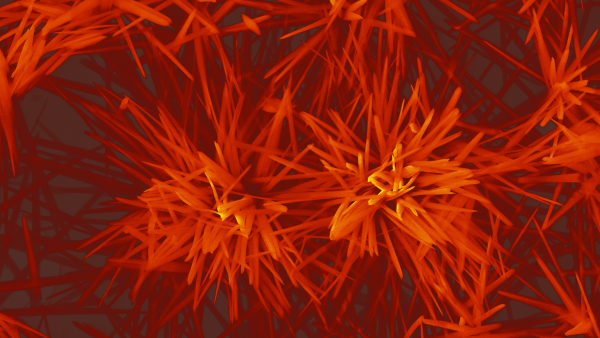
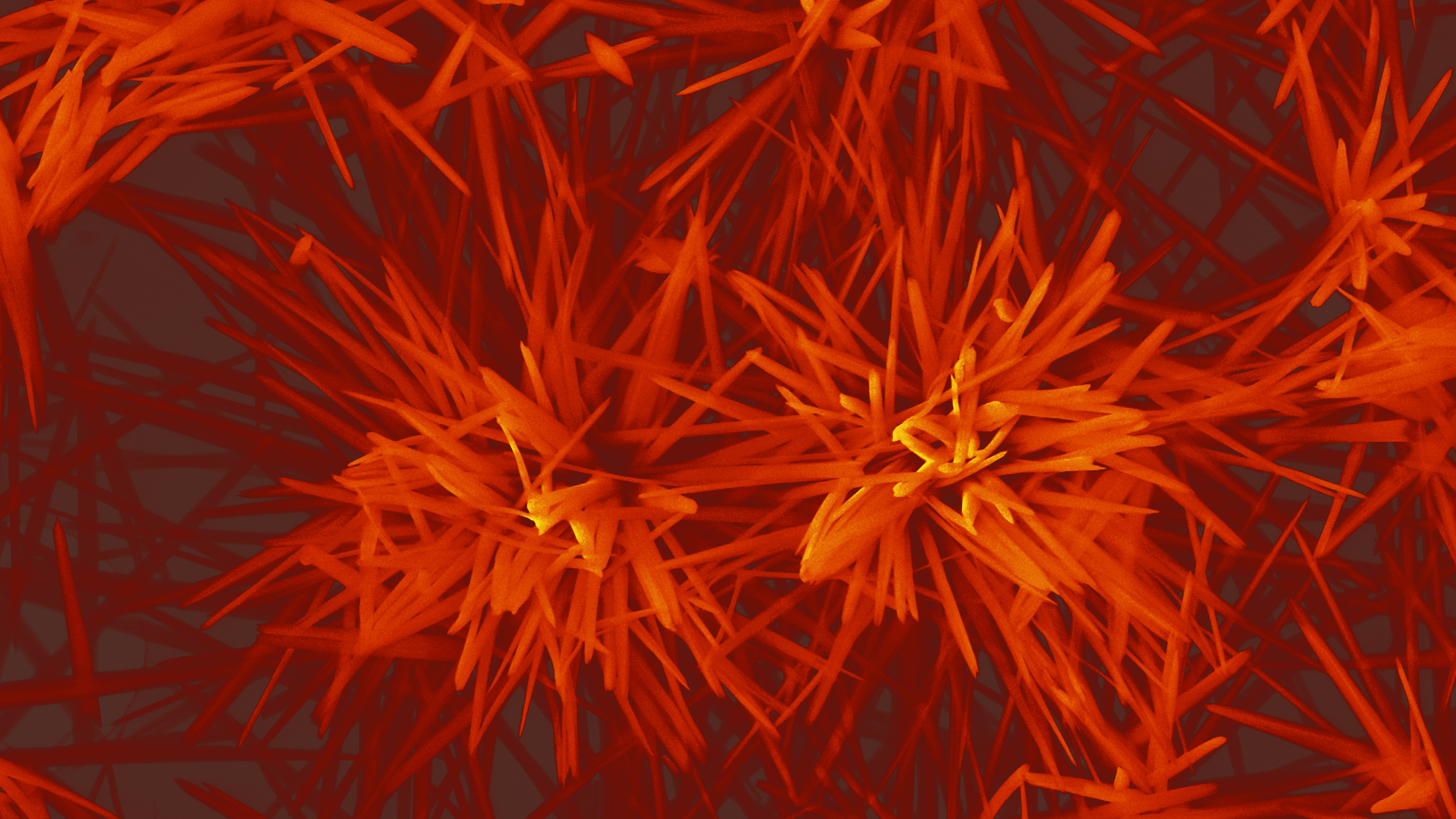
July winner: Sepideh Valimehr, Bio21 Institute. "This image shows very small wires called nanowires on a transmission electron microscopy grid, taken with a Scanning Electron Microscope. The wires came together in a way that looks like a saffron flower. The thin lines spread out like petals, creating a beautiful and natural shape. Even though it's made in a lab, it looks like something from nature. This picture is a mix of science and art, showing how even the smallest things can be surprising and beautiful. The image was taken at Ian Holmes Imaging Centre, Bio21 Insitute." -
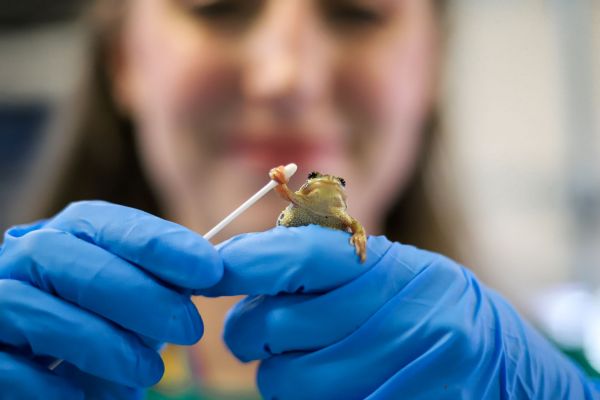
August winner: Tharaka D. Liyanage, Melbourne Veterinary School. "Fighting Extinction: Chytrid fungus is lethal to many frog species, including the critically endangered Alpine tree frog (Litoria verreauxii alpina). This photo was taken in the One Health Research Group Lab at the Werribee campus, where my friend and colleague, Danielle Wallace, holds an Alpine tree frog while collecting skin samples to test for chytrid fungus. Her PhD research uncovered a remarkable finding: once infected, these tiny frogs appear to increase their reproductive efforts, a possible strategy to boost the survival of their species." -
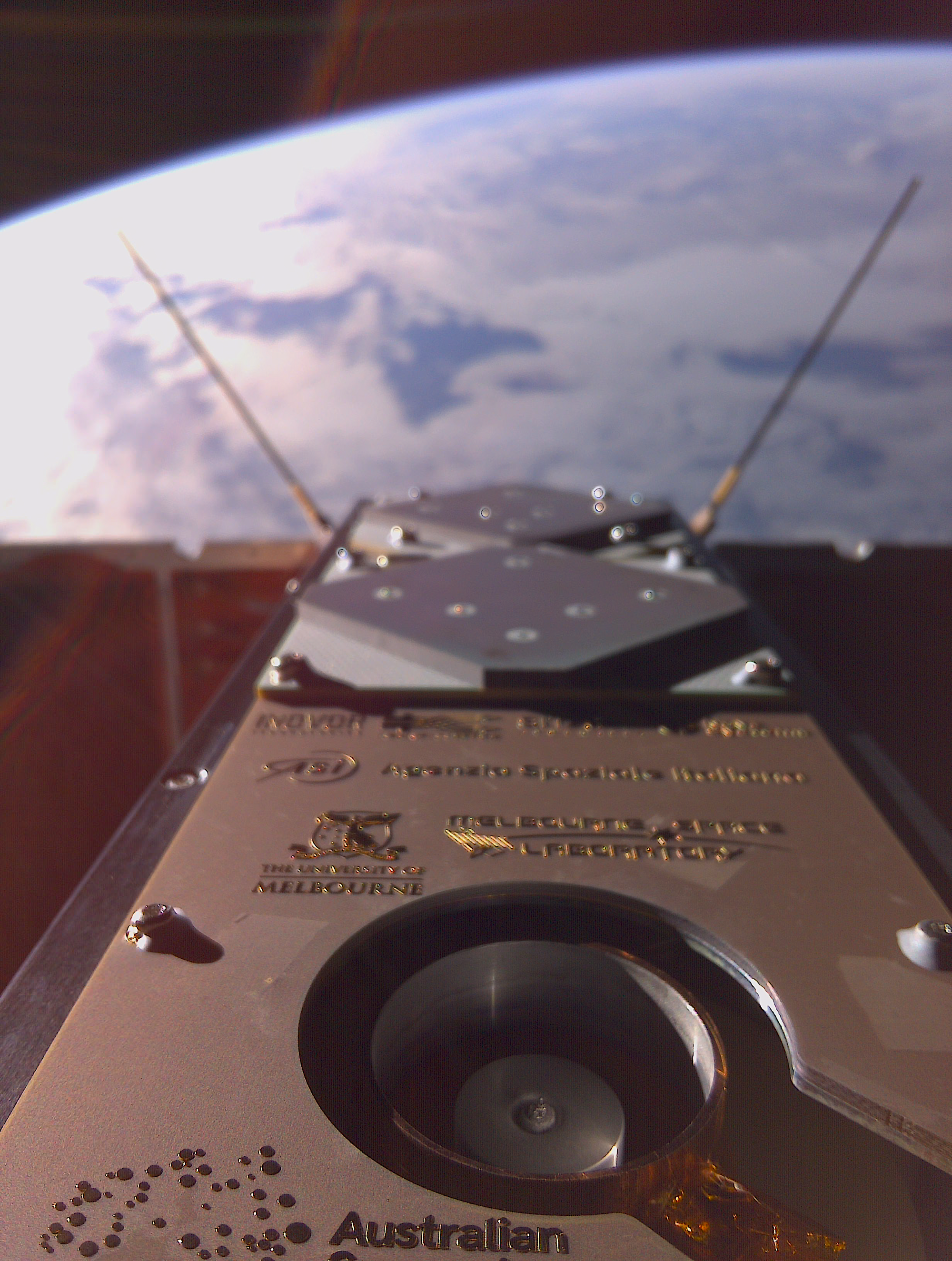
September winner: Michele Trenti, School of Physics. "The first image by the selfie camera mounted on the University of Melbourne SpIRIT satellite, acquired from about 450km above Earth over New Zealand on 14 July 2025. The camera captures the underside of the SpIRIT satellite, where mission participant logos are printed. The image includes the electric propulsion thruster payload of SpIRIT (cylindrical aperture near the bottom) and telecommunication transceivers (diamond patches and antennae). The backs of the solar panels are also visible."