Saxon Taylor-Le Page
“The beauty of this field is that it is inherently essential to human existence,” says the Bachelor of Agriculture student at the University of Melbourne.
“This is one of the reasons I chose to follow this path, and I can’t wait to get out into the workforce and contribute to Australian agriculture.”
In Australia and internationally, farming faces challenges: climate change, land and water management, changing expectations of animal welfare. These problems need innovative solutions from people who understand both the science and practice of agriculture, and Saxon’s classmates recently showcased their responses to these challenges to industry and scientists.
Her team presented on sustainable water use in northern Victoria, receiving an Outstanding Achievement Award from the School of Agriculture, Food and Ecosystem Sciences. Saxon explored how Indigenous Australians of the Murray Darling Basin can contribute to water management via their knowledge, values and practices.
“I gained awareness of Indigenous land management when learning about cultural burning practices in a forestry subject in Semester 1,” Saxon says.
“I was interested to see if Indigenous land management skills stretched into aquatic environments as well.”
Students also discussed how they could leverage their experience with agriculture professionals and get started in the industry.
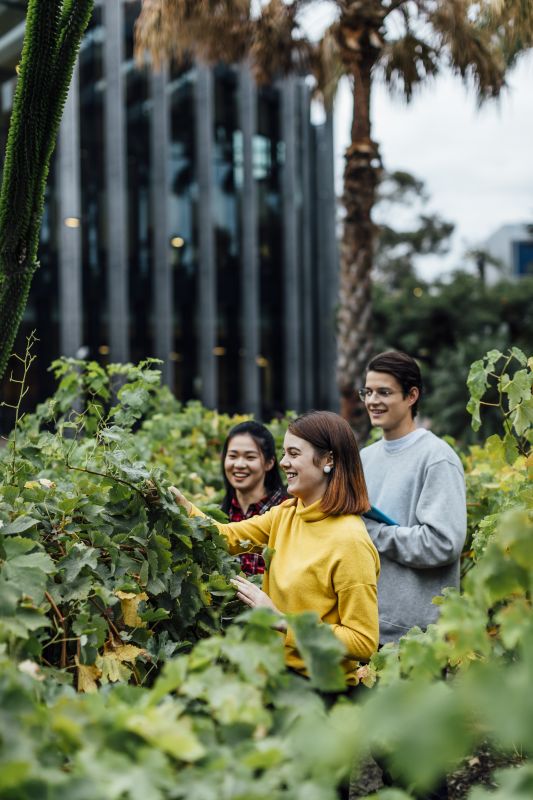
Preparing students for career success is an important part of universities’ role, but the challenges of studying in 2020 have reemphasised the importance of support throughout their studies. Saxon says the University’s support services helped her when she found herself overwhelmed early in her degree, and lecturers have helped students succeed despite the challenges of 2020.
“This year has highlighted the kindness, dedication and compassion of faculty members. Whether it’s running meditation at the start of a tutorial or taking the time to check in with students, the empathy they displayed has been remarkable.”
The University of Melbourne has also implemented an expanded range of student support services, with a range of financial and curriculum initiatives for students.
Online workshops have helped them adapt to the new challenges of studying during COVID-19, and students can access free, 24-hour counselling and psychological services. Staff have also connected with 3000 students through outreach calls.
Over 16,500 students have received financial assistance through Emergency Support Fund and Student Support Grants, in addition to device loans and assistance with internet access. Students have received more than 38,000 free meals through a partnership with not-for-profit SecondBite.
This is in addition to new Academic Advising and Peer Mentoring services for all first-year undergraduate students.
Tim Brabazon, who leads the University’s student services as Director, Student Success, says these initiatives, planned prior to COVID-19 pandemic, ensure students have a knowledgeable academic who takes an active interest in their wellbeing, progress and success.
“Starting a university degree can be overwhelming, but students have told us having someone you know checking in can help to keep stress under control,” he says.
“Academic advisers are also well-placed to link students to opportunities and people who can help them in their careers, while peer mentoring helps students form habits to achieve their goals.”
This matches Saxon’s experience studying in 2020.
“People have been more open to forming study groups, and are talking to one another about difficulty with assignments or the transition to online learning,” she says.
“The most successful group assignments of my degree have taken place during this year. I credit this to the overarching emphasis on teamwork in the agriculture cohort.”
Heading into 2021, Saxon is optimistic.
“No one should worry about employment if they are completing the Bachelor of Agriculture,” she says.
“If anything, the COVID-19 pandemic has highlighted the importance of our food production systems. The supermarket shortages of essential products, the horticultural sector’s inability to access overseas workers, COVID-19 outbreaks in Victorian abattoirs; these are all issues that emphasise the need for innovative minds in agriculture.”