Food scientist harnessing the power of probiotics to improve health and food safety
The microorganisms living in our digestive system play a far greater role in our health than many people realise.
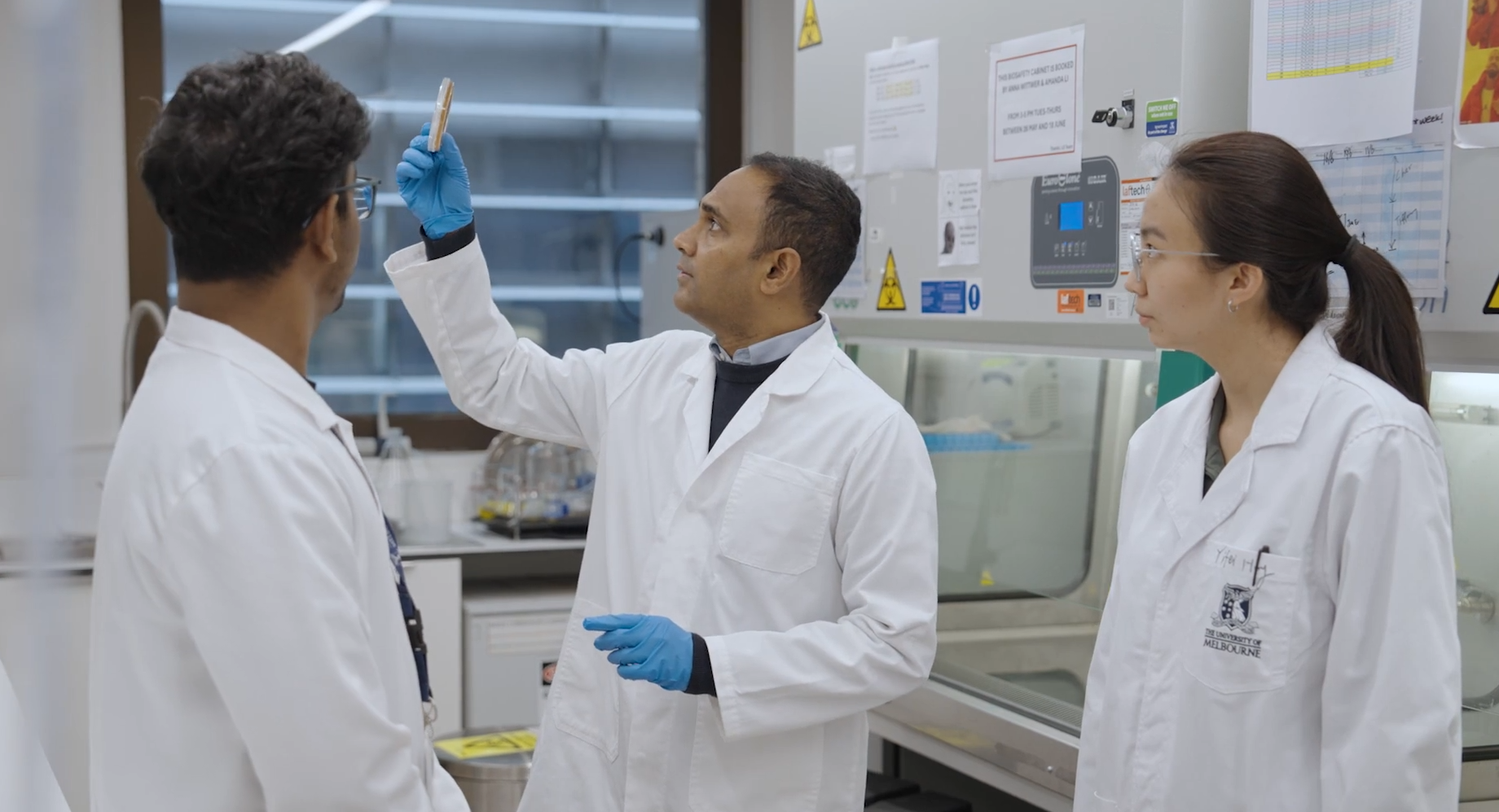
For food scientist Associate Professor Senaka Ranadheera, understanding these invisible communities could help address some of the world's biggest food and health challenges.
Based in the School of Agriculture, Food and Ecosystem Sciences, Associate Professor Ranadheera studies probiotics and other beneficial microorganisms that support gut health, enhance wellbeing and improve food safety.
His research investigates ways to enhance the effectiveness of probiotics while also exploring how beneficial microbes can be used to combat food-borne pathogens.
"These gut microbiomes control everything: our mood, our health and our overall wellbeing," Associate Professor Ranadheera said.
"We have strong evidence that probiotics are part of us. They interact with the whole body. If you have a healthy gut microbiome, you will be healthy and happy."
Associate Professor Ranadheera is particularly motivated by the potential of his research to address global food safety challenges.
Every year, millions of people around the world become ill from consuming unsafe food, with food-borne diseases remaining a significant public health issue.
"If we know more about these microorganisms, how we tackle them and how we can control them, the good and the bad, we can make a real difference," he said.
Associate Professor Ranadheera’s fascination with food science began early, driven by a curiosity about the invisible processes behind everyday foods.
"I was always fascinated by food, specifically how milk can be converted into things like yoghurt," he said.
"It's a liquid that transforms into a gel-like structure. What's the mechanism behind that? What's the secret?"
After completing an undergraduate degree in Agriculture, he discovered the remarkable capabilities of microorganisms and the role they play in food production, health and sustainability. This passion led him to pursue his PhD in probiotics and establish a career at the intersection of food science and microbiology.
Alongside his research, Associate Professor Ranadheera is passionate about mentoring the next generation of food scientists. He teaches across the subjects Coffee: Science, Trade & Culture, Food for a Healthy Planet I, Food for a Healthy Planet II and Current Issues in Dairy Science, and is the coordinator of graduate subject Food Safety and Quality and undergraduate subject Food Research and Development.
Working closely with students and early-career researchers, he encourages them to develop the skills and confidence needed to tackle complex global challenges.
"I'm working with bright young minds. They're so eager to go out there and face those challenges," he said.
Looking ahead, Associate Professor Ranadheera believes one of the greatest challenges facing food scientists will be feeding a growing global population with food that is safe, nutritious and sustainable.
"We need to provide quality, healthy, safe and nutritious food," Associate Professor Ranadheera said.
"It's going to be a very big challenge. But with the science, we can face that challenge."
Studying Food Science within the Bachelor of Science can lead to careers across the food, biotechnology, health and research sectors.
Graduates may pursue opportunities in food manufacturing, product development, quality assurance, food safety regulation, research organisations and government agencies or continue their studies through a range of graduate research and coursework pathways.
This profile is part of the Research Spotlight video series. Watch the full video below.