Fox parasites pose risks to people and pets
Red foxes living in and around Melbourne are infected with intestinal parasites at alarmingly high rates, posing health risks to people and pets, new research has revealed.
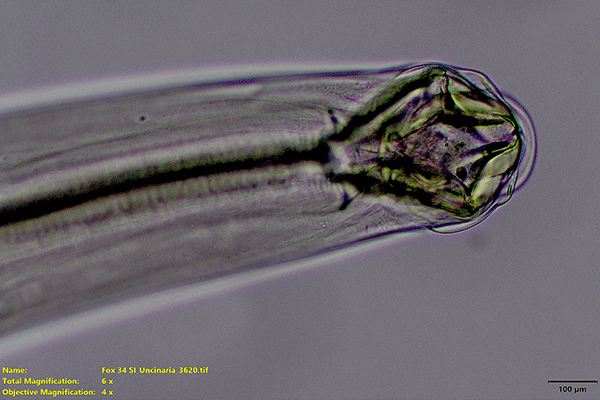 A roundworm identified in the gastrointestinal tract of a red fox. Credit - Bridget Graffeo, University of Melbourne
The red fox (Vulpes vulpes) is one of Australia’s most adaptable species, thriving in both rural and urban environments. In cities, foxes benefit from food scraps, water and shelter provided, often unintentionally, by people and their close proximity to humans and domestic animals increases the likelihood of parasite transmission.
Published in the International Journal for Parasitology: Parasites and Wildlife, research assessed parasite diversity and prevalence in foxes from metropolitan and rural Victoria.
University of Melbourne Doctor of Veterinary Medicine student Bridget Graffeo who led the research reported on the study’s findings.
“In examining the gastrointestinal tracts of 51 red foxes in total from Melbourne and rural Victoria, our study found that over 90 per cent of foxes were infected with at least one parasite species, one of the highest infection rates recorded in Australian foxes,” Ms Graffeo said.
“Seven types of worms were identified, most commonly roundworms found in 67 per cent of foxes, hookworms found in 57 per cent and the flea tapeworm. All of these parasites are found in pets, and several can also infect humans.”
Study co-author Professor Abdul Jabbar from the Melbourne Veterinary School explained the potential risks pose by these parasites to people and pets.
“These parasites can cause disease when people or animals accidentally ingest parasite eggs from contaminated soil, water or animal faeces. Fox droppings left in parks, playgrounds and gardens may therefore pose an under-recognised source of infection,” Professor Jabbar said.
According to the study, rural foxes carried a greater variety of parasites, while urban foxes had fewer species but those of greater relevance to human health.
Dietary analysis as part of the study revealed that foods consumed by foxes, including insects, birds, plants and small mammals, can sustain parasite life cycles.
Professor Jabbar said the study addressed an important gap in the latest understanding of a problem that has received limited attention in Australia until now.
“Updated surveillance data on parasites in foxes has been lacking for decades, without which, it has been difficult to assess risks that urban foxes pose to public health,” Professor Jabbar said.
Managing urban fox populations is challenging, but non-lethal, evidence-based approaches, including parasite control, habitat management and public education, offer promising solutions said the researchers.
“This research underscores the importance of a ‘One Health’ approach linking human, animal and environmental health,” Professor Jabbar said.
“Better monitoring and community awareness will help manage fox populations and minimise the risks their parasites pose to people and pets.”