Global biodiversity study uncovers missing patterns in ecosystem stability
Natural ecosystems are incredibly complex, and it’s long been recognised that biodiversity loss can lead to decreased ecosystem stability and function. However, traditional approaches to studying the role of biodiversity in ecosystems may be overlooking crucial complexities, new research shows.
In a paper published today in Nature Ecology & Evolution, researchers from the University of Melbourne and The University of Western Australia report that 74 per cent of global studies on ecosystem stability were focused on the effects of biodiversity loss within a single group of species in the same level of a food chain, known as monotrophic studies. Multitrophic studies, which consider the wider impact of biodiversity loss on a range of species in an ecosystem, such as predators and prey, result in a richer understanding of how ecosystems change over time, but make up only 26 per cent.

A coral reef in French Polynesia. One of the field locations for which long-term monitoring data were available.
University of Melbourne PhD candidate Griffin Srednick, who led the research, said understanding ecosystem stability is incredibly important for global conservation efforts.
“Research on ecosystem stability and resilience – how ecosystems maintain balance and bounce back after a disturbance such as species loss – is used to inform government policies around the world. If we’re only trying to understand stability in a single group of species within a food chain, we are not fully understanding what’s going on in the entire ecosystem,” Mr Srednick said.
“Studies rarely look at the effects of biodiversity in relation to predators and prey because working with large datasets is mathematically challenging, but our findings suggest that these complexities are important. Overlooking the wider interactions fails to consider the full implications of biodiversity loss – these implications could result in disruptions to ecosystem productivity and even their collapse.”
To test whether findings varied between approaches, the multitrophic approach was applied to investigate links between aIgae and the herbivores that prey on them in marine ecosystems using long-term monitoring data. Similarities were found with prior studies that used a monotrophic approach. However, when multitrophic impacts were considered, additional patterns of how biodiversity influences changes in ecosystems were uncovered. In this instance, the additional patterns revealed a deeper understanding of why biodiversity affects ecosystems differently on tropical reefs versus temperate waters. It was found that increases in algae diversity in temperate waters stabilised ecosystems, but increases in algal diversity in tropical waters could de-stabilise.
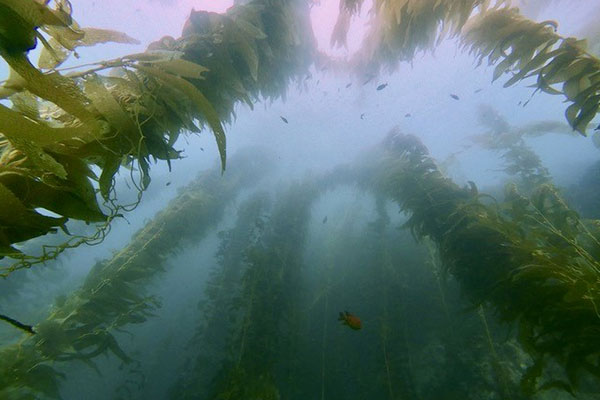
A temperate kelp forest in California, USA. One of the field locations for which long-term monitoring data were available.
“Increases in the populations of certain species may disrupt the delicate balance of an ecosystem, leading to ecological instability, and there is evidence of this happening. Conservation management should consider the harmony between linked species in an ecosystem,” Mr Srednick said.
Co-author Professor Stephen Swearer from The University of Western Australia said that despite decades of research and debate regarding the drivers and implications of global declines in biodiversity, relatively little is known about how biodiversity loss influences the nature and strength of linkages among the remaining species.
“Our findings reveal new questions concerning how diversity develops and is maintained at the scale of ecosystems. The importance of this work isn’t just advancing what we know about the value of diversity, but also what we do not know,” Professor Swearer said.