Globetrotting equine surgeon and animal oncologist share passion for vet education
This World Animal Day, veterinary scientists Dr Jenny Raffetto and Associate Professor Peter Bennett discuss their international training, awe-inspiring work experiences, and how they strive to improve vet education and animal welfare.
Jenny: I know it sounds more disgusting than inspiring, but the first time I saw someone save the life of a horse suffering colic by opening its abdomen and manipulating its intestines, I knew I wanted to be an equine surgeon. I now lecture in equine surgery at the Melbourne Veterinary School and contribute to research in the University’s Equine Centre at Werribee. My parents own a small horse farm in Maryland, USA, and my dad was a doctor, so connecting medicine with horses was a natural path for me. I love being able to solve a problem – for example, untwist a bowel, stop the pain and extend an animal’s life.
Peter: I grew up in Melbourne. My family had some cats, but animals weren’t a focus of my childhood. As a teenager, I liked the idea of entering a medical field and got some work experience in vet practices that I found interesting, so I came to the University of Melbourne to study veterinary science. After graduating, I worked in small animal practice for a while. I enjoyed the variety and, like Jenny, the problem-solving.

Associate Professor Peter Bennett and Dr Jenny Raffetto
Jenny: I studied at the Royal Veterinary College in London, then returned to the US. I completed an equine surgery internship in a private practice, followed by a surgical residency at Virginia Tech, where I met my partner, an Australian. He moved home after finishing his equine medicine residency and I came with him. I initially saw it as a phase, like studying in the UK, but I’ve been in Australia since 2012 and have no plans to leave. I first worked in private practice on the Gold Coast and in Townsville, and then taught at James Cook University. I joined the University of Melbourne in 2018.
Peter: I wanted to specialise in small animal medicine and found a mentor – Grant Guilford – at Massey University in New Zealand. Meanwhile, my wife was offered a post-doctoral position in the US, so Grant helped me devise a study program shared between Massey University, the University of Georgia and the University of Tennessee, where I developed an interest in oncology. I became certified as a veterinary oncology specialist and joined the faculty at Purdue University in Indiana. In the late ‘90s, there were no veterinary oncologists in Australia, so when we returned home, I co-founded the Melbourne Veterinary Specialist Centre and worked there for around 12 years in small animal medicine and oncology. I moved on to the University of Sydney, before returning to the University of Melbourne at the start of 2024
Students at the Melbourne Veterinary School learn clinical skills using animal models.
Jenny: I’m grateful to many enthusiastic teachers and inspiring mentors who have helped me, including Josh Slater at this University, so I’m trying to pay it forward. At the MVS, I help to shape the curriculum and prepare students for clinical practice, ensuring they have all necessary skills from washing their hands properly to inserting a catheter to running anaesthesia, as well as supporting senior students during their clinical rotations. Before the students touch live animals in clinical practice, we teach them using mockups of workspaces and equipment, life-size model animals, and model body parts. For example, students might use a toy dog and a fake X-ray machine to learn how to position the animal for imaging different body parts.
Peter: I teach third- and fourth-year students in small animal medicine and oncology and supervise them on cases in our teaching hospital, preparing them to handle cases on their own when they move into practice. Clinical research is also part of my role. I have a major interest in comparative research, because studying animal medicine can help us better understand and improve human medicine, and vice versa. For example, I study therapies for lymphomas – when cancerous white blood cells develop in the lymph system – that recruit the patient’s immune system to help fight the disease. These therapies can be adapted for animals and humans.
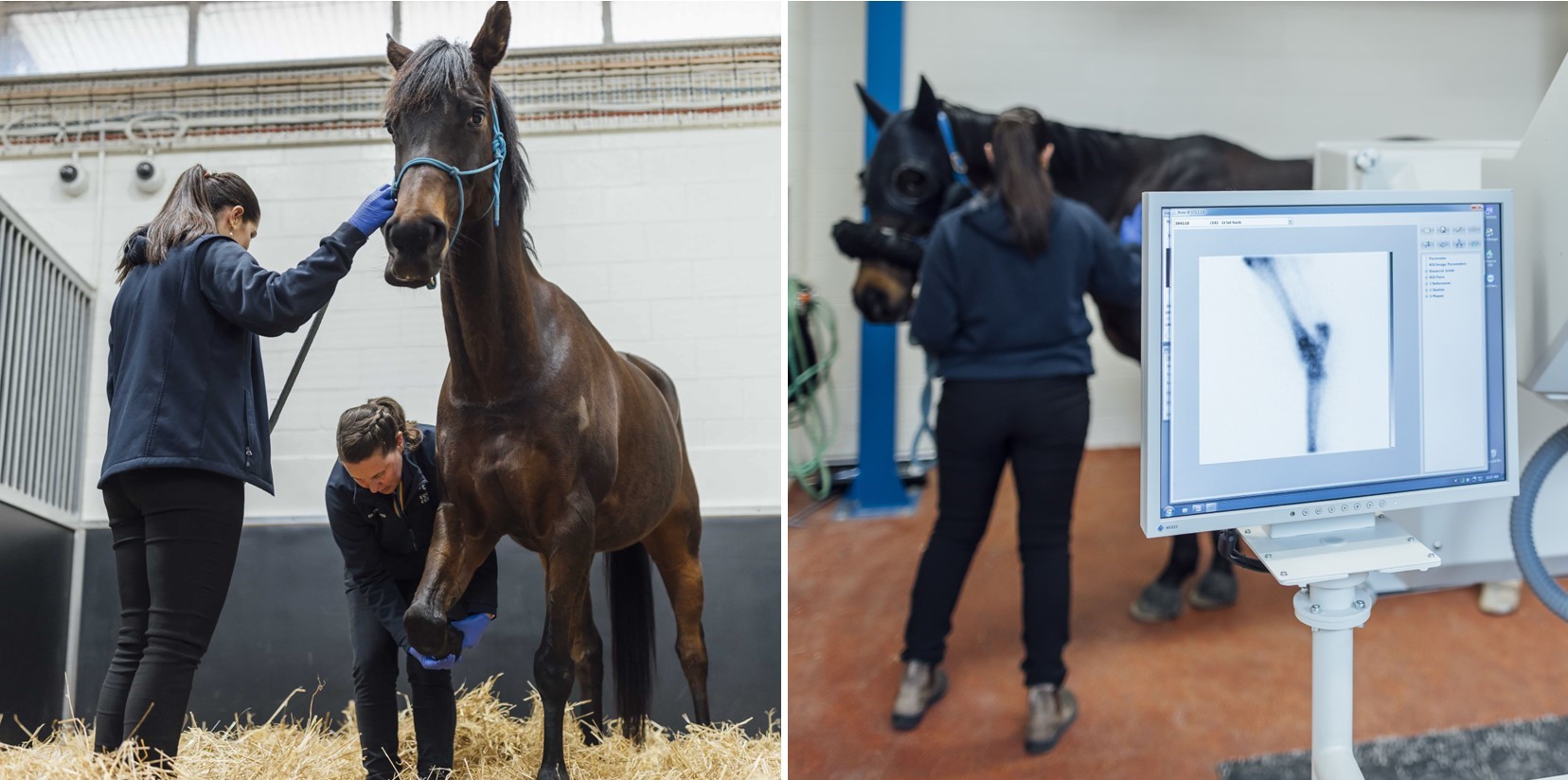
Jenny (second from left) works in the University of Melbourne Equine Centre.
Jenny: Meanwhile, in the University of Melbourne Equine Centre, I’m working to prevent injuries in racehorses, using advanced imaging technology, some of which is unique in Australia. We can perform CT scans of horses while they’re standing, or we can quickly and safely lift an anaesthetised 500kg animal and turn it on its back for surgery, which is amazing. Beyond horses, some of my weirdest and most wonderful work experiences have involved consulting to zoos. I have removed a tumour from a zebra and performed a rectal examination of a tapir with abdominal pain, which was fascinating but smelly. The skills and empathy of the dedicated people who care for zoo animals are always impressive.
Peter: At Melbourne Zoo, I once fed an endoscopy tube through the nose of an anaesthetised lion to take a biopsy sample. Seeing a lion’s mouth closeup was a hair-raising experience. I also heard the lion’s companion roar from about a metre’s distance and I will never forget the awesome feeling of that sound reverberating through my body.
Jenny: Being a veterinarian is a highly challenging job. As well as deep understanding of animals, vets need strong people skills too. I’m passionate about educating people on the full costs and responsibilities of animal ownership before they commit to it. If people can't look after their pets properly, then the animals suffer and that impacts owners’ and veterinarians’ mental health too. False expectations about the time and money involved in caring for animals also affect clients’ interactions with veterinarians, who sometimes suffer abuse as a result. Community education in this area is critical to the wellbeing of humans and animals alike.
Peter: Our industry needs stronger government support so that we can better educate the community, as well as providing the best possible teaching for future veterinarians, and thereby optimise animal welfare. The ultimate why is our moral obligation to share this planet with respect and kindness for all living creatures.
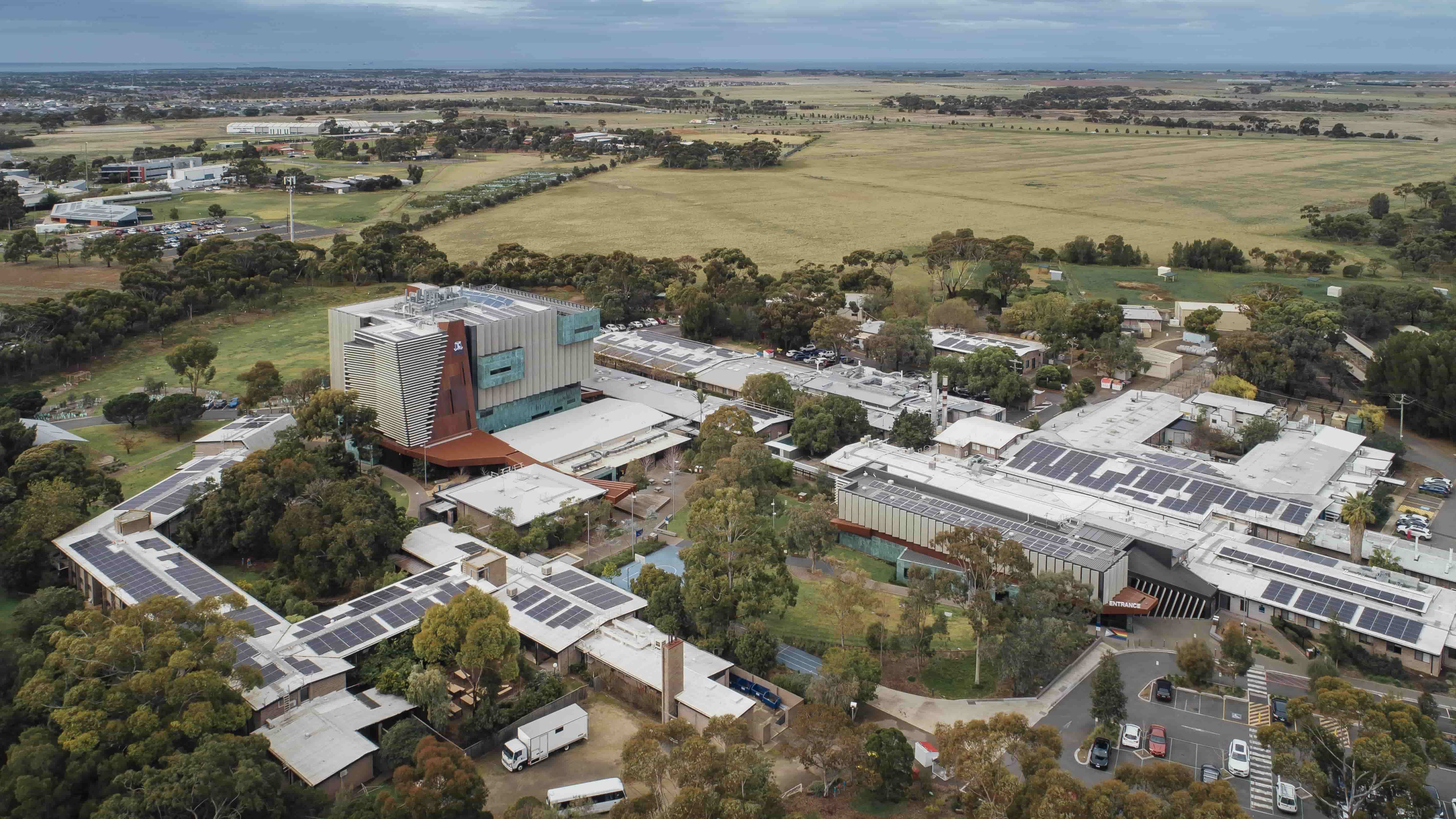
The University's Werribee campus houses the Melbourne Veterinary School.