Investigating how disease is shaping frogs' future
The Melbourne Veterinary School is pleased to share an interview with Alexander Wendt, who is nearing the completion of their research higher degree.
Alex (pictured below) has undertaken a PhD with the One Health Research Group, supervised by Dr Laura Brannelly, Associate Professor Lee Berger and Professor Lee Skerratt.
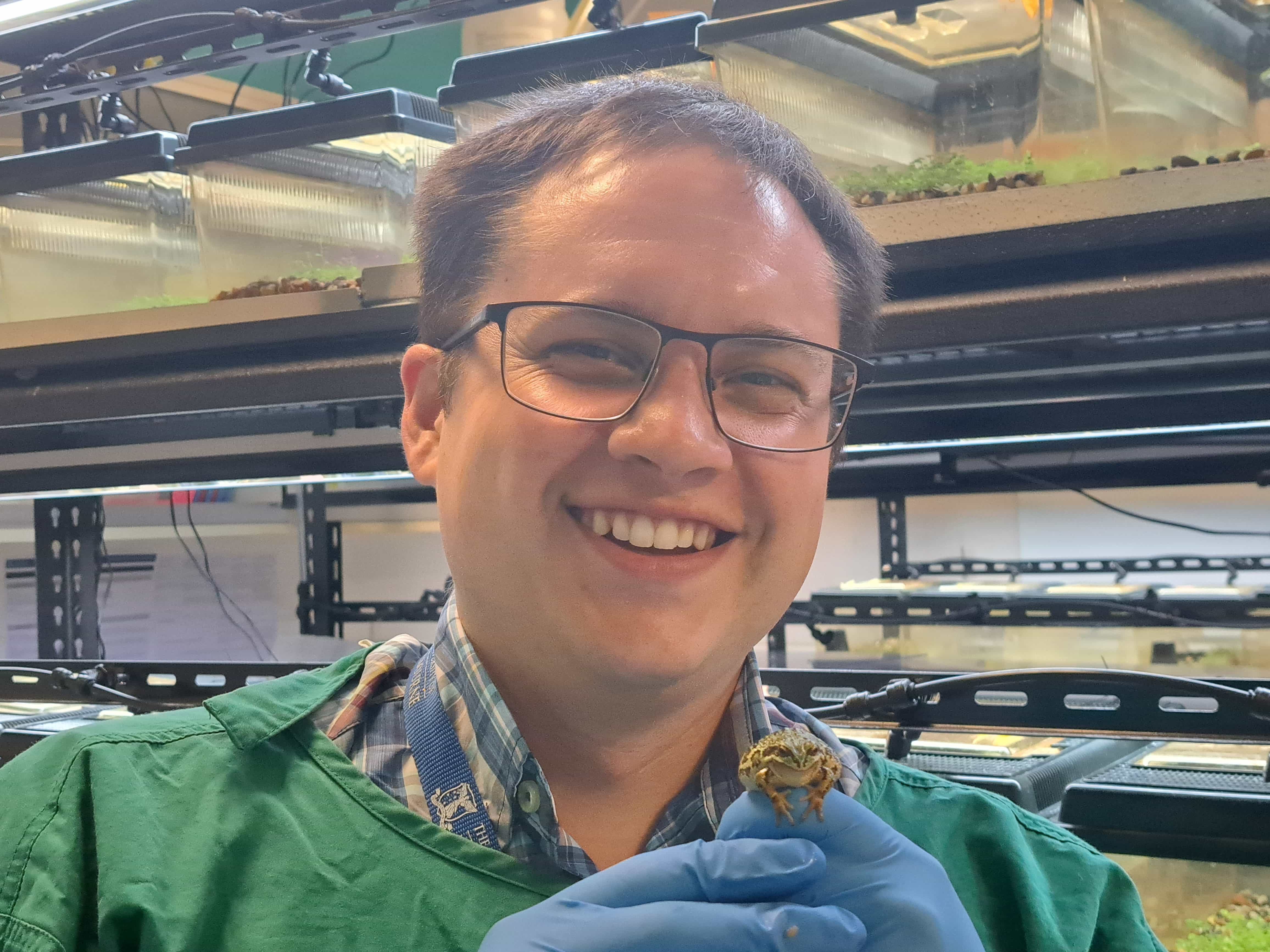
Alex Wendt is a conservation biologist and PhD candidate in the Melbourne Veterinary School.
Can you tell us a little bit about yourself?
I’m a conservation biologist and PhD candidate at the University of Melbourne. My research investigates how the amphibian fungal pathogen Batrachochytrium dendrobatidis (Bd) shapes the genetics, connectivity, and long-term viability of the alpine tree frog (Litoria verreauxii alpina). My road to Melbourne ran through a series of hands-on roles including: a professional internship in animal behaviour at Disney’s Animal Kingdom; working with hellbenders at The Wilds; herpetological surveys in Ecuador; a master’s at Georgia Southern on flatwoods salamanders; and wildlife disease surveillance in Yellowstone National Park. These experiences ultimately led me to focus on pathogen-driven conservation.
What did you research during your PhD?
I set out to understand how a long-standing frog disease (Bd) is shaping the alpine tree frog’s future. I linked DNA patterns to landscape features such as roads, rivers, and habitat to see how the terrain affects gene flow, then used mark-recapture to reveal a mostly one-partner mating strategy within seasons. Genome scans identified genes under selection, concentrated near regions that may be important for gene regulation. Finally, population viability models showed which actions most improve persistence, highlighting habitat restoration and barrier reduction. Together, these results point managers to connect key ponds, ease movement, and monitor a short list of gene targets.
What are some of the highlights (and challenges) during your degree?
Attending and presenting at the World Congress of Herpetology in Borneo was a standout moment, from sharing results and learning new things with global experts to late-night outings looking for amazing wildlife. Closer to home, doing fieldwork in Kosciuszko was a thrilling and enjoyable time, even though we got snowed on and had several late nights catching frogs. The biggest challenge during the PhD journey was juggling logistics, analysis, and writing while the project kept evolving.
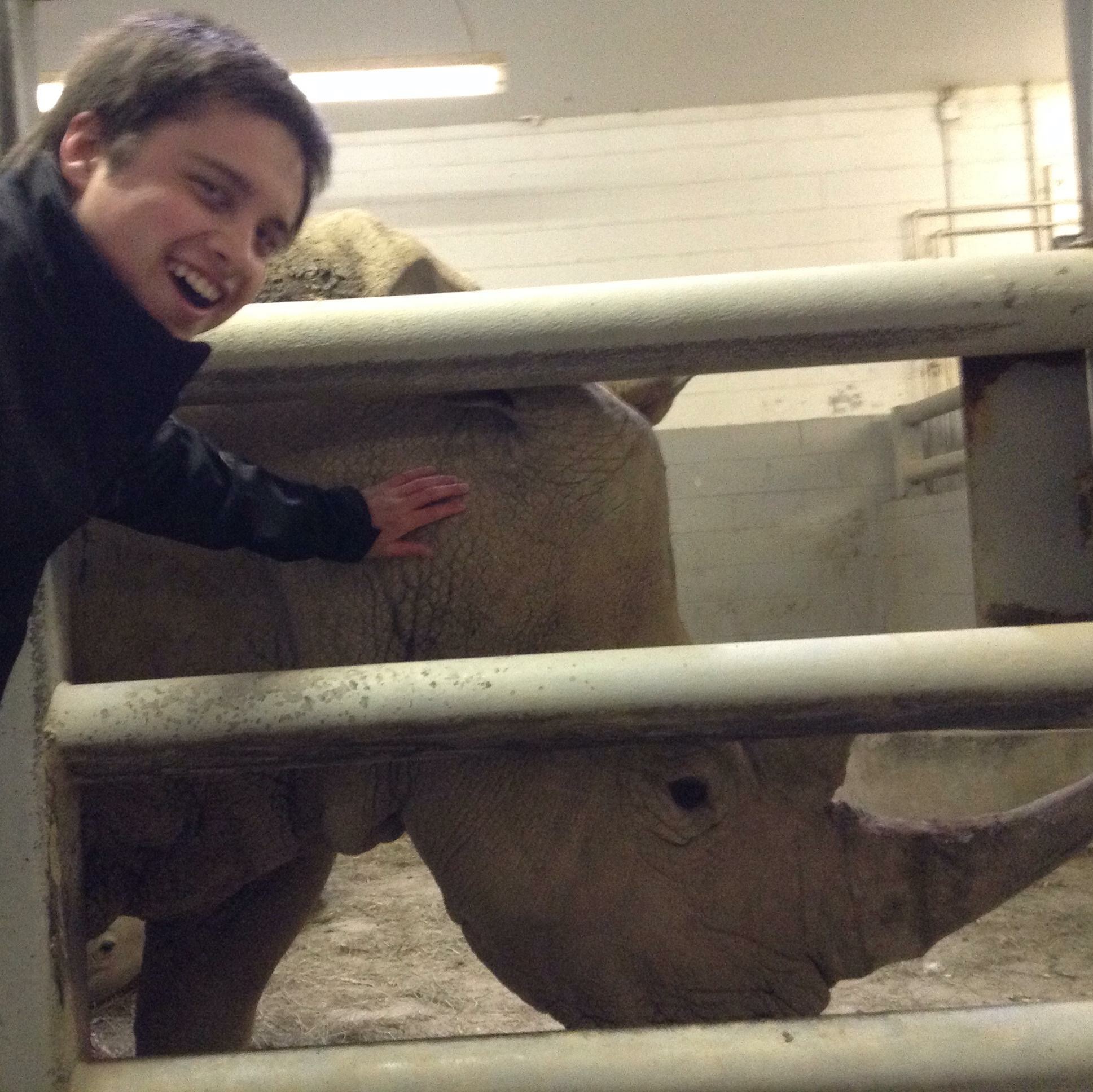
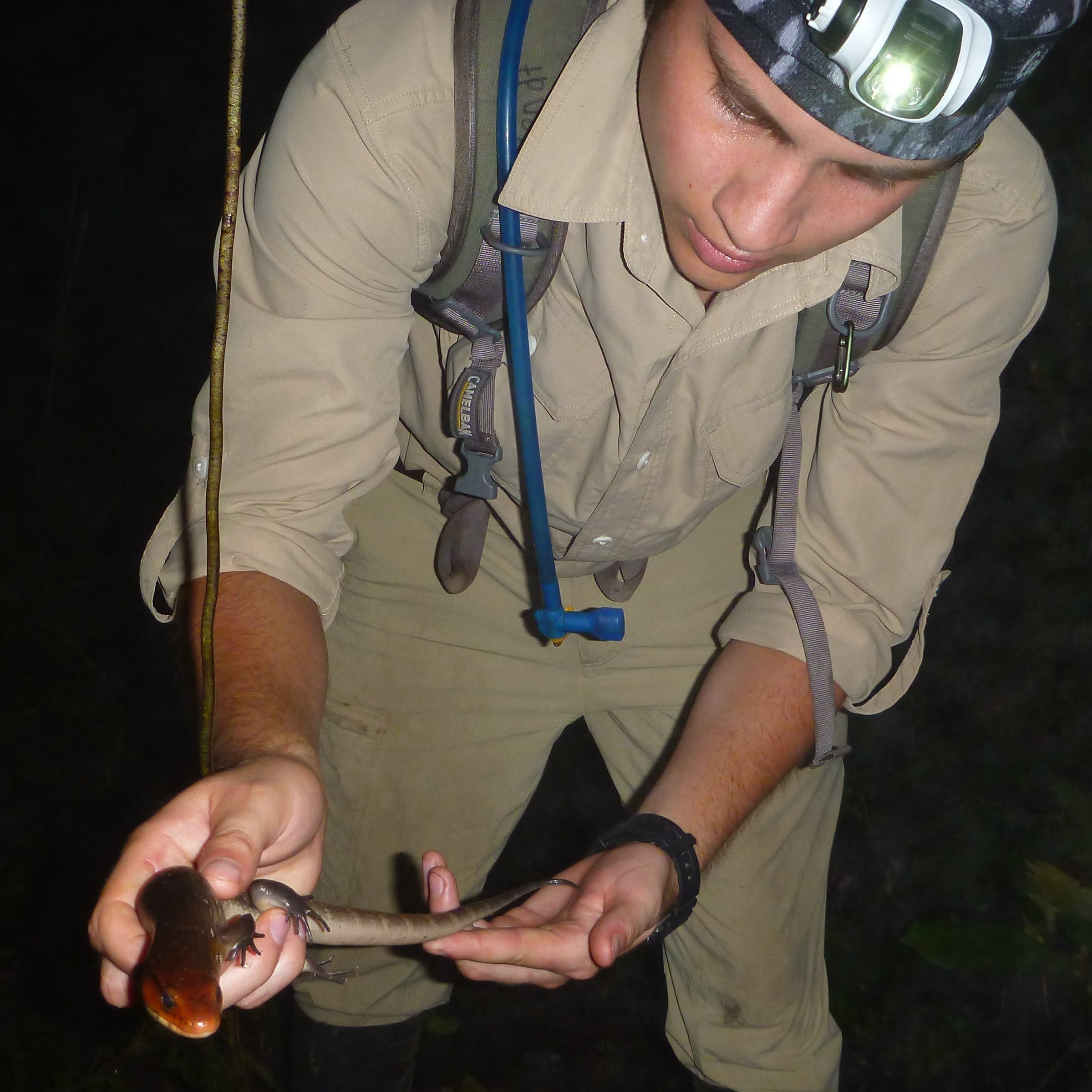
Alex's close encounters with wildife have included meeting a rhinoceros and a rainbow galliwasp lizard in Ecuador.
What does a typical day for you look like?
When I am not stuck behind a computer running various models, you could find me either in the lab extracting DNA or out in the field catching frogs (or other small, slippery suspects). My gloves may be spotless in the lab, but my gumboots get dirty in the field. On lab days, mornings begin with coffee, antiseptic benches, and rows of labeled tubes. Hours disappear into pipetting, then centrifuging tube after tube. It’s a stark contrast to field days that start at dusk, with headlamps along pond edges, quietly catching frogs until 2am. Regardless of the hour or the mess, I do it for the frogs.
Any words of wisdom for future students?
Start writing your thesis early, draft methods as you finish them, keep a living results outline, and do not forget to have fun along the way.
Learn more abut Alex's research:
- Reference genome and reproduction-focused transcriptome for the threatened alpine tree frog (Litoria verreauxii alpina)
- Devastating disease can cause increased breeding effort and success that improves population resilience
Discover research opportunities in the Melbourne Veterinary School