Professor Tom Kompas on biosecurity, climate change and global risk
As a Professor of Environmental Economics and Biosecurity, Professor Tom Kompas’ research focuses on a significant global challenge: how to prevent and manage the damage caused by invasive pests and diseases.
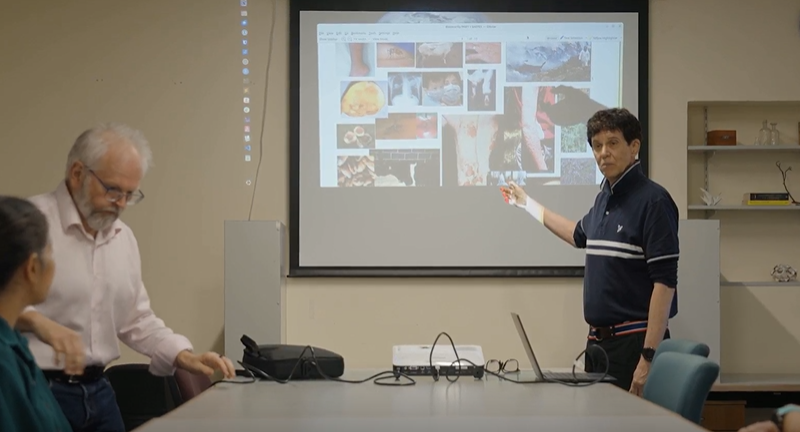
“Biosecurity is a set of measures that try to prevent damages from invasive pests and diseases – exotic pests, as well as endemic pests that already exist in Australia,” Professor Kompas explained.
Starting off as an engineer, Professor Kompas transitioned into economics as he thought it was fascinating. Now, his work sits at the intersection of science, economics, and policy. He believes an interdisciplinary approach is needed to solve biosecurity problems.
“Biosecurity and invasive pests and diseases impact animal, plant, and human health, and it also can greatly affect the environment,” Professor Kompas said.
Much of his work is highly technical, drawing on large-scale computational models to analyse biosecurity and global warming risks.
“There are models with half a terabyte of information… and all of that gets attached to economic damages, both in Australia and globally” Professor Kompas said.
Professor Kompas supports governments and industry to make complex decisions about how best to allocate resources across a growing range of biosecurity threats, including those from different types of pests and resulting biosecurity management strategies (e.g., pre-border, border, post-border biosecurity measures, along with eradication and containment campaigns).
He also acknowledges the strong connection between biosecurity and climate change.
“Climate change impacts countries across the world very differently,” he said.
“The pattern of exports and imports will change, and that tells you pest pathways into Australia and throughout the world will change.”
To tackle these challenges, Professor Kompas collaborates broadly across the University, working with experts in various fields including statisticians, ecologists, veterinarians, agricultural economists and environmental specialists.
As a member of the Centre of Excellence for Biosecurity Risk Analysis (CEBRA), Professor Kompas’ work directly informs policy and decision-making at both national and international levels.
He is also passionate about training individuals to become biosecurity professionals.
“I want to help people understand what’s happening, what’s coming, what we can do about it. That’s why I’m here, that’s why I keep going,” Professor Kompas said.
Professor Kompas lectures in the subjects Agricultural Economics, Biosecurity: Managing Invasive Species, and Resource Management Economics.
Students can study biosecurity-related topics in a number of courses – in the Bachelor of Science, Bachelor of Agriculture, and a range of graduate courses. Graduates develop field and lab-based diagnostic skills to pursue careers in: resource economics, policy areas, government and regulatory compliance, environmental management and health of managed and native plants, animals, and biodiversity.
This profile is part of the Research Spotlight video series. Watch the full video below.