Research-industry collaboration wins grant to reduce livestock emissions
Agricultural scientists at the University of Melbourne have received a $1.14M Australian Government grant to reduce methane emissions from cattle and sheep farming – one of the major contributors to greenhouse gas emissions leading to climate change.
Funded by the Methane Emissions Reduction in Livestock (MERiL) program, with an additional $200K from industry partners, Associate Professor Surinder Singh Chauhan is leading a research-industry collaboration that will empower livestock farmers to help Australia reach the goal of net-zero emissions as soon as possible.
“Ruminants such as cattle and sheep produce methane through their digestive processes, accounting for about 70 per cent of greenhouse gas emissions from the Australian agricultural sector,” Associate Professor Chauhan said.
“Specialised feed supplements can play a major role in reducing methane emissions from livestock. At small scale, we have already demonstrated significant emissions reductions across sheep, dairy and beef cattle production through cost-effective delivery of a novel, natural feed supplement derived from a by-product of sugarcane processing.”

A calf in a small-scale trial of the novel feed supplement at Dookie campus.
Associate Professor Chauhan said the team aims to upscale this promising solution to large on-farm applications and validate methane reduction and potential productivity gains in grazing dairy cows and sheep.
Also funded under the MERiL program, the team’s previous research showed up to 34 per cent reduction in enteric methane emissions by grazing cattle and sheep that were fed polyphenol-rich sugarcane feed material or an essential oil mix.
The newly funded project builds on long-term relationships between the University and industry partners The Product Makers Australia and FeedWorks, commercial livestock producers Endhill Pty Ltd and The Hermitage Dairy, and the Riverine Plains farmers group, who have provided co-funding and/or in-kind support, including access to farms in Victoria and NSW.
The research team includes Professors Frank Dunshea, Professor Richard Eckard, Professor Bill Malcolm, Professor Robyn Warner, Dr Mei Bai, and Dr Pragna Prathap.
“All our multinational supply chain companies have set targets for reduced greenhouse gas emissions from their farmers. This research is essential to provide farmers with cost-effective options to respond to these targets and meet market demands,” Professor Eckard said.
Associate Professor Chauhan said the project team aims to deliver practical, scalable, and sustainable solutions that reduce the environmental footprint of grazing livestock farming while ensuring economic viability for producers and high-quality products for consumers.
“Being raised in a farming family in a small village in North India, I have personally experienced food insecurity and appreciate the value of livestock producers,” he said. “It is my passion to develop global agricultural solutions that secure our food supply with environmental sustainability.”
Learn more about the University's research in agriculture.
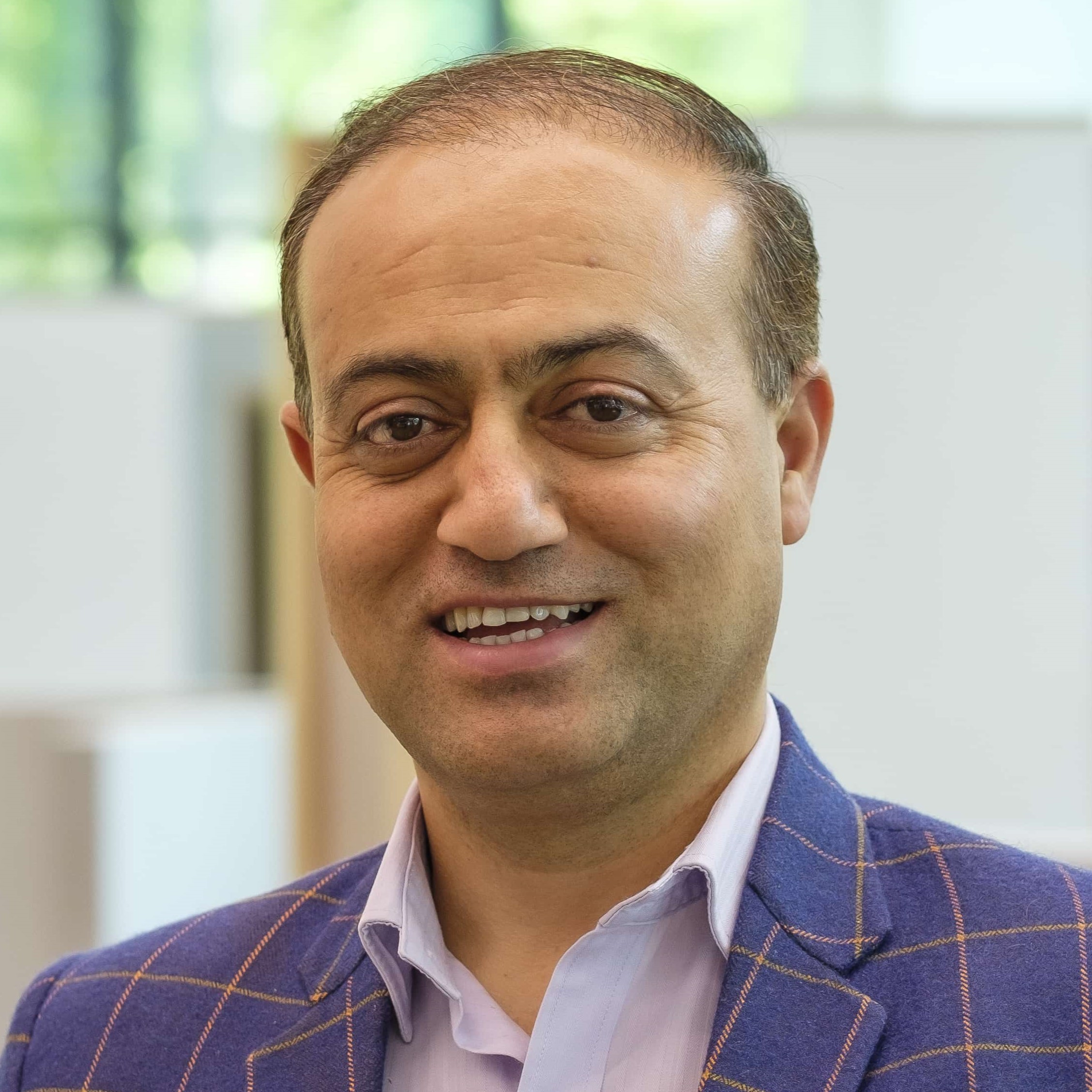

Associate Professor Chauhan (left) and Professor Eckard