Research-industry collaborations win funding to improve medicinal drugs and livestock vaccines
University of Melbourne scientists have received two grants totalling almost $1.3M from the Australian Research Council’s (ARC) highly competitive Linkage Program for industry partnerships that will generate novel strategies for developing medicinal drugs, and new vaccines for livestock.
Professor Spencer Williams (School of Chemistry) is leading a project entitled Innovative strategies for crafting precision kinase inhibitors thatreceived $536,343 from the ARC, while Professor Glenn Browning (Melbourne Veterinary School) leads Understanding the immune response to mycoplasma vaccines, which received$751,326.


Professors Williams (left) and Browning
In partnership with Australian company TianLi Biotechnology, Professor Williams’ research team aims to create a strategy for developing more targeted kinase inhibitors for biochemical research including drug development.
“Kinases are enzymes that regulate various biological processes including metabolic pathways, cellular signals, and transport across cell membranes,” Professor Williams said.
“Their inhibitors are often used to treat cancer and inflammation, and in biological research and drug development. But poorly selective kinase inhibitors interfere with non-target processes, which can cause severe side-effects from drugs and impede research and development.
“The innovative approach of our two-year project is to develop inhibitors that bind to multiple sites on the target kinase, to ultimately boost drug efficacy and reduce side effects. It’s exciting to contribute to the development of the next generation of medicinal drugs.”
Professor Browning’s three-year project will investigate new vaccines for Mycoplasma bacteria that cause respiratory diseases in chickens, impacting their welfare and productivity.
“The poultry industry is growing rapidly across the globe, especially in low- and middle-income countries, and diseases caused by mycoplasmas drive much of the industry’s use of antibiotics, particularly across Asia,” Professor Browning said.
“This is accelerating development of antibiotic resistance in these and other bacteria, limiting our capacity to treat diseases caused by them in livestock and humans.”
Vaccines previously developed by the University of Melbourne and commercialised by long-term partner Bioproperties P/L can control mycoplasmas in breeding chickens, but these vaccines can only be used when birds are at least three weeks old and must be applied individually.
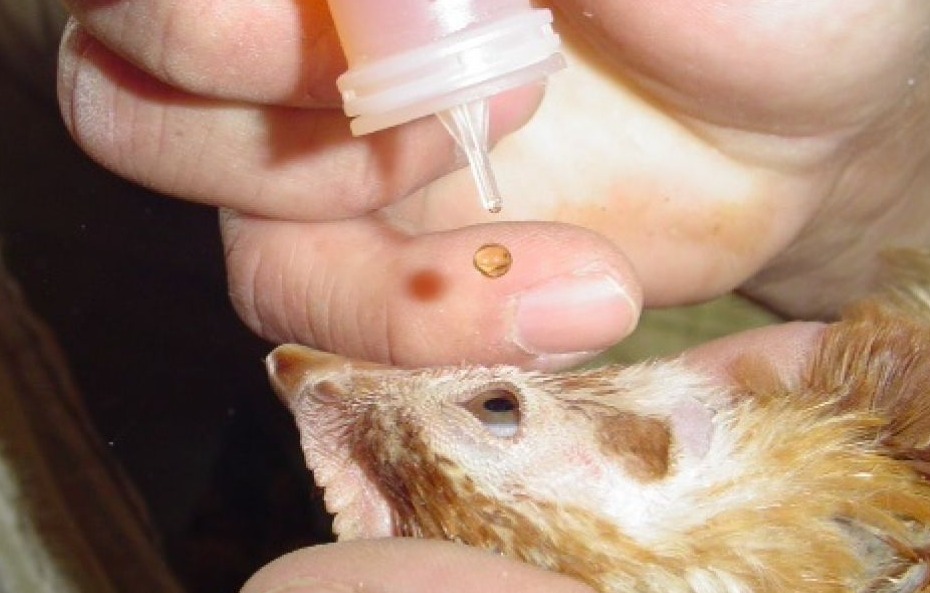
A chicken being vaccinated via eye dropper. Image credit Martin Diaz.
The team is now developing a world-first vaccine for egg- and meat-producing chickens, which must be vaccinated in the hatchery before they are distributed to farms.
“We have already demonstrated that our vaccine is safe and effective when administered to day-old chicks,” Professor Browning said.
“Our newly funded project aims to develop methods for efficient, mass vaccination in hatcheries, and to determine which birds have been effectively vaccinated. This has potential to revolutionise control of mycoplasmas, improving productivity for poultry farmers and enhancing animal welfare internationally.
“In addition, by replacing antibiotic use with vaccination we will slow the development of antibiotic resistance in poultry, with global public health benefits.”
Learn more about Professor Williams' research or Professor Browning's research.