Tracking livestock health in data-poor environments
The Melbourne Veterinary School is pleased to share an interview with Ayesha Siddiqua, who recently submitted her PhD on improving disease surveillance in livestock populations.
Ayesha undertook her degree with the Veterinary Epidemiology team at the Asia-Pacific Centre for Animal Health, supervised by Professor Mark Stevenson, Dr Caitlin Pfeiffer, Dr Sandra Steele, and Associate Professor Simon Firestone.
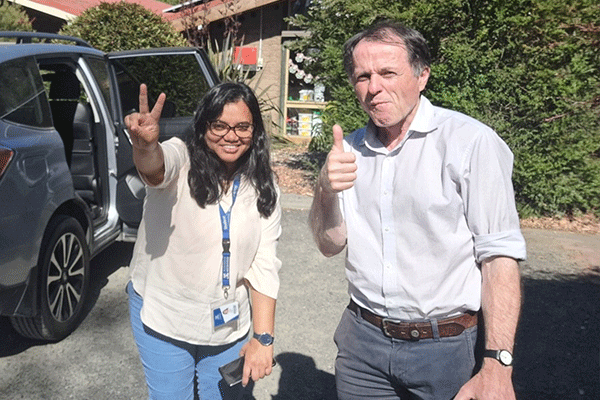
Ayesha and Professor Mark Stevenson celebrating the completion of data collection.
Can you tell us a little bit about yourself?
I’m a veterinarian and PhD candidate at the University of Melbourne. My research focuses on developing methodologies to estimate disease frequency in animal populations in the absence of individual disease-recording systems.
My practical experience spans field and laboratory work in Bangladesh. I have worked as a veterinary officer on Avian Influenza surveillance projects under the U.S. Agency for International Development (USAID); as a veterinary surgeon with the Department of Livestock Services (DLS); as a scientific officer in the Marek’s vaccine laboratory at the Livestock Research Institute; and as an Upazila Livestock Officer at the administrative level for DLS.
These experiences ultimately led me to focus on improving disease surveillance and developing practical epidemiological tools for livestock populations.
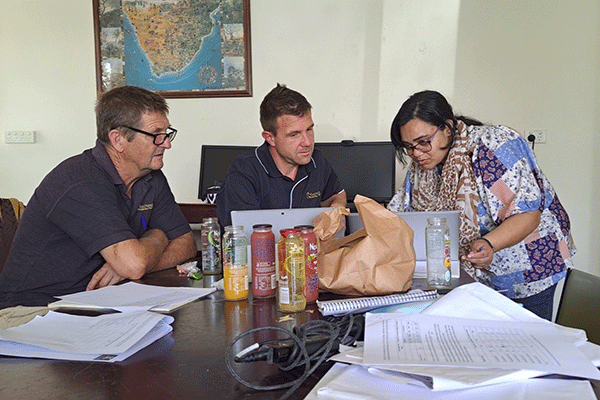
Ayesha with Victorian dairy veterinarians during data collection.
What drives your passion for animal health?
From Bangladesh to Melbourne, I’ve pursued my dream of engaging in world-class veterinary research and learning from inspirational experts. My commitment to animal health comes from a deep love for animals and a desire to make a tangible impact on their welfare and care practices. My research also aims to improve human and environmental health by enhancing livestock outcomes, ultimately benefiting farmers and broader communities.
What did you research during your PhD?
My research aimed to develop methodologies to estimate disease frequency in livestock populations lacking individual animal health records, supporting the World Organisation for Animal Health’s Global Burden of Animal Diseases (GBADs) programme.
I developed frameworks to critically appraise existing datasets and applied questionnaire-based expert elicitation approaches, including post-stratification survey adjustments, to estimate disease frequencies across major dairy cow disorders at both herd and state levels.
These methods showed that even in resource-limited settings, reliable disease-frequency estimates can be obtained without full animal-level records. The outcomes provide practical tools for veterinarians, policymakers, and livestock managers to enhance surveillance and guide disease-control strategies.
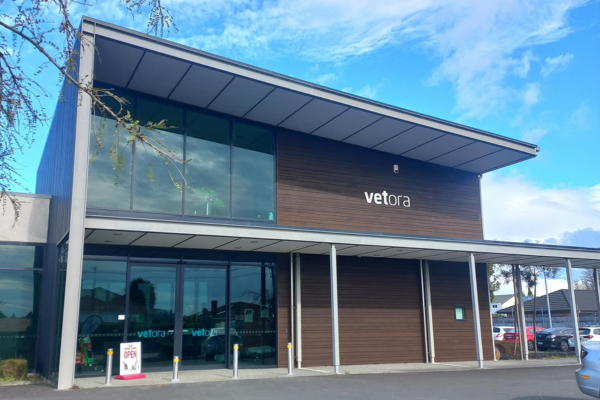
During her research, Ayesha visited veterinary practices in New Zealand.
What does a ‘day in the life’ of your PhD look like?
Most days, I was behind the computer cleaning and analysing data, reviewing literature, and meeting with supervisors to discuss results and plan next steps. When collecting data, I travelled across New Zealand and Victoria to visit dairy practices, talk with veterinarians, and gather information on dairy-cow diseases.
Visiting dairy practices and interviewing veterinarians was always an exciting experience. It gave me the opportunity to meet new people and learn from their practical insights. However, scheduling interviews was often challenging, as veterinarians have unpredictable and demanding workloads. Obtaining data from different organisations also required patience and persistence due to extensive official paperwork.
For future students, I would say: plan early, start writing your thesis as soon as possible, draft your methods as you complete them, maintain a living results outline, and, most importantly, enjoy the process along the way.
Discover research opportunities in the Melbourne Veterinary School