
What is In2science?
Current university students studying STEM disciplines are trained and placed into your secondary school STEM classes as mentors. They join the class once a week for a 10-week period.
Working alongside you, mentors assist your students, share their own university experiences and motivations, and relate class content to real-world examples. They also serve as diverse role models, sharing their passion for STEM and encouraging your students, especially those from traditionally underrepresented groups, to pursue tertiary education.
The In2science program is designed to inspire, motivate, and support students in continuing STEM studies throughout high school and beyond.
How do mentors assist in the classroom?
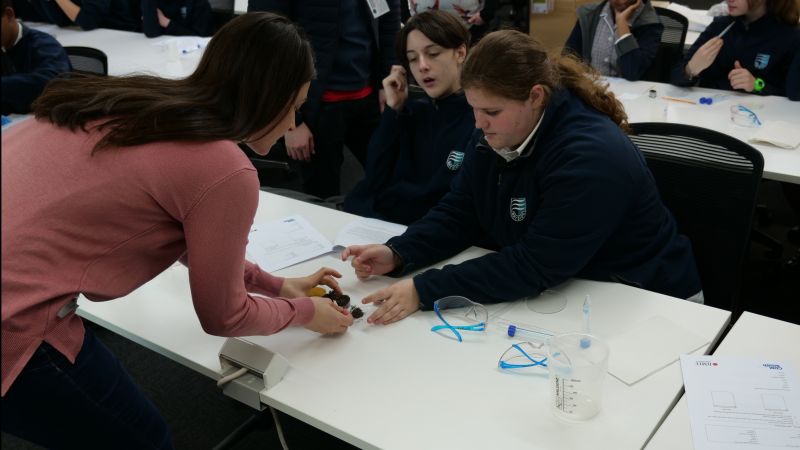
In2science mentors can be used in a variety of ways, such as giving a talk to students about their studies, discussing their STEM interests and career motivations, describing what it’s like to study at university, or even just providing another set of hands.
For example, mentors could work closely with a small group of students during their placement. This can be particularly beneficial for students who are disengaged or challenged by STEM topics, motivated students who are losing enthusiasm, female or gender-diverse students in a majority male class, or students with English as an additional language.
Alternatively, mentors can act as classroom rovers, supporting the teacher during lessons or practical experiments. Where possible, the the subject specialisation of the mentor is selected to compliment the teacher’s knowledge, so the mentor can enhance the student experience by sharing their subject expertise with the class.
The benefits of having an In2science mentor in your class
- Free classroom assistance and support.
- More freedom to manage the learning environment.
- Greater capacity to meet the learning needs of all students.
- Opportunity to interact with motivated university STEM students.
- Form connections with partner universities.
- Peer-to-peer discussions about university research, courses and tertiary student experiences.
- Learn about the latest real-world applications of STEM.

Who coordinates the program?
Marie Kinsey is the Program Coordinator for the University of Melbourne. Marie is a passionate science communicator, lover of nature, sustainability ambassador and a fan of all things STEM and the creative intersections in between. Marie has over a decade of experience communicating science and working with young people, showcasing how STEM can be relevant, fascinating, creative and accessible to all.
About the program
Target students
The program is aimed at Year 7 – 10 science, technology, engineering or maths classes, generally in low-ICSEA schools (<1046).
Dates
Mentors begin their placement at the start of each university semester (March and August).
Cost
Free
Request a mentor in your classroom
If this is your school’s first time being involved with In2science, please contact In2science Program Manager Nicole Butler.
Frequently asked questions
If you have further questions about the program, please contact the In2science team.
-
Mentors receive pre-placement training to equip them with the tools to connect with and inspire the next generation of STEM enthusiasts, as well as mid-semester training providing an opportunity to share their experience with other mentors and workshop further techniques to engage with young people. In addition, mentors receive ongoing support and gain access to exclusive professional development workshops and industry networking events. All mentors are trained in Child Safety and hold Working with Children Checks.
-
Several mentors can be placed at the same school at one time in different classes.
Get the quarterly STEM in Schools newsletter
If you want to be kept in the loop about all upcoming workshops, events and activities for secondary school students run by the University of Melbourne, you can opt in to receive the quarterly STEM in Schools newsletter by filling out this form.