
Project
Collaborative sustainability framework for nature-based aquaculture in Southeast Asia-Pacific region
Sustainability is widely promoted in aquaculture, but it's rarely defined or measured in a clear, practical way. My project addresses this gap in partnership with WorldFish, a CGIAR research centre and global leader in aquatic food systems, working across 27 countries. My main collaborator is Dr Eddie Allison, Principal Scientist at WorldFish and lead of the Climate-Adaptive, Inclusive, Nature-based Aquaculture (CAINA) project. With support from the 2025 Global Collaboration Award, I've been contributing to CAINA's work in Malaysia, helping develop a nature- and people-positive framework (NaPPA) that supports what's known in the field as a "blue transformation," that is, the shift toward more sustainable, equitable aquatic food systems. The NaPPA framework spans seven dimensions: nature-positive outcomes, climate adaptability, animal welfare, socio-economic inclusion, economic efficiency, nutrition sensitivity and governance. It's designed to help industry, policymakers, seafood buyers and consumers make more informed decisions.
The $18,626 award funded a four-week research visit to WorldFish's headquarters in Penang, Malaysia (August–September 2025), covering travel, accommodation and per diem costs. It also covered casual research assistance (for local data collection in Malaysia and to keep my Melbourne-based projects running while I was away), specialist software for sustainability modelling, and support for a literature review.
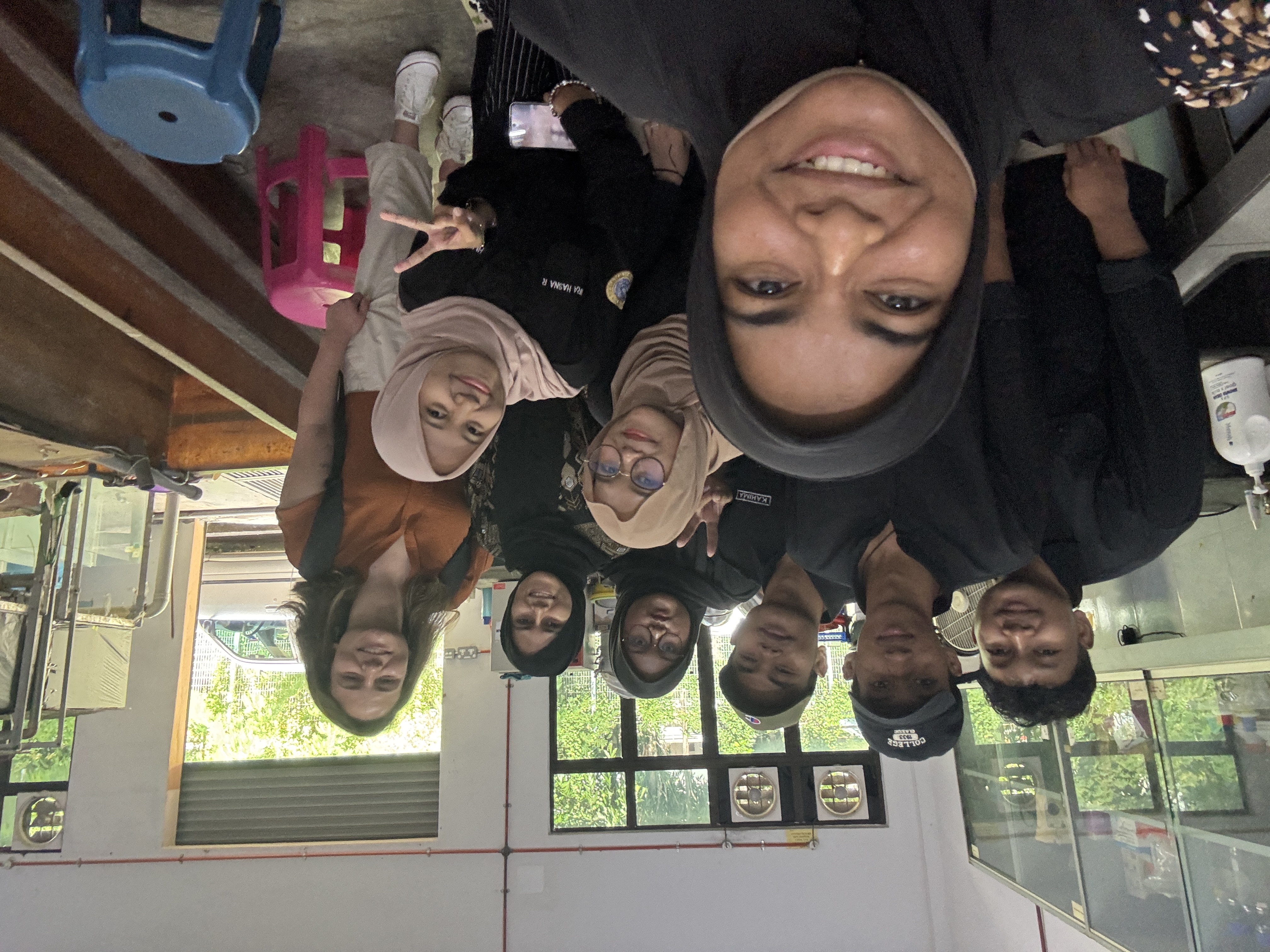
I became embedded in WorldFish's AQUADAPT/CAINA network. I presented my work, and that of our Aquaculture Sustainability (AquaS) group, at more than 10 team and cross-project meetings, including with WorldFish's Science Leaders and the Bangladesh, Egypt, and Climate & Environment teams. I also connected with the aquaculture group at Universiti Sains Malaysia, visiting their research facility and meeting students from the aquaculture nutrition team. In Bangkok, I met with aquaculture sector experts from the Food and Agriculture Organization of the United Nations (FAO), the Network of Aquaculture Centres in Asia-Pacific (NACA), and FutureFish. As part of this collaboration, I am contributing to three scholarly outputs from the CAINA project: a review paper on sustainability definitions and frameworks in aquaculture (submitted), a paper proposing the NaPPA framework (with around 30 co-authors across WorldFish, six Malaysian universities, and partners in the Solomon Islands and Thailand), and a case study validating the framework across Southeast Asia. The most significant outcome has certainly been the growth of my international network and a stronger understanding of the region's aquaculture sector. The relationships I have built are also connecting my research more closely to real-world policy and development work.
I am continuing to contribute to the CAINA and AQUADAPT networks and papers, with periodic meetings with the CAINA Malaysia team. We're also exploring future co-supervision of AquaS stuents with Dr Allison, and have started scoping an ACIAR project concept in Bangladesh. Longer term, my goal is to make AquaS group a regular collaborator with WorldFish on future projects.