
Project
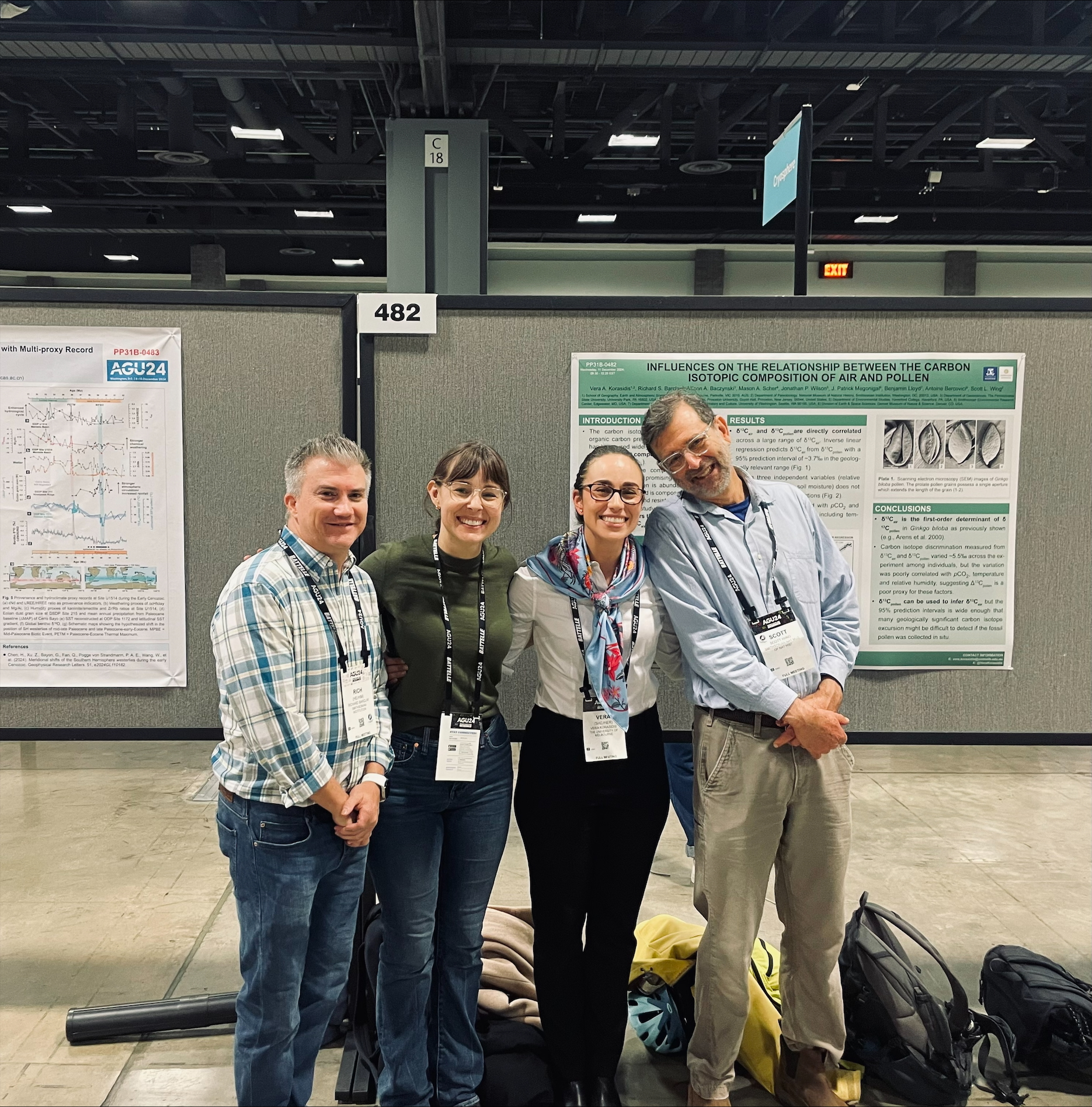
Influence of elevated atmospheric CO2 on pollen chemistry
If pollen chemistry is calibrated to atmospheric CO2, it means that the chemistry of fossil pollen can be used to monitor ancient atmospheric isotopic compositions. Fossil pollen are very common in sedimentary rocks, and so could be used to routinely monitor ancient atmospheric CO2 compositions. This has important implications for determining the atmospheric isotopic control on ancient climates.
Attaining this funding has helped cultivate and foster numerous relationships with geologists and paleontologists in the USA and enhanced my career trajectory by allowing me to complete this research, all of which needed to be completed in the USA where the required analytical equipment is. Under the guidance of Dr. Barclay I have learnt how to prepare modern pollen samples and standards for isotopic analysis. While visiting Pennsylvania State University, I acquired training in organic geochemistry and isotopic techniques by Ass. Res. Prof. Baczynski who specializes in Nano-EA/IRMS advances.
Attaining this Award has also enabled me to further build my publication record and develop international program management skills whilst strengthening global research ties, particularly with paleobotanists and geochemists affiliated with internationally renowned universities and museums.
Follow Up: Vera was awarded a 2025 ARC Discovery Early Career Research Award.
COVID-19 prevented me visiting numerous research institutions and establishing new research relationships. Thanks to this award I have established new collaborations between the School of Geography, Earth and Atmospheric Sciences at the University of Melbourne with the Department of Geosciences and Department of Chemistry at Pennsylvania State University and the Smithsonian Environmental Research Centre