Victoria Wain
“As I was finishing high school, I knew I wanted to study a program that would help me address the pressures facing the future of food security, and the changes needed to make sustainable, ethical agricultural practices,” she says.
It’s a global challenge, and one Bachelor of Agriculture graduates can address working not only as advisers and science consultants working across farms in a region, but also as biosecurity and finance professionals, animal welfare and nutrition scientists, marketers and policymakers.
“I also liked the broad career outcomes towards the end and knew it was a field requiring more experts,” Victoria says.
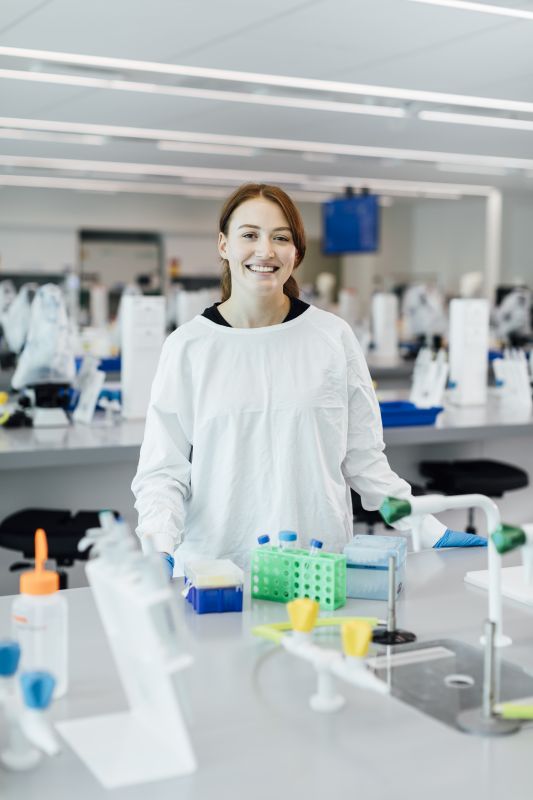
She was able to balance theoretical and laboratory-based knowledge with ‘hands on’ learning thanks to upgraded facilities in the city and the semester she chose to study at the University of Melbourne’s Dookie campus, a 2,440-hectare research farm and natural bush reserve.
“Living at Dookie campus, being exposed to practical, hands-on aspects of agriculture whilst making lifelong friendships was an invaluable experience,” Victoria says.
“Professor Tim Reeves’ passion for sustainable agriculture is incredible. He is a leading voice in food security who now mentors researchers and students at Dookie, and his belief in our ability to meet the targets of sustainable ag was inspiring.
“We also had the opportunity to complete a Cert III in Agriculture. This meant we got to do things such as drive tractors, use chainsaws, gain chemical user certificates and countless other skills. The opportunity in the laboratory on campus were also really useful, especially in the plant sciences practicals.”
This mix of theory and practical, field-based science is a microcosm of what agriculture has to offer. The careers of agriculture graduates are becoming increasingly data-driven – while many agricultural services professionals will still visit farms to test soil or assess animals, for example, it is increasingly common for farm staff to use new tools to take readings themselves and provide the data to those professionals for analysis and advice.
Victoria says she has been surprised by the software and technology she’s encountered.
The course really impressed me with its emphasis on sustainable agriculture and the changes we need to make to ensure the future of farming. Victoria Wain
“The vast amount of online programs available to agronomists, farmers and scientists was far more than I expected when I started the degree. DNA databases, crop modelling websites and statistical websites were all incredibly interesting to learn about and use.
“I’m very interested in the potential for technology to deliver advances in sustainable agriculture, particularly in hydroponics and water management.”
Her interest in sustainability was one of the main reasons Victoria chose to study agriculture at Melbourne.
“I have been a vegetarian and vegan my whole life due to the sustainability issues surrounding animal products and wanted to see what I could do to make an impactful, knowledgeable change in these areas. The course really impressed me with its emphasis on sustainable agriculture and the changes we need to make to ensure the future of farming.”
Having completed her Bachelor of Agriculture in 2020, Victoria is now starting a Juris Doctor, a type of graduate degree that allows people from a range of backgrounds to practice law.
The University of Melbourne offers a range of pathways to its own Juris Doctor program, including a Graduate Degree Package with the Bachelor of Agriculture for school leavers.
She plans to synthesise her interests in sustainability and ethical production and consumption, her practical experience of agriculture and her knowledge of agricultural science, sustainable practices, law and policy to develop systems that work for farmers, consumers and the environment.
“I hope to combine the two degrees, and eventually work in a role involving environmental or water policy,” Victoria says.
“I realised the effect policies and legislation can have on farmers, for example the Murray-Darling Basin Plan, and the need for people with agricultural experience in these legislative roles.”
Learn more about the scholarships available to support your study at Dookie campus.
Banner image: Karkalla, a native Australian food plant growing in a glasshouse at Dookie campus. Australian first peoples ate its sweet fruit fresh or dried, and paired its salty leaves with meat.