Farm field days showcase feed additives that reduce livestock methane emissions
University of Melbourne researchers demonstrated on-farm use of feed supplements that reduce methane emissions from grazing livestock – a major contributor to climate change – at two public field days in rural Victoria recently.
Part of a research translation project funded by the Australian Government’s Methane Emissions Reduction in Livestock program and industry partners, the field days – one for the dairy industry and one focused on sheep – were held in Victoria’s Goulburn Valley and Kiewa Valley, and attended by farmers, agricultural businesses, and government stakeholders.
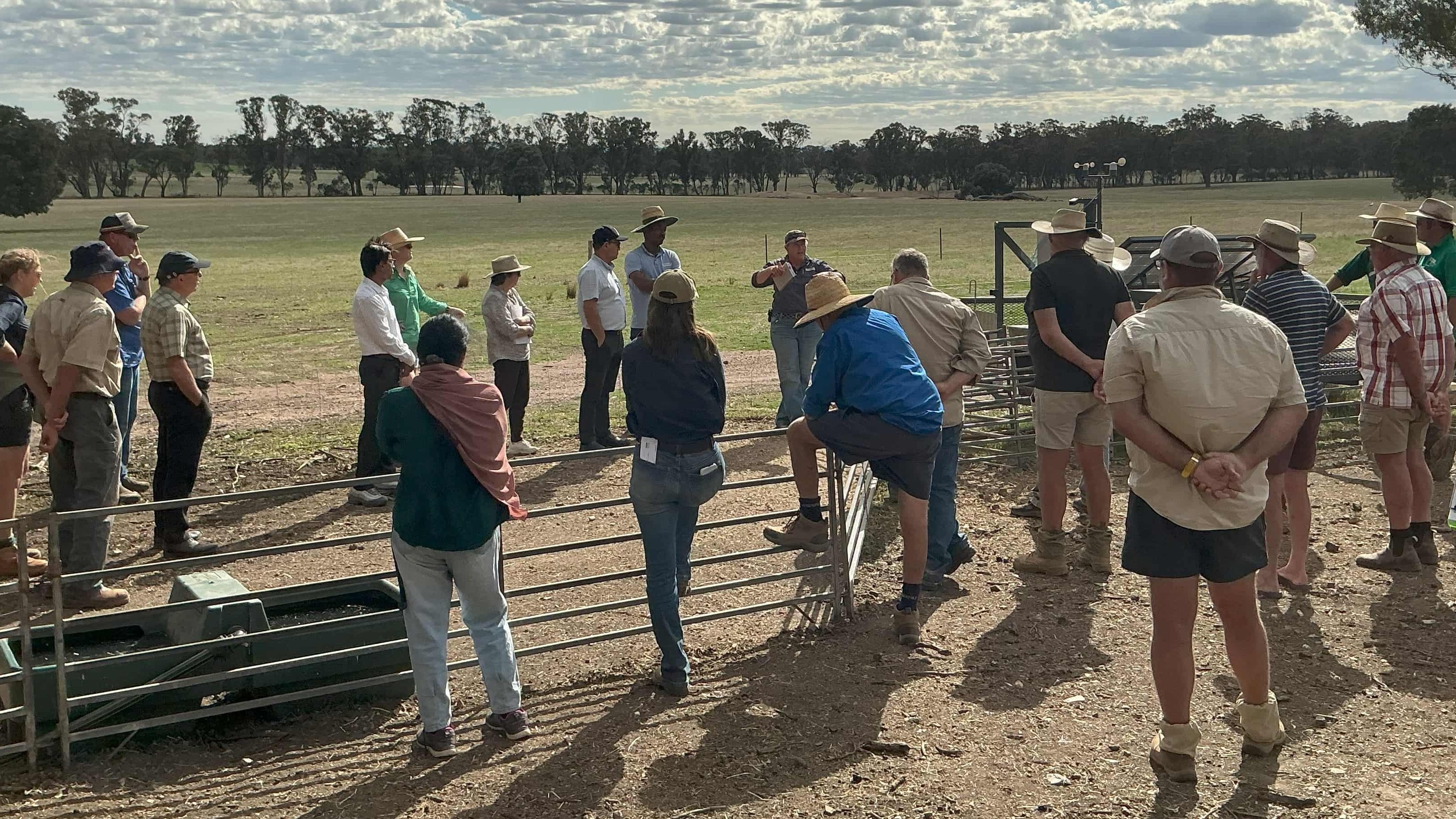
Field day attendees listen to a presentation at Homewood Farm, Baddaginnie.
Project leader Associate Professor Surinder Singh Chauhan said the aim was to empower livestock farmers to help Australia reach the goal of net-zero greenhouse emissions as soon as possible.
“Ruminant animals including cattle and sheep produce methane as they digest their food, accounting for about 70 per cent of greenhouse gas emissions from the Australian agricultural sector,” Associate Professor Chauhan said.
“The dietary supplements we have tested with industry partners The Product Makers and Feedworks are a cost-effective means for livestock farmers to respond to emissions targets while maintaining and even enhancing productivity.
“The field days showcased readily available, practical and scalable solutions for farmers to reduce methane emissions, with results measured in the paddock.”
Hosted at Homewood Farm at Baddaginnie on 11 March and at The Hermitage Dairy at Kergunyah South on 9 April, the field days featured delivery methods for feed additives including Polygain and Agolin, and demonstrations of commercial systems for monitoring feeding, production, and methane emissions under real farm conditions.
“These tools are becoming critical as the industry moves towards verified, farm-level emissions reporting,” Associate Professor Chauhan said.
“Our research shows that these feed additives are achieving meaningful reductions in methane emissions while supporting positive production outcomes, including improved milk performance in supplemented cows.”
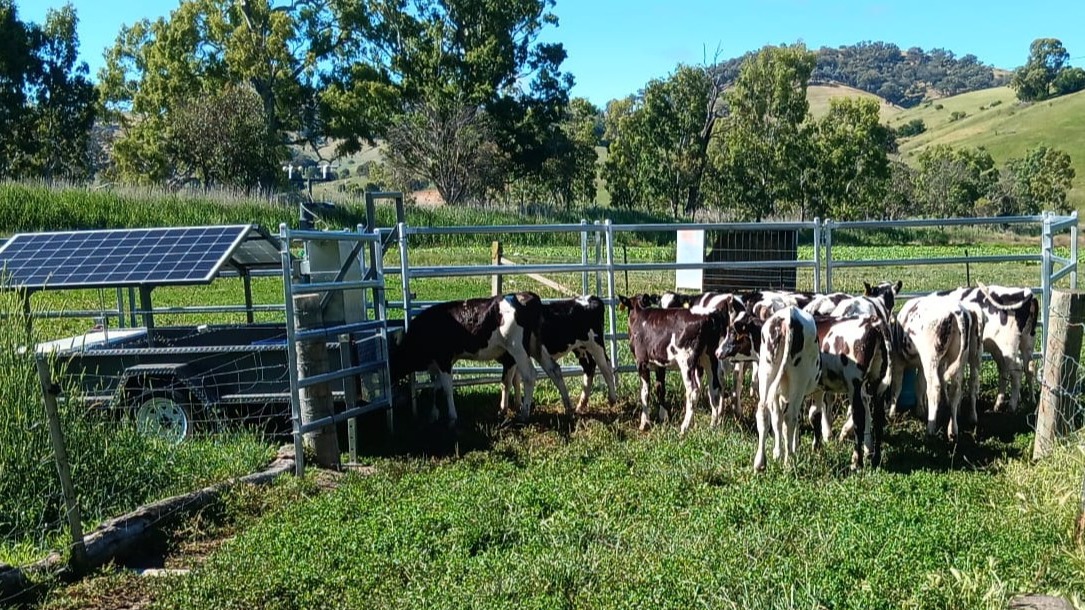
Calves in a feed supplement trial.
Associate Professor Chauhan said a commercial-scale trial of feed additives on a sheep farm showed that we can reduce methane emissions without compromising animal health and welfare.
“We have also seen promising results in calves, where early-life supplementation reduces methane production while contributing to improved growth rate and long-term productivity,” he said.
“Methane reduction is no longer just a government policy or research ambition, but an achievable on-farm practice that can boost sustainability and support livestock production.”
Learn more about research addressing production animal nutrition, physiology and sustainable management in the School of Agriculture, Food and Ecosystem Sciences.