New internships provide scientific research experience for Indigenous undergraduates
On 24 June, the University of Melbourne launched the inaugural Indigenous Students in Science Research Internship (ISSRI) program for undergraduates in the Faculty of Science.
The program gives Aboriginal and Torres Strait Islander students at any stage in the Bachelor of Science, Bachelor of Science (Extended) or Bachelor of Agriculture the opportunity to complete a supervised research project during a four-week, paid work placement with a laboratory group.
During the inaugural program, five interns engaged with researchers at all career stages, including PhD students, lecturers, laboratory leaders, and the Associate Dean (Indigenous) Professor Michael-Shawn Fletcher.
“The goal of the ISSRI program is to enhance students’ knowledge, skills and workforce experience, giving them better understanding of scientific concepts, research techniques, and the everyday life of an academic researcher,” said Professor Fletcher.
“We matched each student to a laboratory group, research supervisor and project according to the strengths and interests the students identified in their internship applications.
“The Faculty of Science has committed to delivering the ISSRI program annually.”
The five inaugural interns – Olivia Christensen, Brayden de Jonge, Hamish Rose, Lochie Rowe and Abbey Walker – are all from different First Nations peoples. Their project topics spanned dark matter detection, traditional Indigenous practices supporting memory and mental health, food production, ecology, and nanomaterials for solar cells.
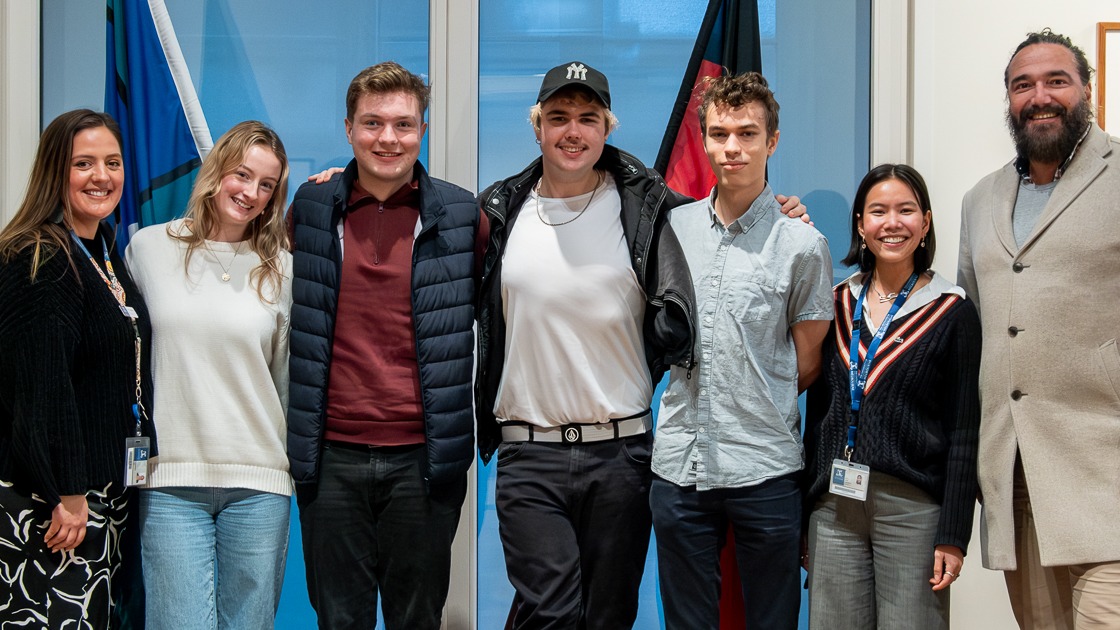
Left to right: Ellen Tunumafono (Senior Coordinator, Outreach and Indigenous Engagement, Faculty of Science), Abbey Walker, Lochlan Rowe, Hamish Rose, Brayden de Jonge, Jenny Santaannop and Professor Michael Shawn-Fletcher.
The co-curricular (not-for-credit) ISSRI program ran through the University’s mid-year teaching break, concluding on 19 July. At the program’s final symposium, the students reported on their research findings and their general experience during the internship. Their comments included:
- The internship gave me an opportunity to learn more about the different research and career pathways in science along with other undergraduate opportunities and programs available.
- Seeing what research work is actually like has made me think about pursuing it. I didn’t know about all the different things you could do. It’s inspired me.
- Getting in-lab experience to learn new skills was the highlight of the internship.
- I’ve been wanting to do quantum mechanics since I was 12. I’ve always found theoretical science and the weirder side of physics fun and interesting and engaging.
- Being able to implement what I learned in year 12 biology in real life was amazing.
- [Through the internship] I've been given an opportunity to come back to the lab during semester and be involved in their research projects.
- It was great to spend time in the lab with other students and researchers.
- It’s nice to have those people I can connect to if I need advice.
- I would say to other Indigenous students, take advantage of the programs offered; there’s so much more opportunity than I thought.
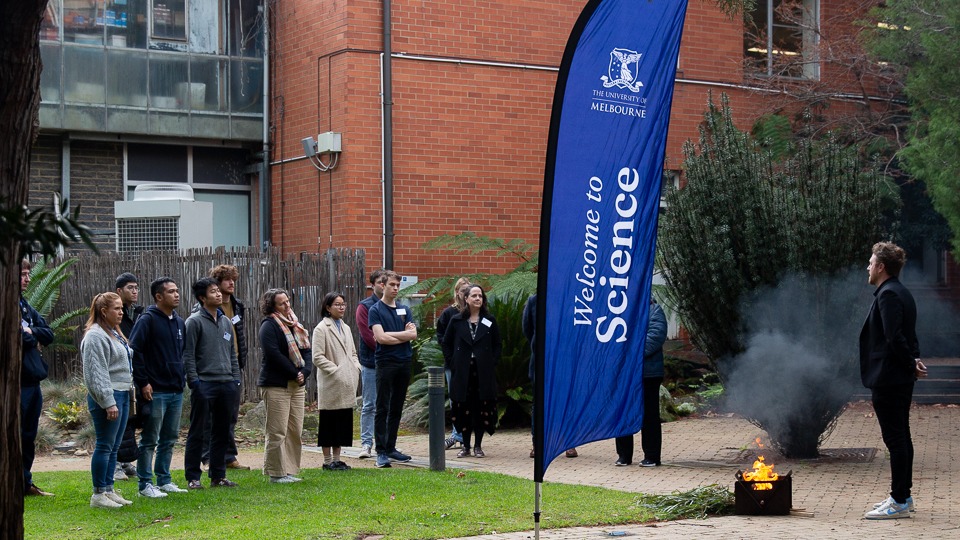
At the ISSRI program launch event, Wurundjeri Traditional Owner Colin Hunter IV provided a Welcome to Country and smoking ceremony (pictured below), and the interns were welcomed to the Faculty of Science by the Associate Dean of Research, Professor Andy Martin.
The Bachelor of Science (Extended) is a degree for talented Aboriginal and Torres Strait Islander Australians who may not meet the regular Bachelor of Science entry requirements. Learn more.