Our living labs
The living laboratories at Burnley showcase green infrastructure research and include green roofs, a raingarden and a Woody Meadow. These are integrated into teaching and enhance campus sustainability by reducing stormwater runoff, providing habitat for biodiversity and creating cool, restorative and welcoming spaces. The living labs also promote uptake of new approaches to urban greening through engagement with industry and communities.
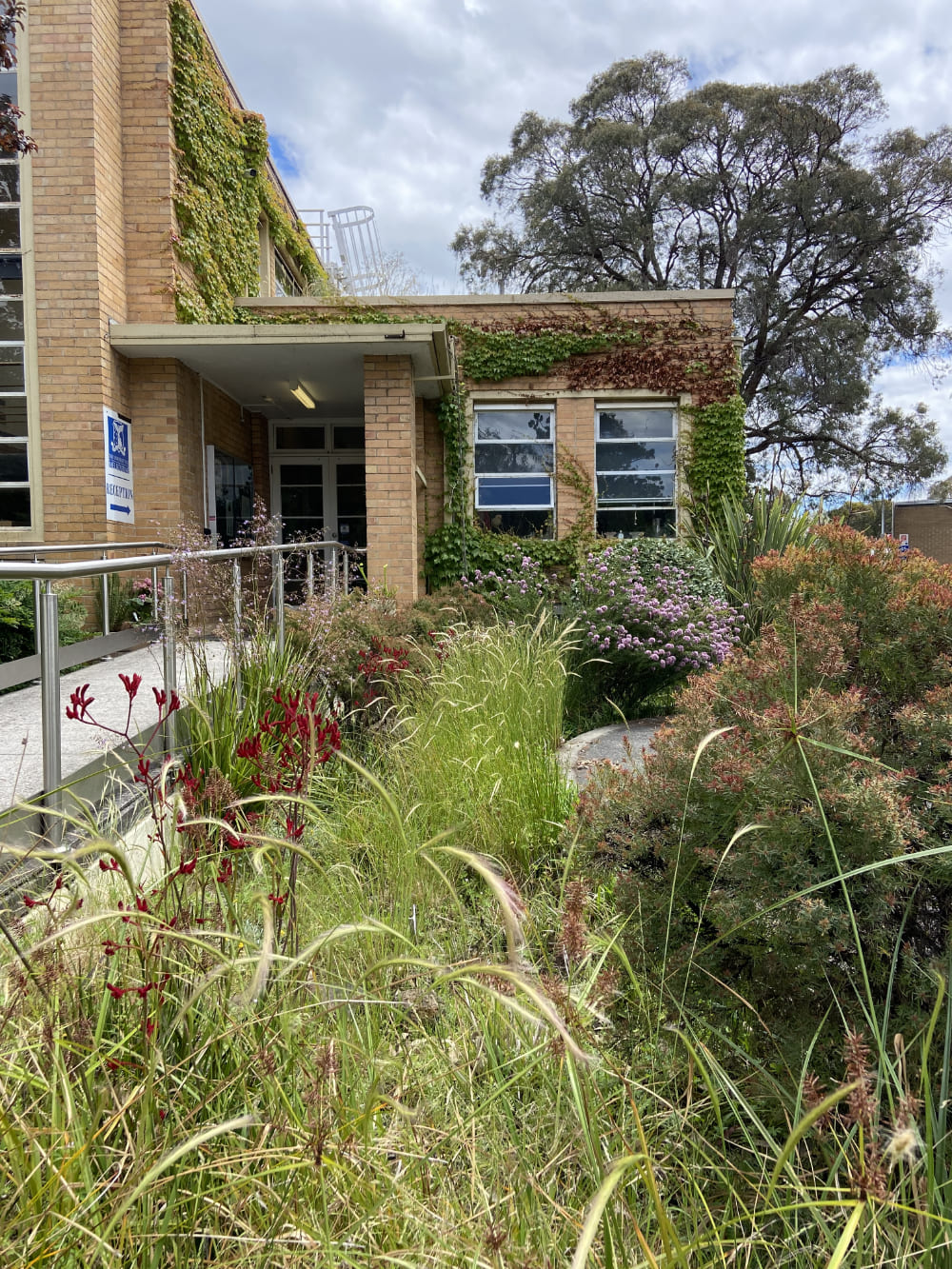
The Burnley Raingarden
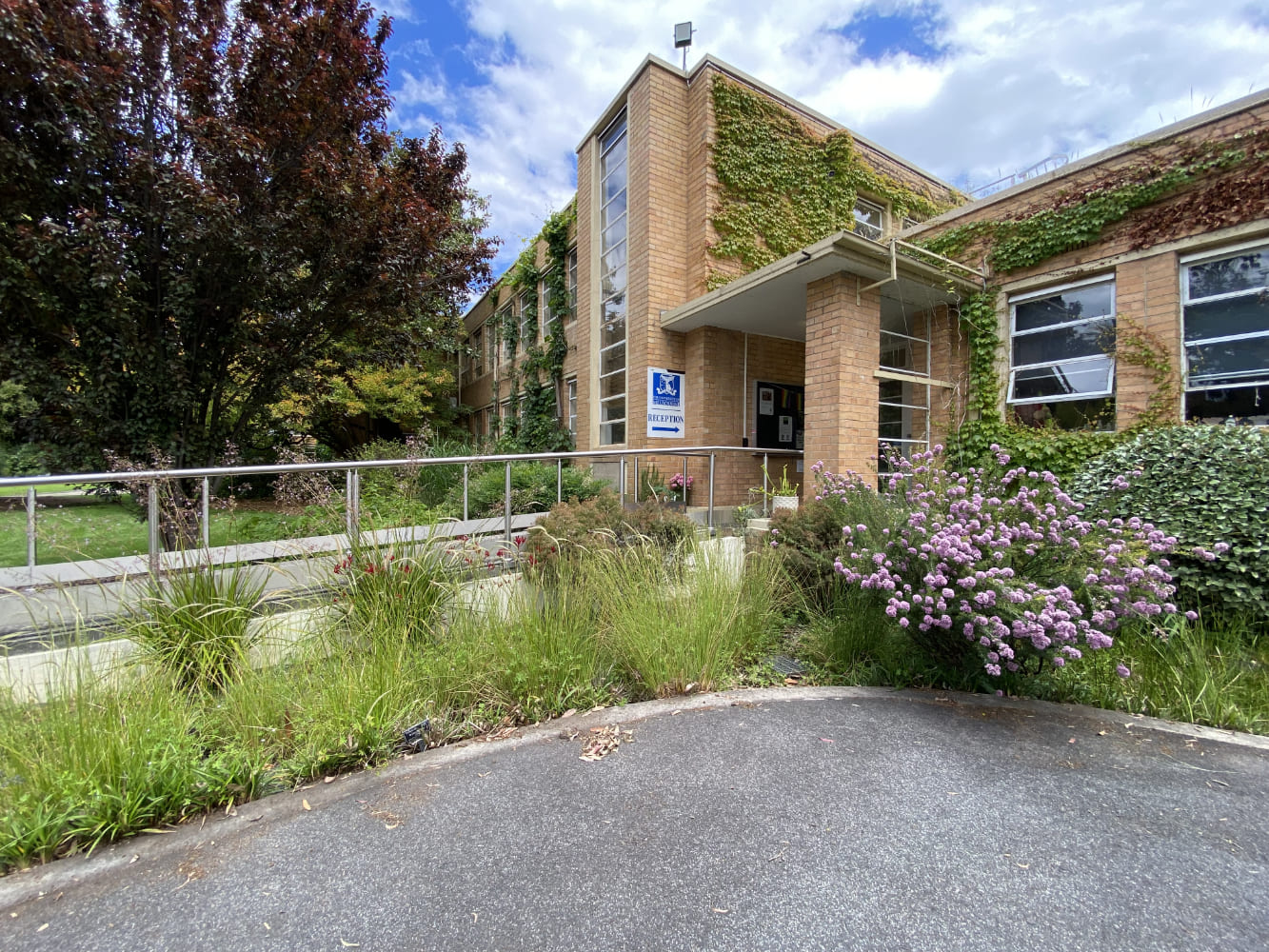
A biofiltration system at the entrance to the main building that collects and filters stormwater runoff. Learn more
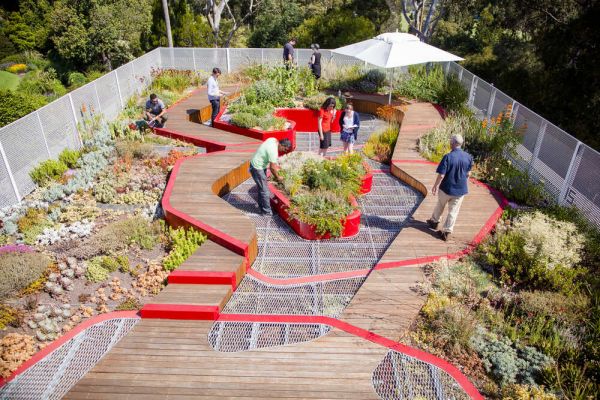
The Burnley Green Roofs
The Burnley Green Roofs showcase three different types of green roofs on the main building. Learn more
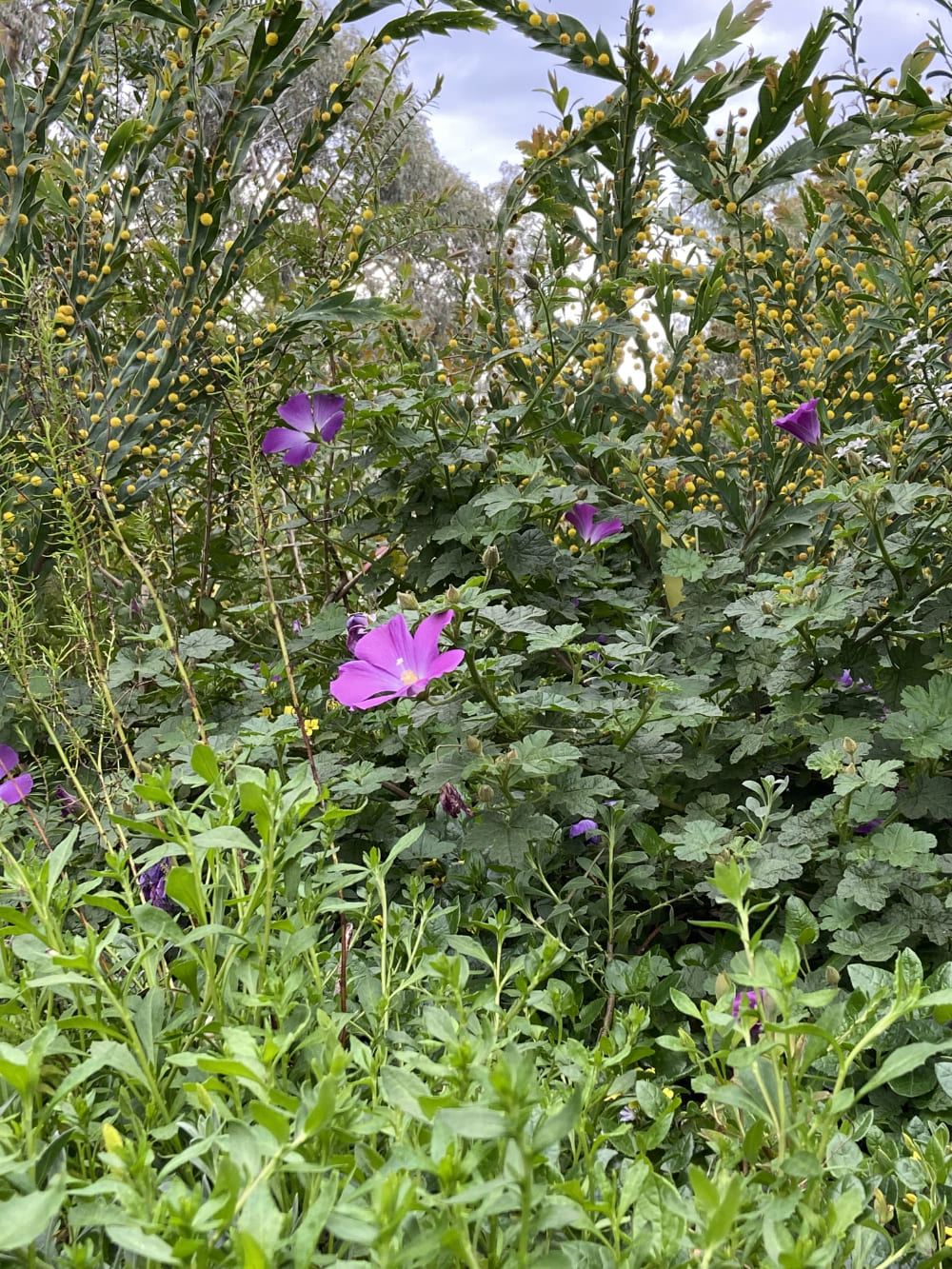
The Burnley Woody Meadow
Naturalistic, highly diverse plantings of Australian shrubs designed to improve the beauty, function and resilience of urban landscapes without needing high maintenance. Learn more
Burnley Raingarden
Raingardens or biofilters are engineered, vegetated systems that intercept, slow and retain rainfall to reduce stormwater runoff from impervious surfaces such as roads and paving entering waterways where it causes pollution and can lead to flooding.
The Burnley Raingarden was designed by the Waterway Ecosystem Research Group (WERG) and the Green Infrastructure Research Group (GIRG) to showcase Water Sensitive Urban Design (WSUD) in teaching.
Installed in 2014, the raingarden receives runoff from the road and roof (the Biodiversity Green Roof), reducing the amount of polluted stormwater flowing into the nearby Birrarung (Yarra River).
Runoff enters via inlet pits and ponds for a short time before soaking into the sub-soil. During large rainfall events, excess water drains out via an overflow pit to prevent flooding. As the raingarden is at the building entrance, it is also watered over summer to maintain its aesthetic appeal.
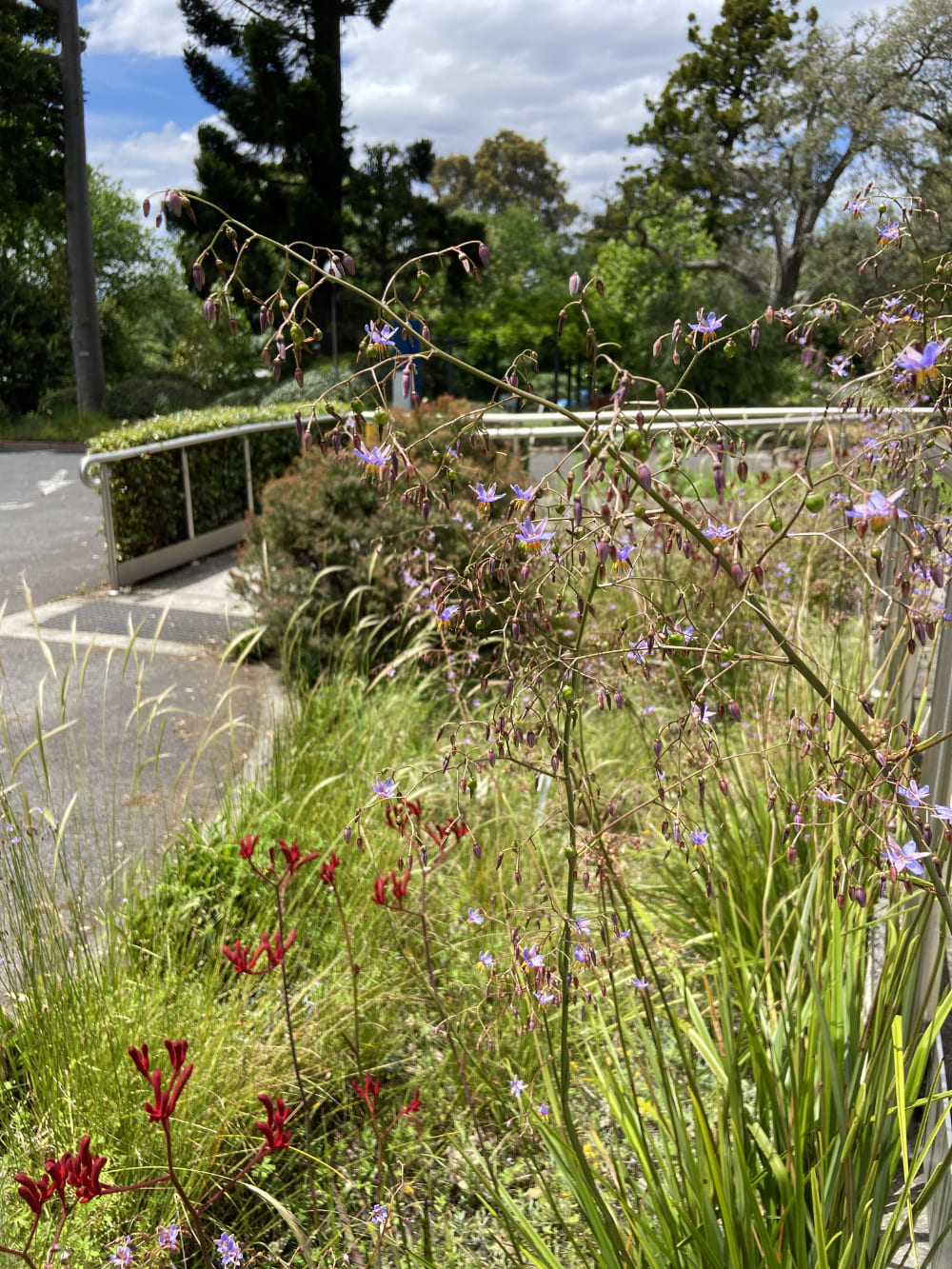
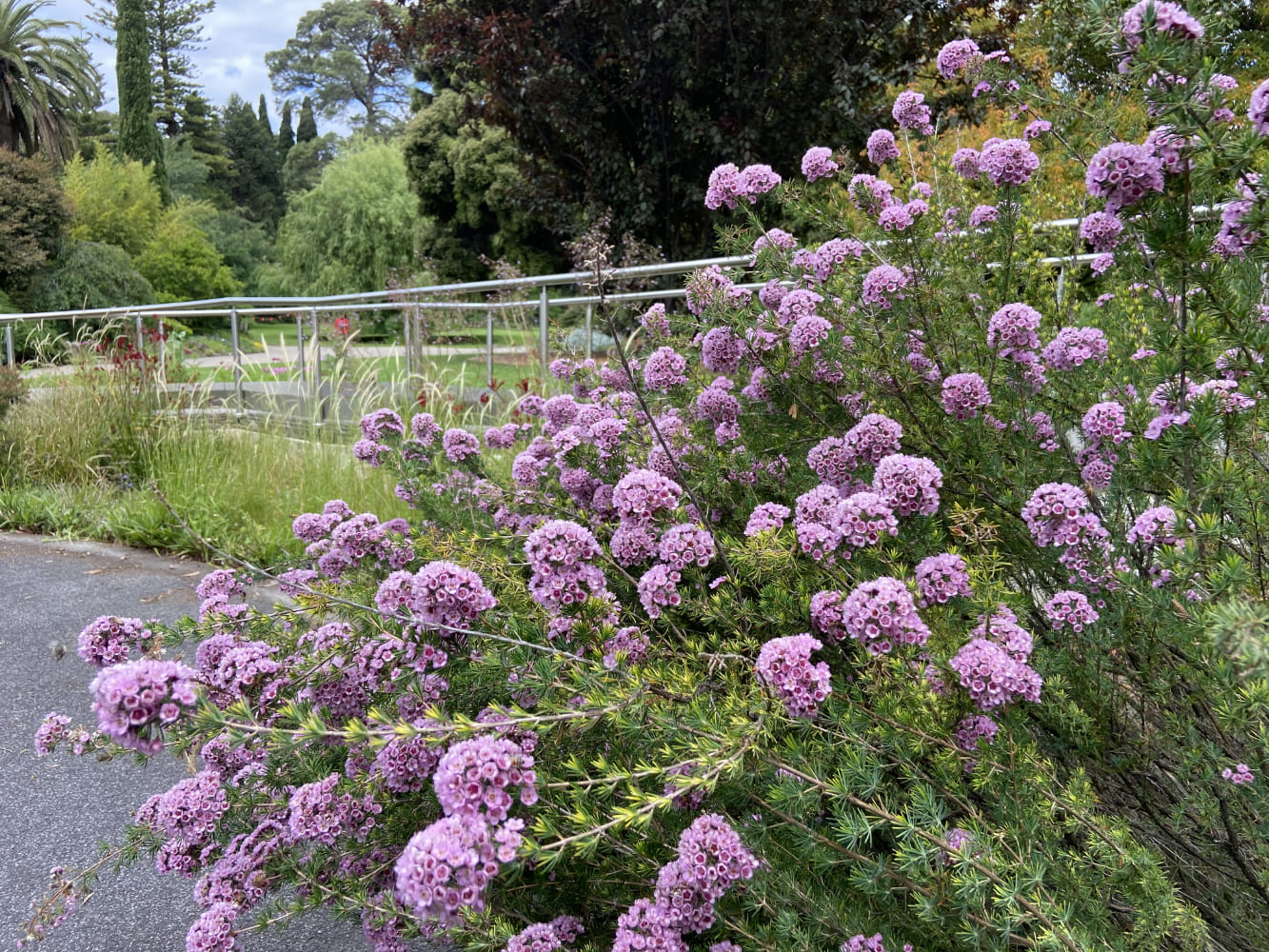
The raingarden is planted with species that can tolerate periodic inundation and drought, as well as species which can uptake pollutants to improve stormwater quality. Successful species include Plumed Featherflower (Verticordia plumosa), Kangaroo Paw (Anigozanthosa cv.), Melaleuca ‘Little Red’ (Melaleuca linariifolia cv.), Black Anther Flax Lily (Dianella revoluta), Knobby Club-rush (Ficinia nodosa), Native Iris (Patersonia occidentalis) and Bidgee widgee (Acaena novae-zelandiae).
Burnley Green Roofs
The Burnley Green Roofs (2012) are Australia’s first dedicated green roofs for demonstration, training and research. The three green roofs (with a combined area of almost 300 m2) span the rooftop of Burnley’s heritage-listed main building and showcase over 15 years of green roof research at Burnley.
This research has created industry ready green roofs with proven plant species and substrates and quantified their benefits including stormwater control, building thermal insulation (lower energy for heating/cooling), urban biodiversity and visual amenity.
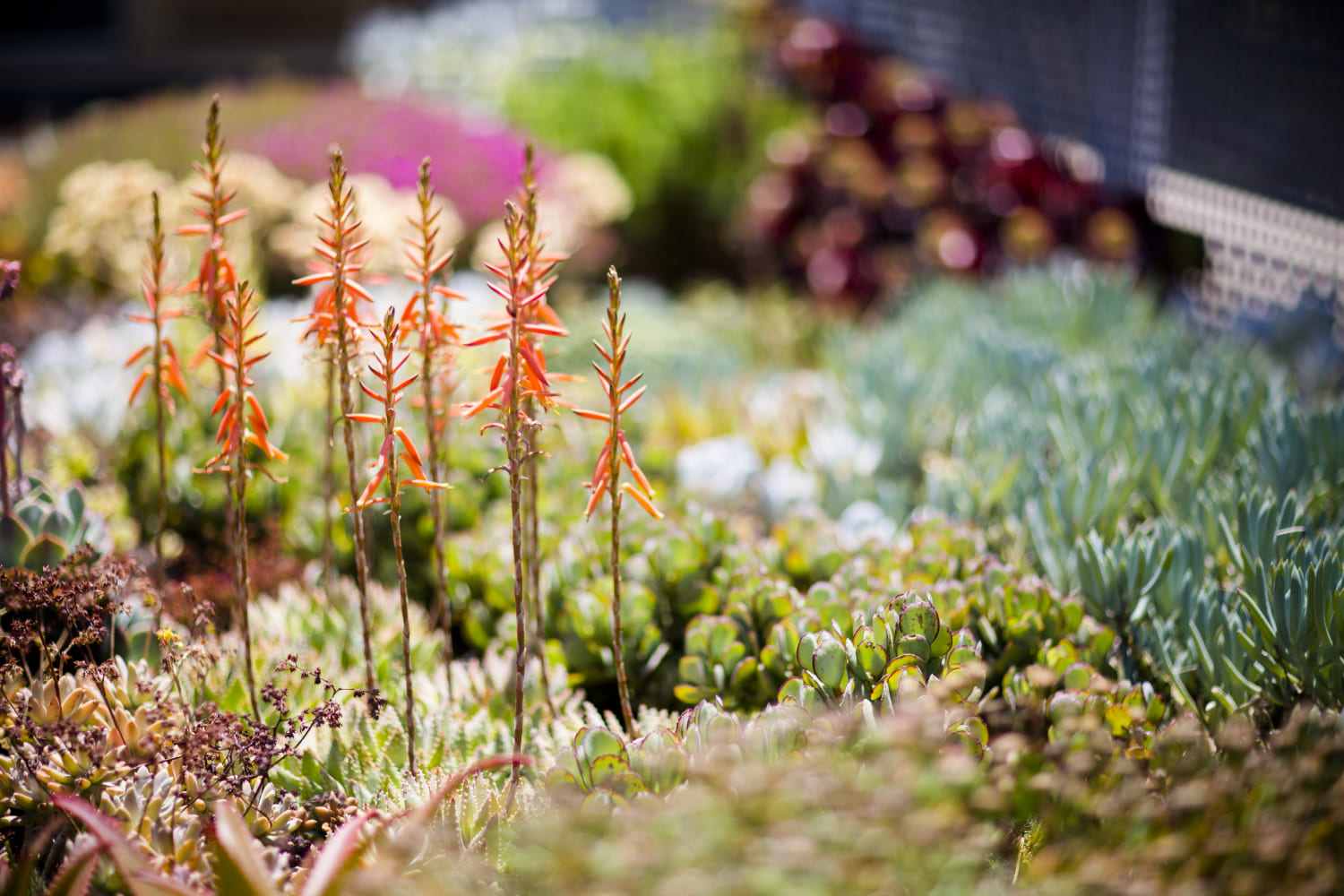
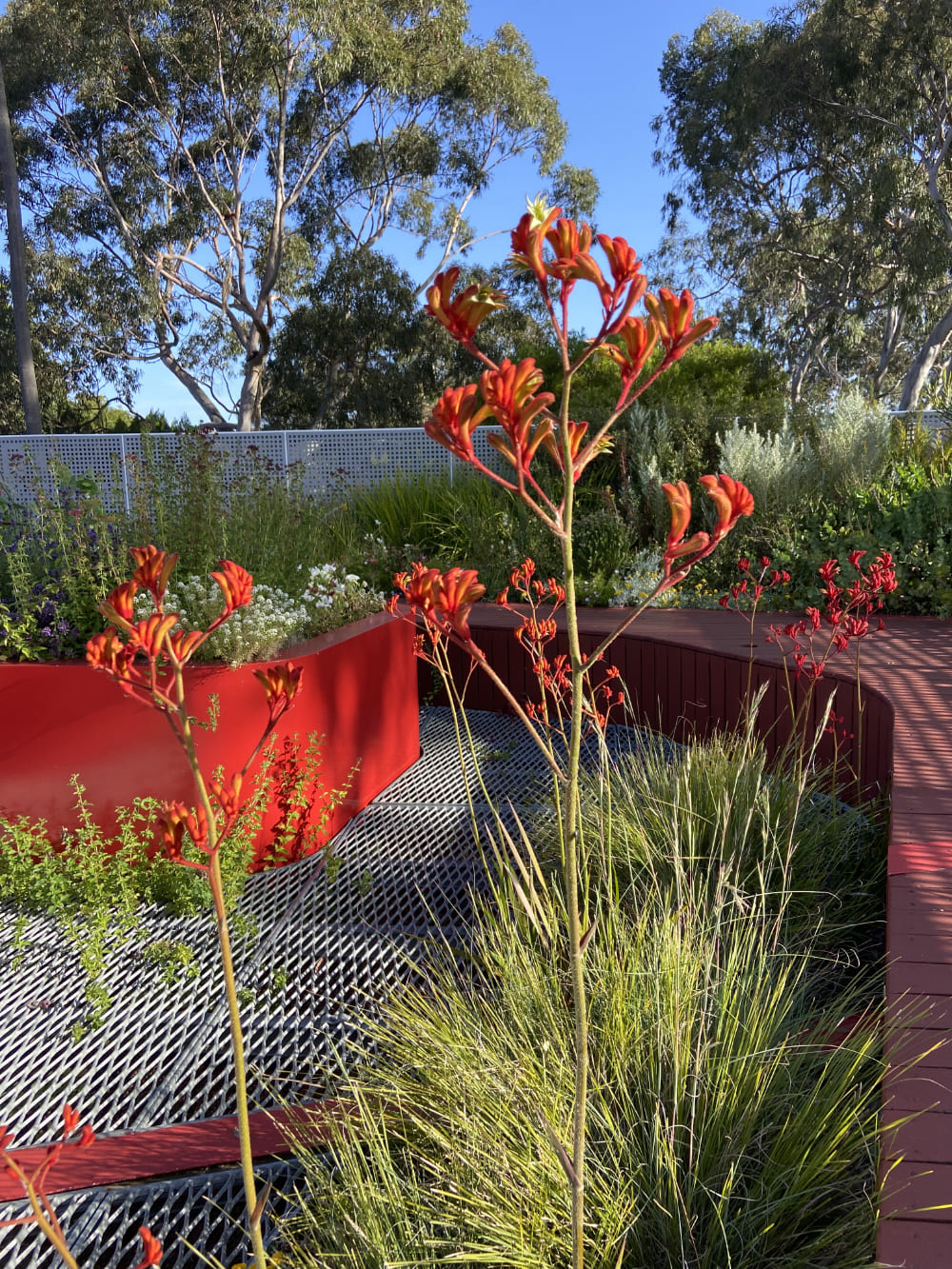
The Demonstration Green Roof (166 m2)
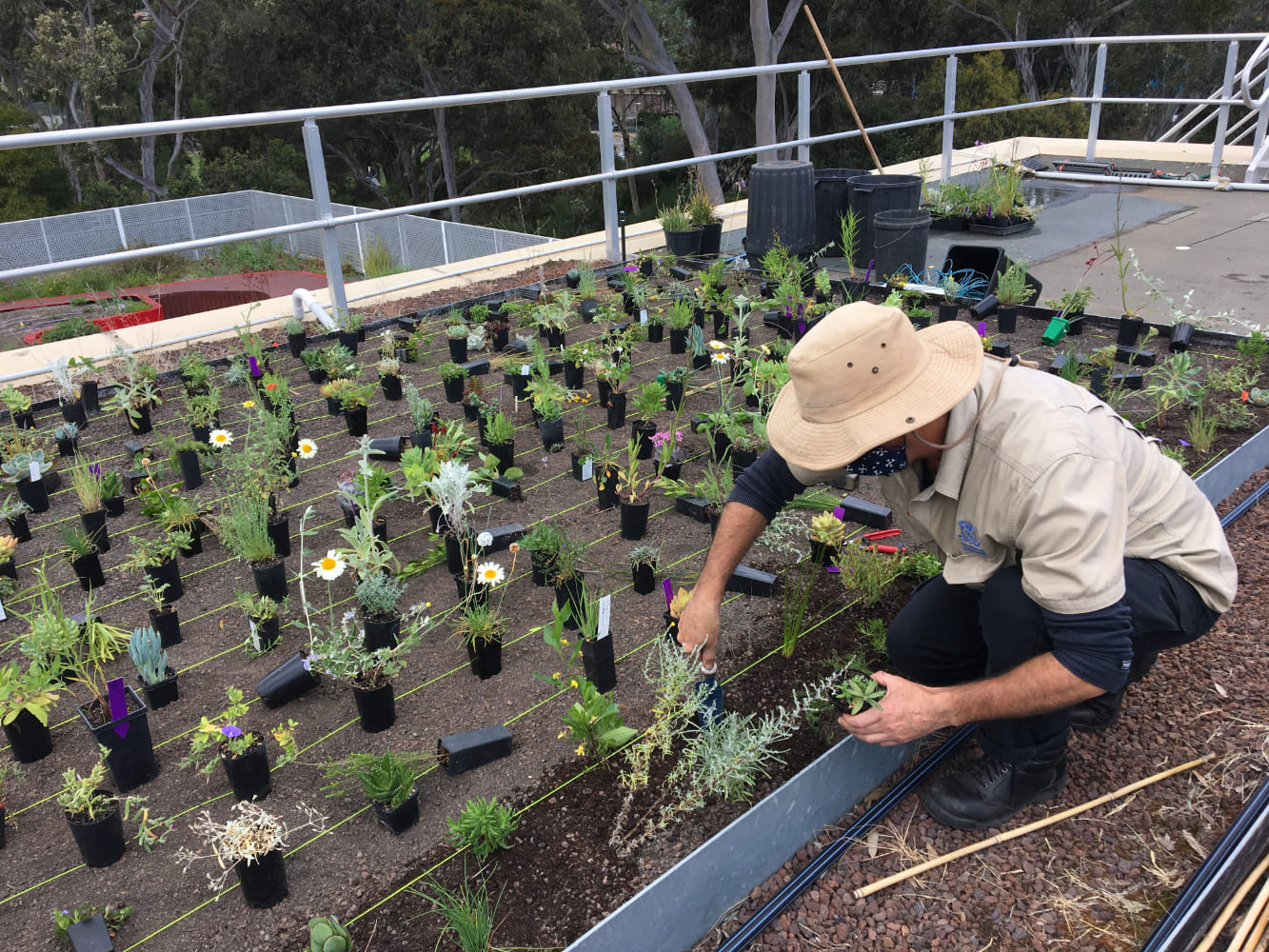
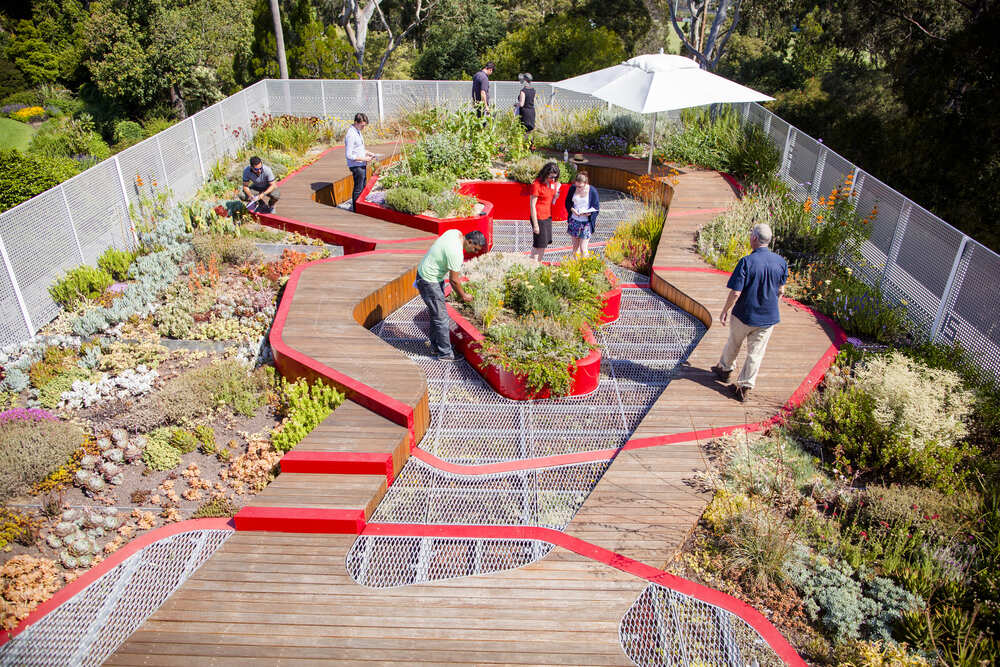
A social breakout space that showcases plants growing in different depths and types of substrates and irrigation (half of the roof is irrigated and the other half is rainfed only). There are over 200 plant species and 3000 individual plants on this green roof and testing of plant survival and growth has been instrumental in identifying suitable plants for Australian green roofs.
The Burnley Research Roof (80 m2)
Divided into four quarters with one quarter left as a normal bitumen green roof and the other three with 10, 15 or 20 cm deep substrates, this green roof is used for experiments to test plant tolerance to heat and water availability, and green roof function (rainwater capture, thermal regulation, biodiversity). Research outcomes contribute to our understanding of plant traits and tolerances, and green roof design for Australian conditions. Our current research project on this green roof is testing plants for Laak Boorndap, the 18 000m2 garden which will transform Melbourne Arts Precinct

The Biodiversity Green Roof (49 m2)
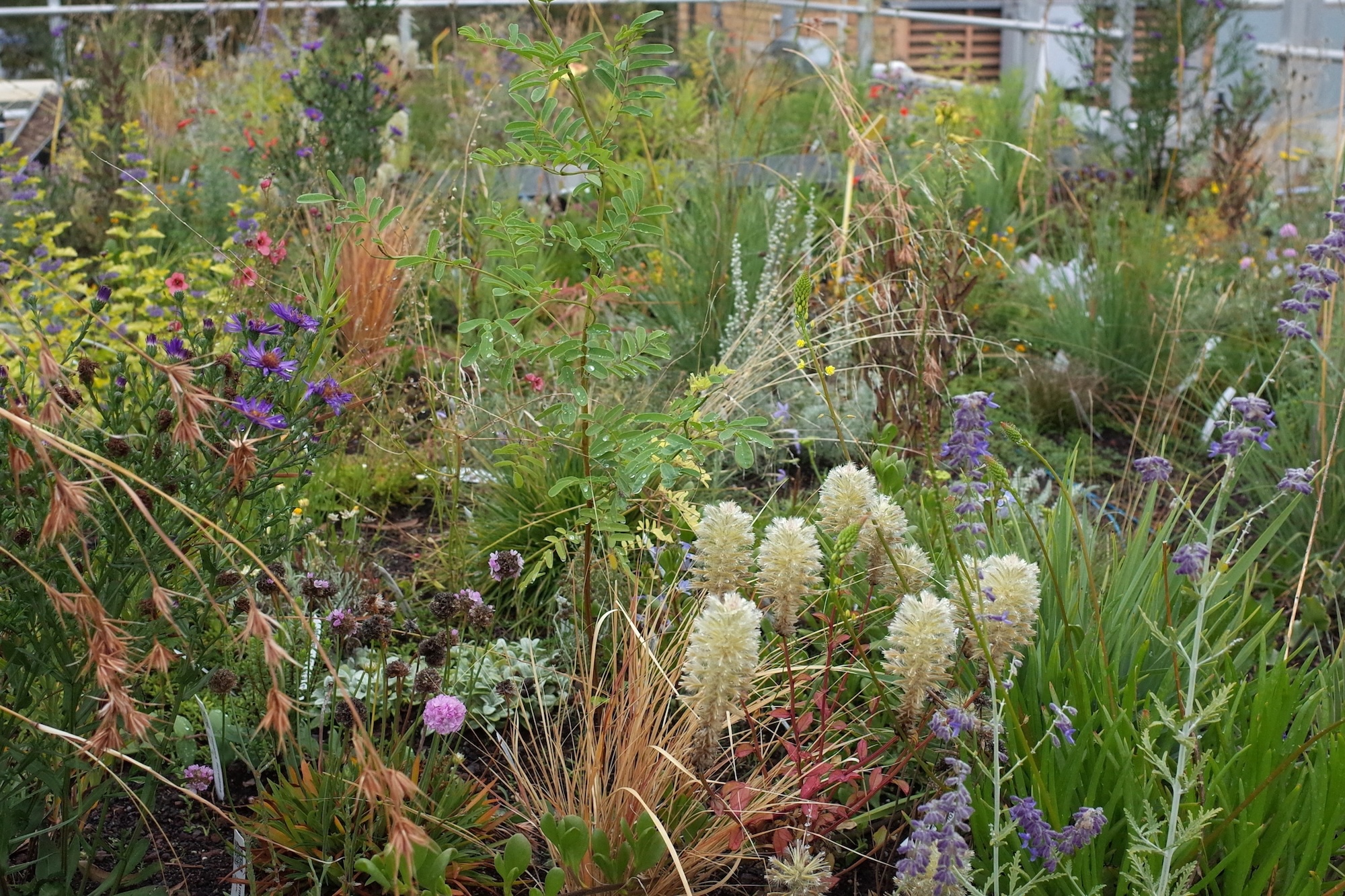
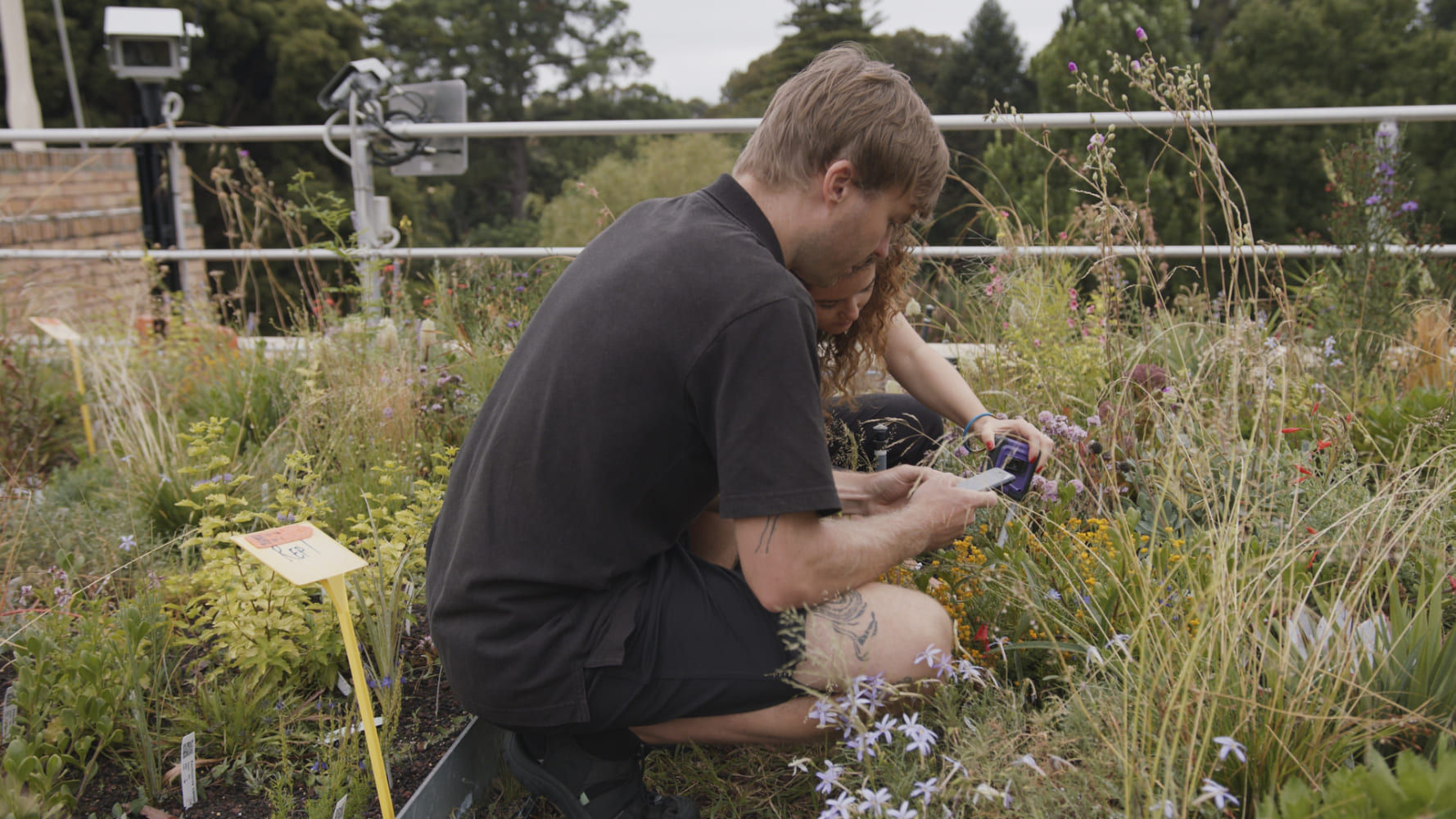
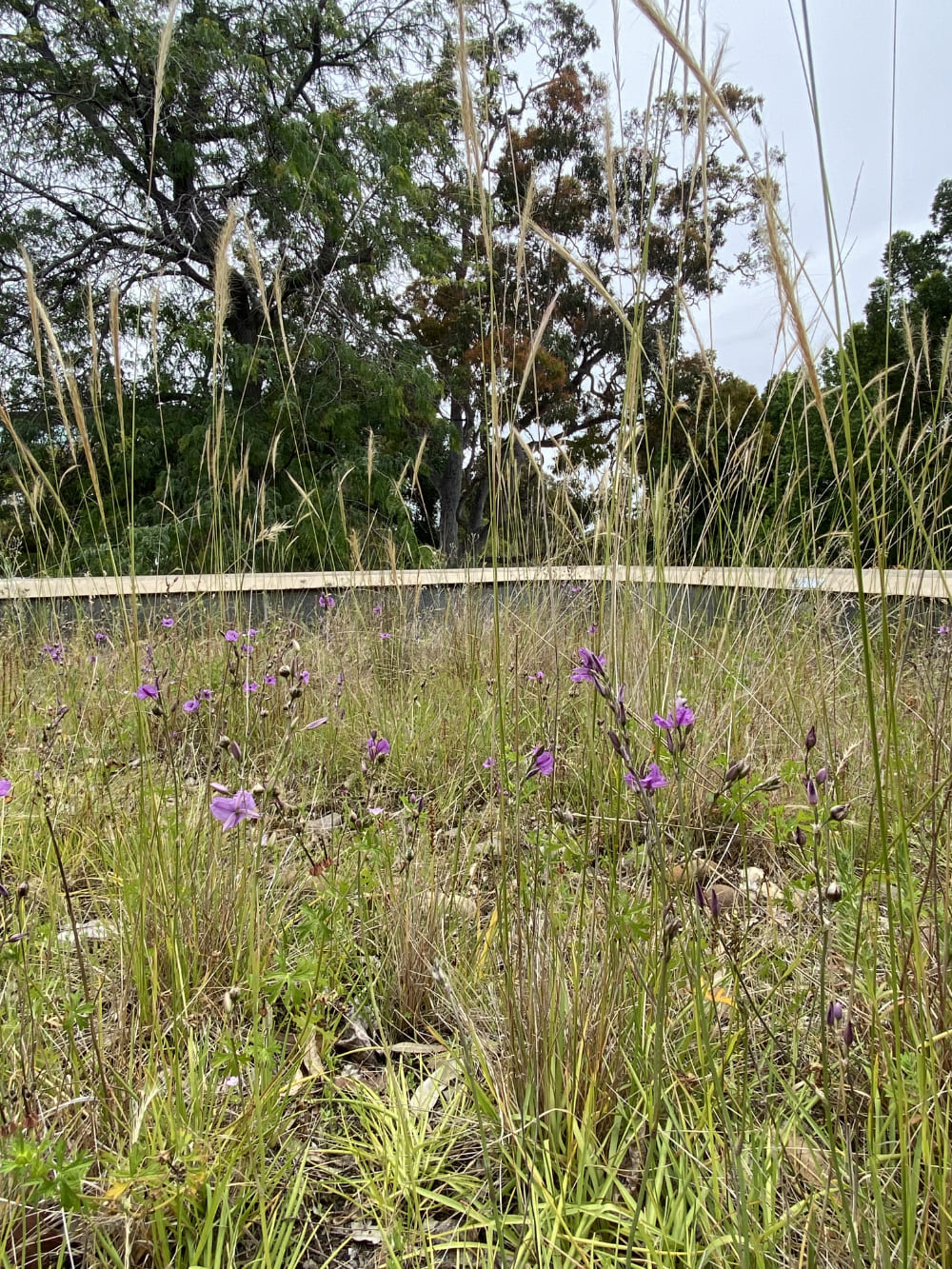
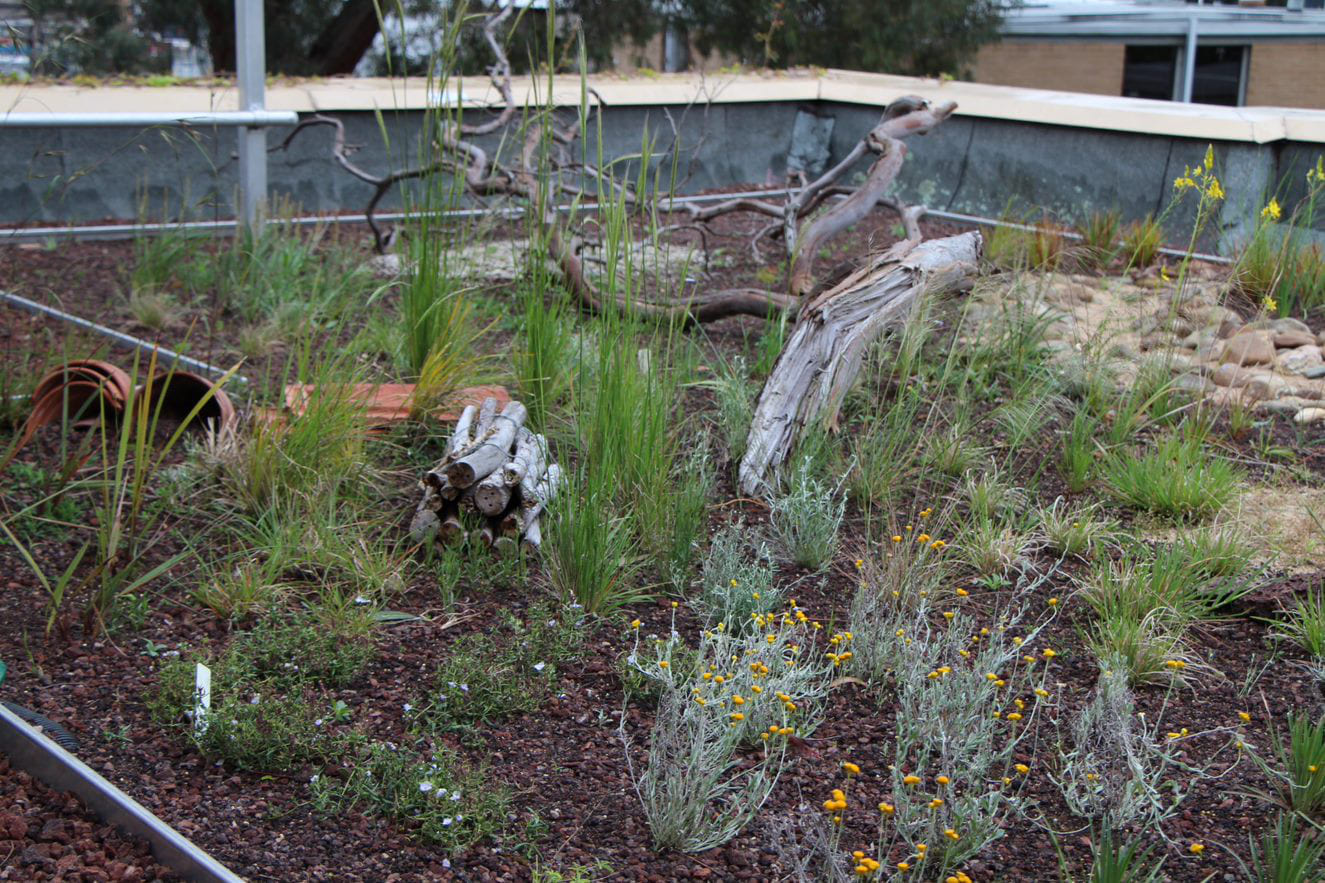
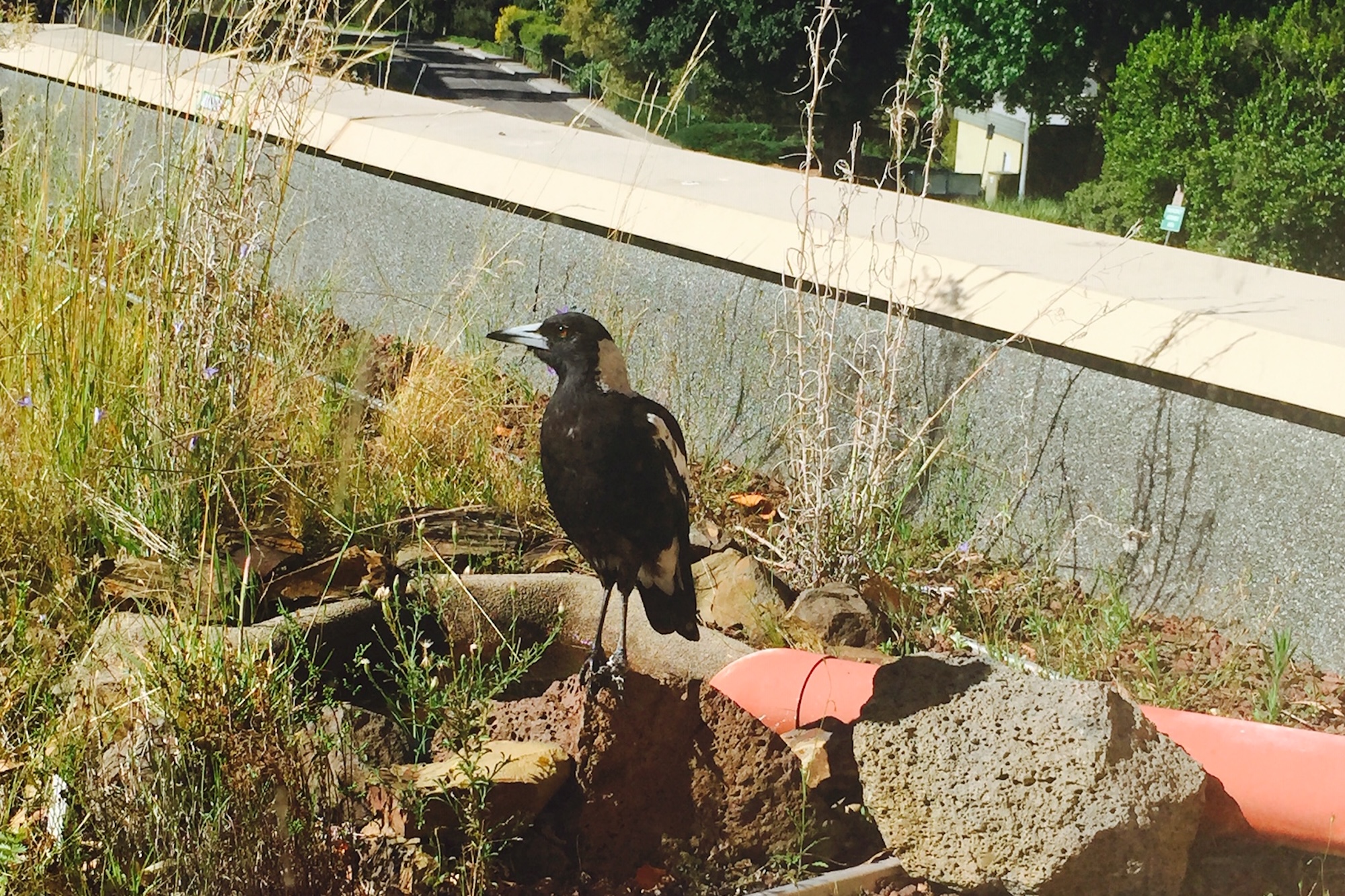
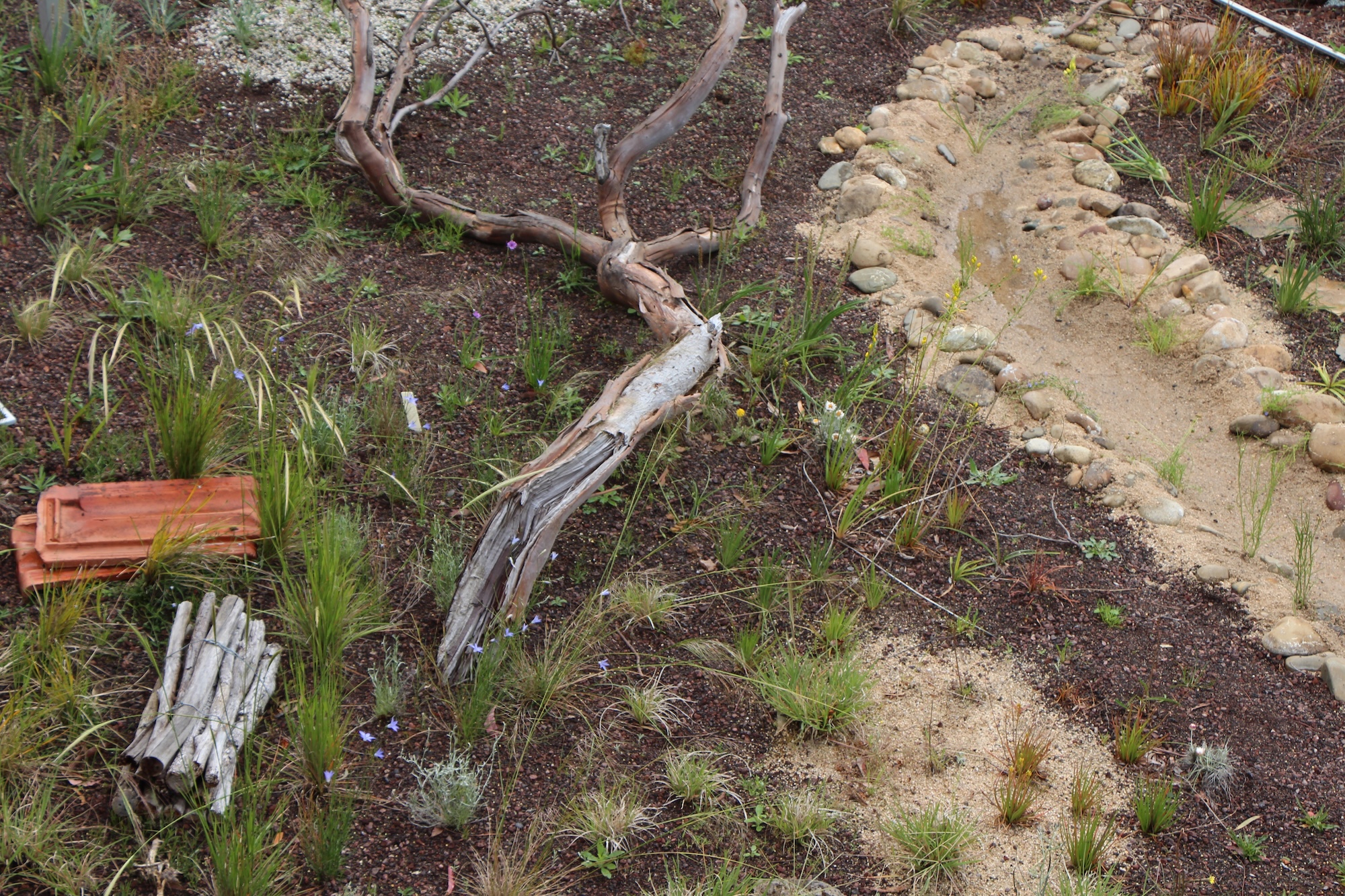
Planted with indigenous plants from Victoria’s endangered grassland communities, this green roof has additional features such as logs, rocks and ephemeral water bodies designed to attract and provide habitat for insects and birds.
Burnley Woody Meadow
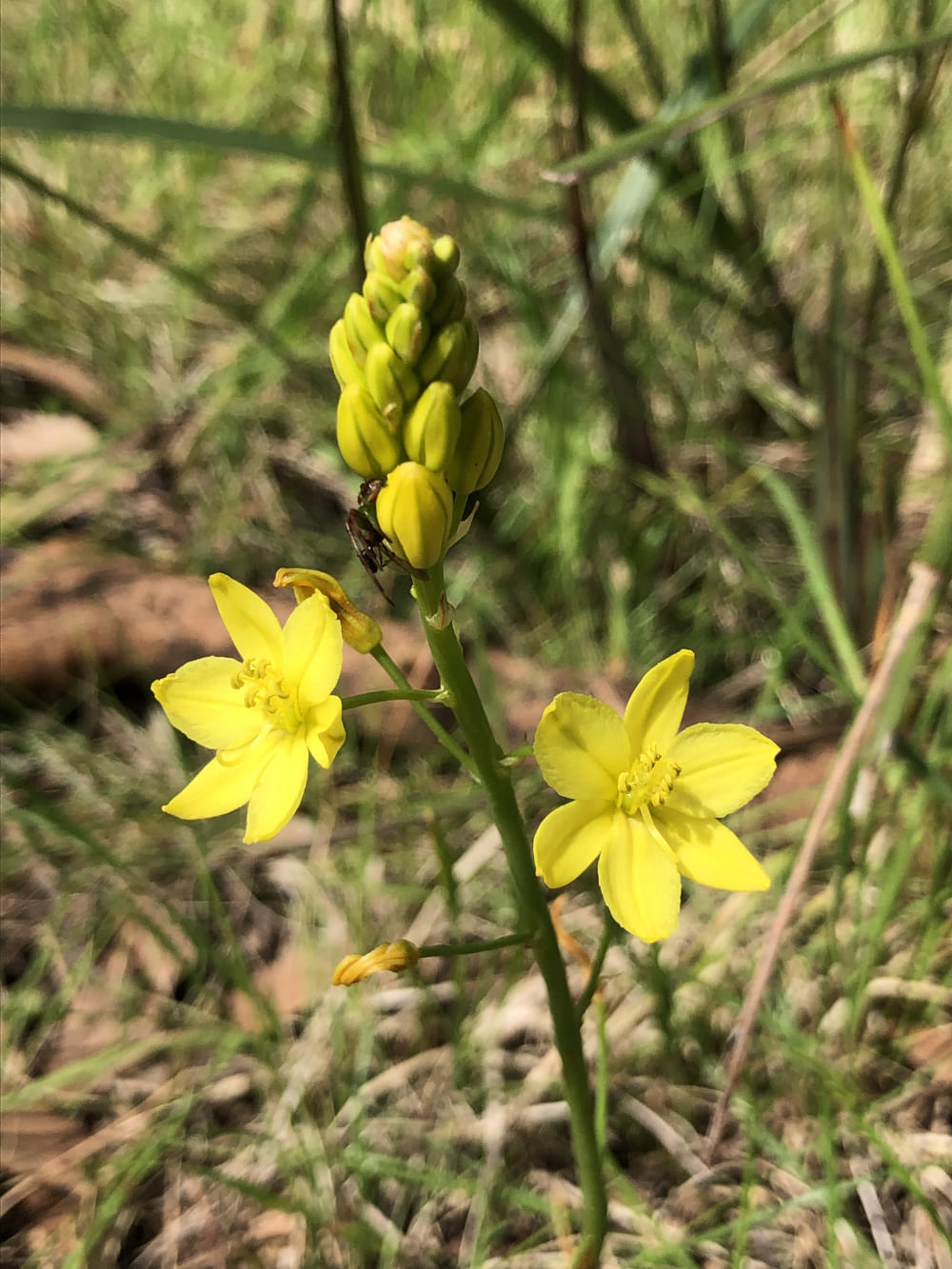
Woody Meadows are naturalist plantings of Australian shrubs designed to replace low-amenity, low diversity city landscapes. They are an innovative planting approach developed by Burnley researchers, drawing on the structure of native shrublands and resprouting response of Australian plants.
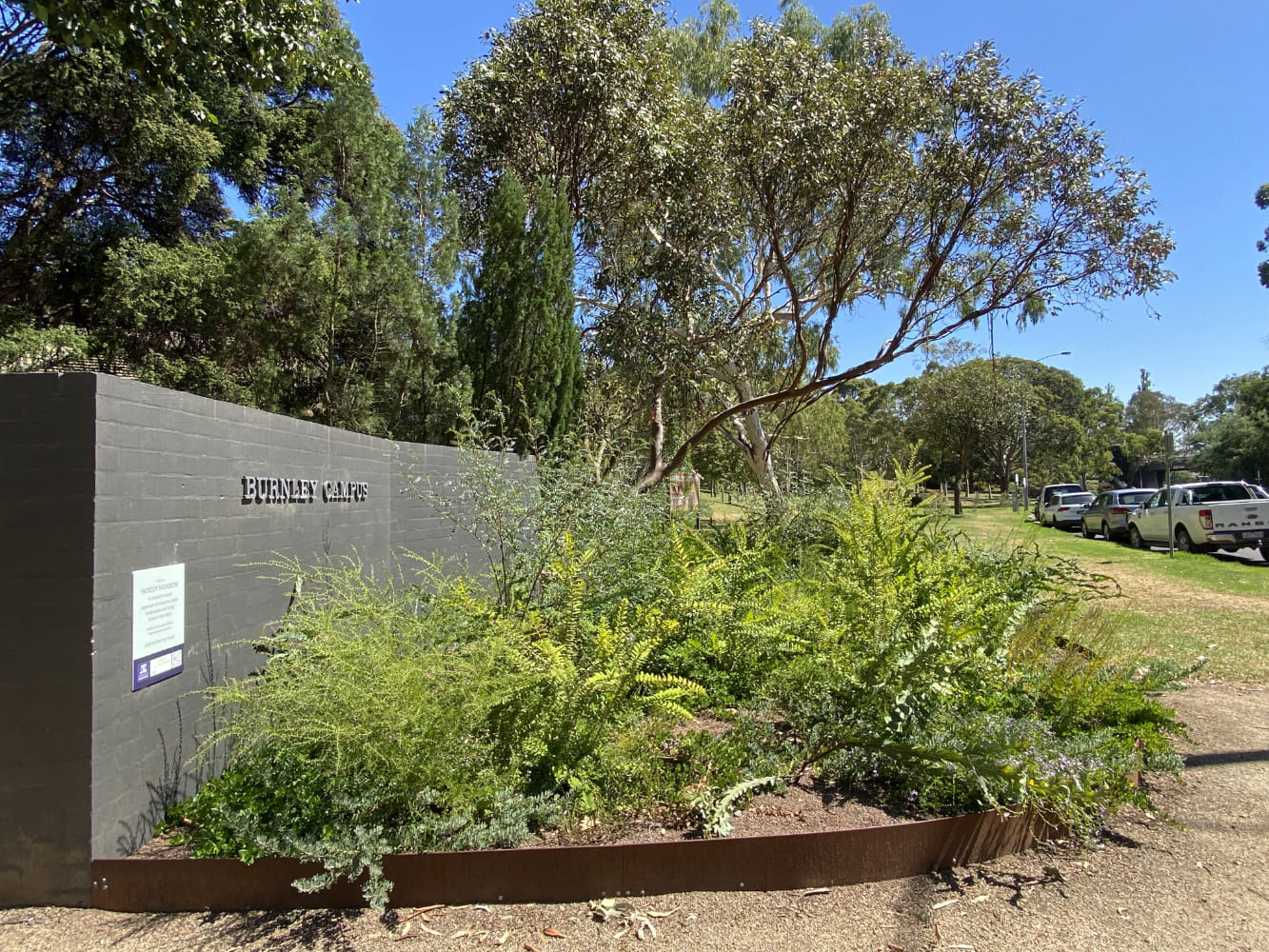
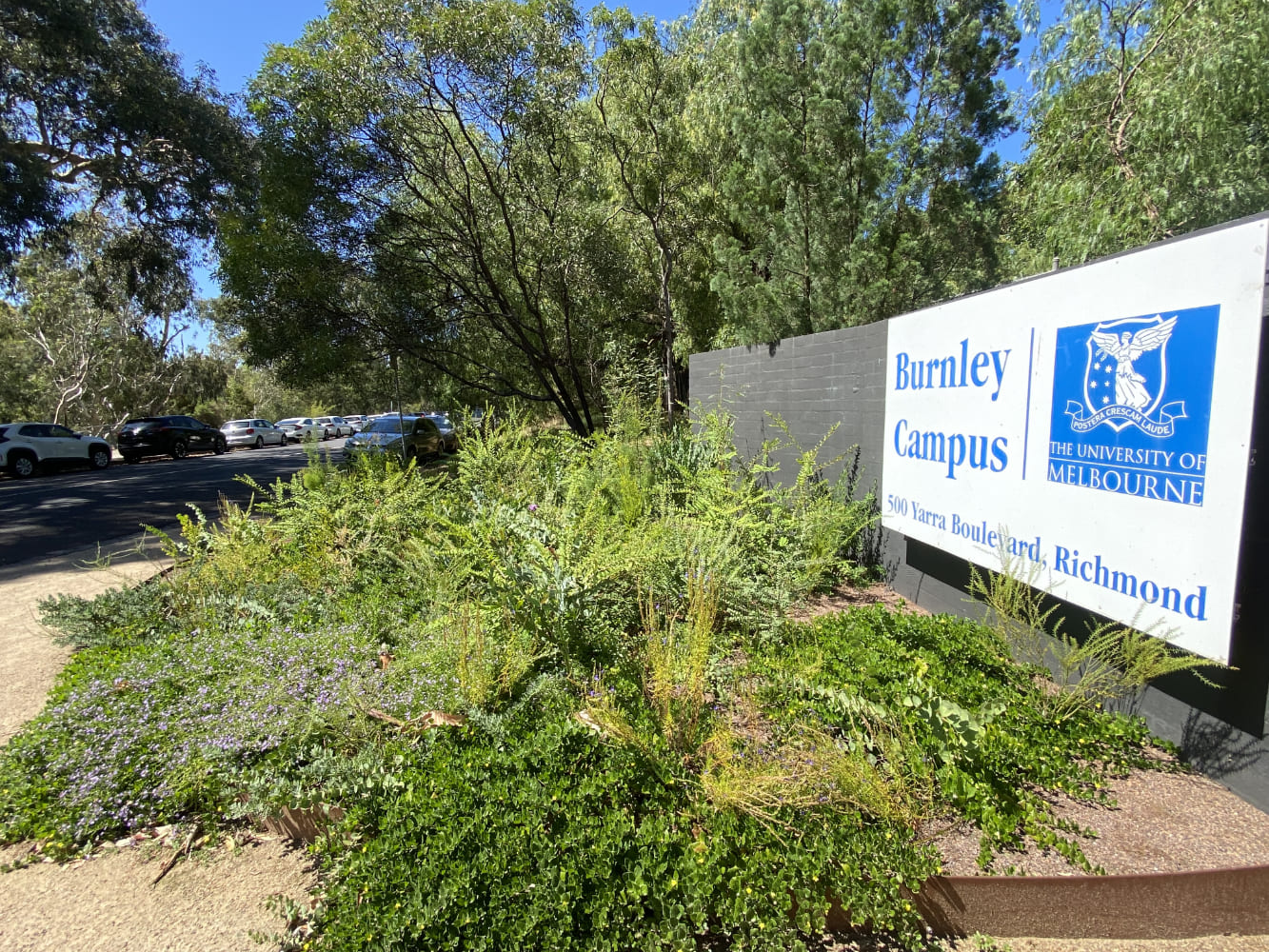
The Burnley Woody Meadow (installed Nov 2023) creates visual interest at the campus entrance showcases Woody Meadows and the use of mineral substrates, plant density and diversity and their maintenance.
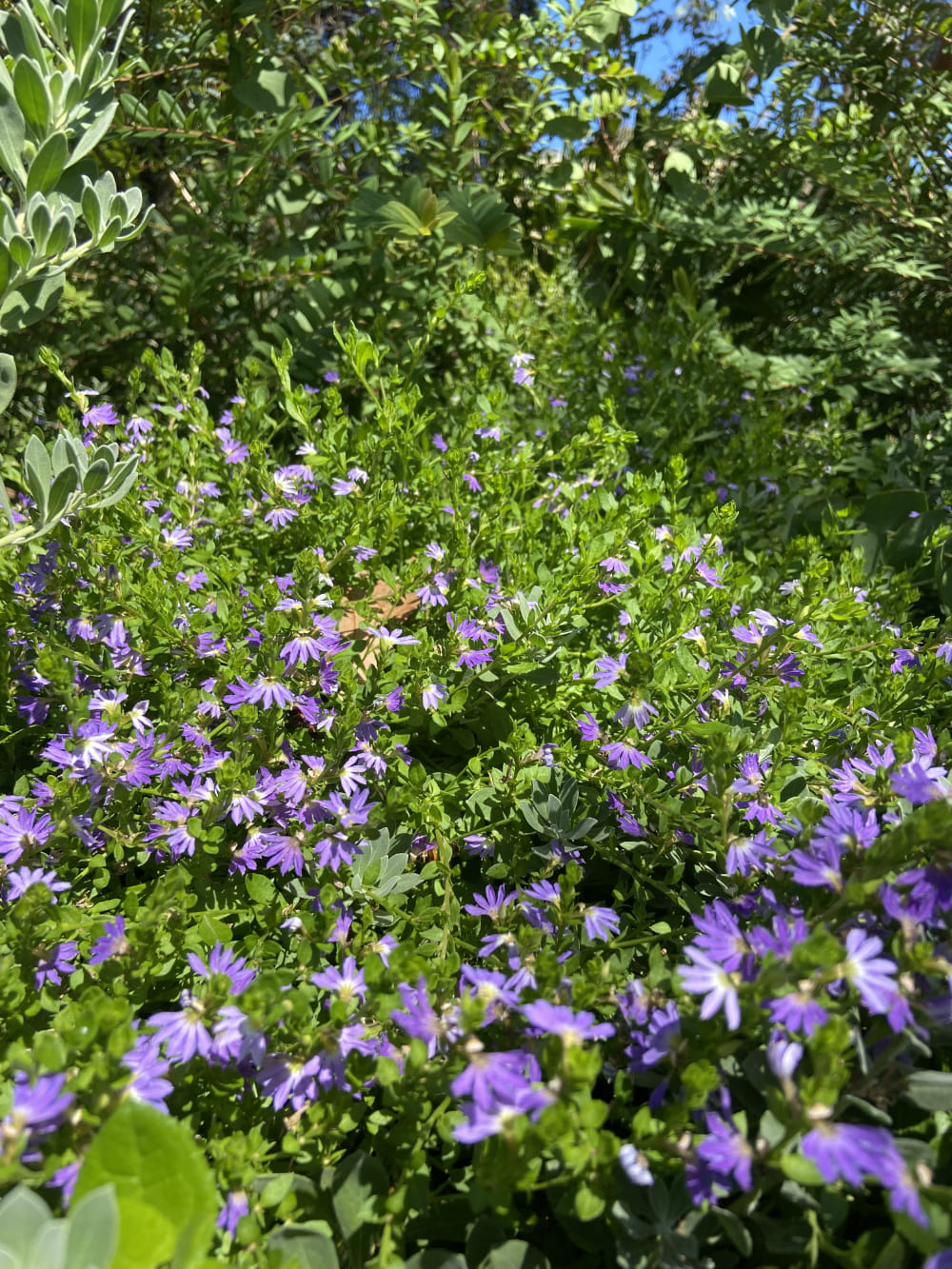
The Woody Meadow includes 21 plant species and is a layered planting with most plants growing to around 500 mm or less (base layer) and scattered species in the upper layer to 1-1.5 m high. Species include Scaevola albida (Pale Fan Flower), Goodenia ovata (Hop Goodenia, prostrate), Indigofera indica (Australian indigo) and Acacia glaucoptera (Clay Wattle)