
Walk the arboretum, meander through the grounds, study the buildings, identify significant trees and appreciate their grandeur on the Creswick Campus.
The Creswick campus has a significant collection of trees planted and nurtured as an arboretum over its 100-year history. The concept of an arboretum walk to showcase and share this history has been a goal for many years and is being realised by a generous donation from the family of eminent forester, the late Alf Leslie, supporting the ongoing development of the arboretum walk as a legacy to Alf. The recent drought took its toll, and measures were taken to manage and retain the most valuable trees around the campus.
The University’s ground managers are working to preserve and develop the grounds. The arboretum walk will continue to be developed over several years, replacing and expanding the collection to improve the overall landscape, adding to the heritage value of the site.

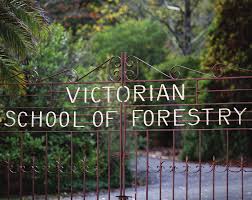
The tour commences and finishes at the main gates on the corner of Water Street and Moore Street.
-
-
1. Main gates
Erected in 1952 to acknowledge the contribution of Sir Alexander Peacock (who was from the Creswick area). -
2. Quercus acutissima (sawtooth oak)
Native to China, this uncommonly planted tree was one of the earliest plantings in the grounds. It is an attractive urban amenity tree with the ability to tolerate adverse conditions such as drought and poor soils. -
-
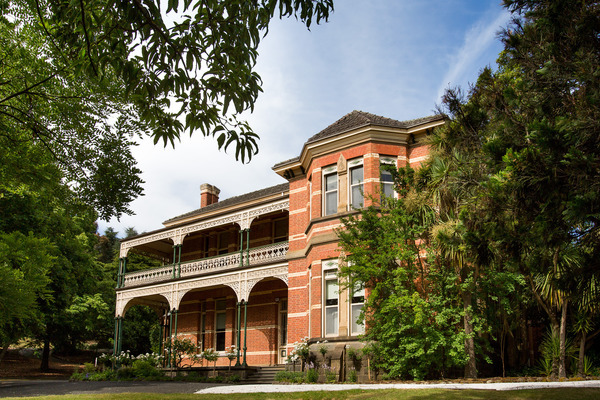
3. Tremearne House
Originally called ‘Pednolva’, the house was built in the early 1880s by Dr John Tremearne (medical officer for the hospital from 1872 to 1888). The state government acquired the House in 1909, converting it into classrooms, a library and museum for the new Forestry School. -
-
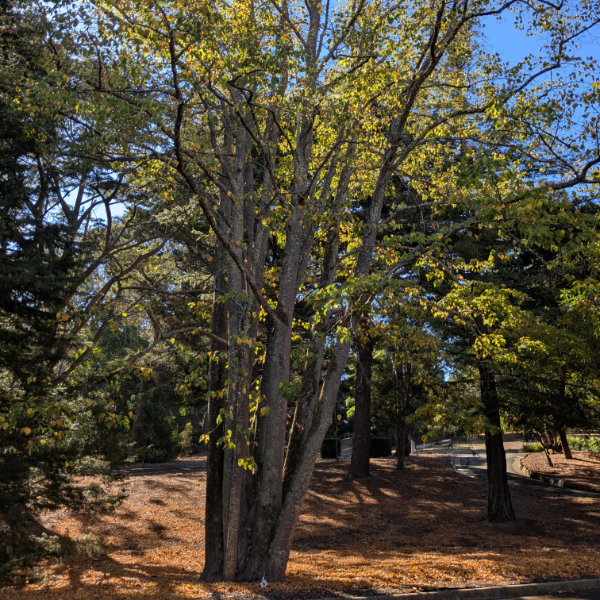
4. Tilea europea (European linden)
Planted in the early 1900s, it is one of the oldest and most impressive plants on the grounds. John Tremearne acquired seedlings from the state nursery in Sawpit Gully and, with hospital staff, planted the seedling. -
5. Cedrus libani (Lebanon cedar)
Native to the mountains of the Mediterranean region, this species is known for its high-quality timber, oils and resins. -
6. Ulmus minor ‘subsp.sarniensis’ (Jersey elm)
This is one of only a few specimens of this species in the state. -
-
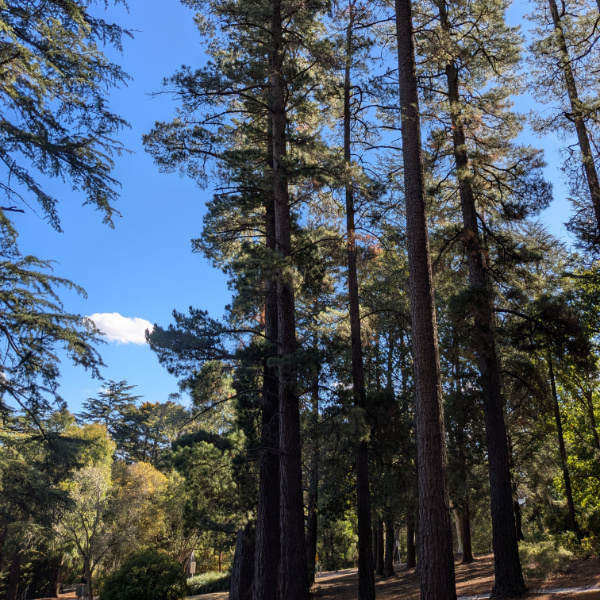
7. Pinus radiata (Monterey pine)
The Pinus radiata in the pine triangle are at least 85 years old. Native to small areas on the central coast of California and Mexico, these conifers proved to perform well under Victorian conditions because they were fast-growing, tolerant of the soil conditions and produced timber useful for construction, pulp for paper and for chipboard production. -
8. Eucalyptus leucoxylon (yellow gum)
Prince Charles planted this tree when he stayed on site in 1974. -
9. Juniperus communis (common juniper)
Native throughout the cool temperate Northern Hemisphere, the cones are berry-like and, when dried, can have culinary use. -
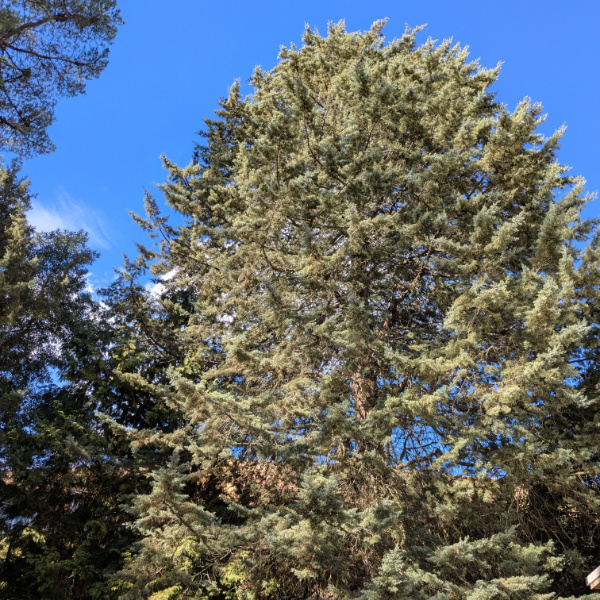
-
10. Cupressus arizonica (Arizona cypress)
The landscaping in this area was commenced by the Public Works Department, but completed by students. While the shrubs in this area have changed over time, this specimen has survived since 1969. -
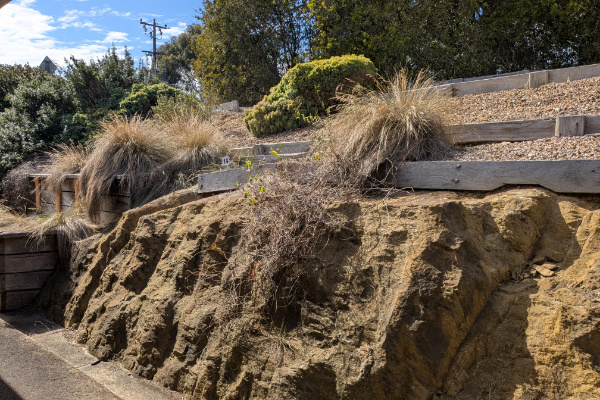
11. Basalt rocks
From Clunes, the basalt rocks were used on the steeper slopes. -
12. Stage 1 and stage 2 buildings
The hub of research on the campus, accommodating a range of laboratories and research staff and students. -
-
13. Stage 1 wall
The shale profile is an excellent example of the growing conditions in the area and the soil profile after the area was mined. -
-
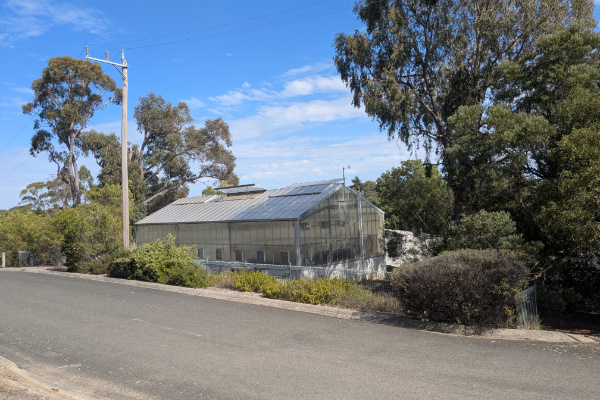
14. Glasshouse
Students use this specialised climate-controlled glasshouse to conduct research in many facets of plant growth and their tolerances. -
15. Eucalyptus aromaphloia (Creswick apple-box)
Endemic to Creswick, Victoria, these specimens are notable for being the basis on which the species was first described for botanical listing. -
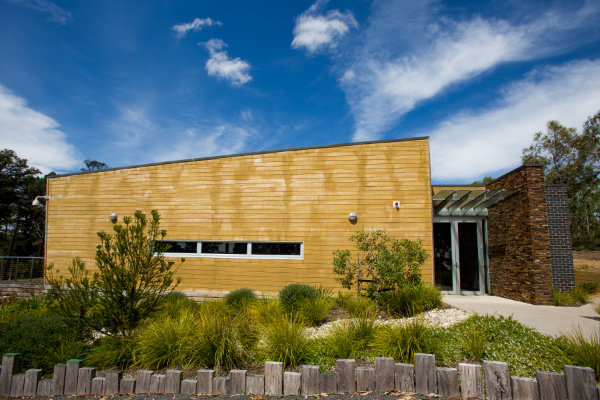
16. Eucalyptus camaldulensis (red gum)
Specimens south of the gym are used for research purposes and field trials for students, examining how red gums survive the local soil conditions. -
-
17. Gymnasium
East of the car park, opened in 2012, it is used by both the University community and the residents of Creswick. -
18. Junction
The road to the right leads to the La Gerche walk. -
19. Fox Canyon
Named after the large number of foxes that lived there. Facing north, in 1969 an arboretum was established for Forest Botany. It included a total of 53 species, representing 11 different genera, mainly conifers and Tasmanian eucalyptus trees.
-
20. Architecture site
Since 2008, this area has been used by students from the University’s Faculty of Architecture, Building and Planning, exploring the building of low-cost, sustainable community infrastructure for Indigenous communities in Western Australia, the Northern Territory and Papua New Guinea. -
21. Sequoia sempervirens (Californian coastal redwood)
Native to North America. A quick grower, it is classified as the world’s tallest conifer. -
22. Eucalyptus melliodora (yellow box)
This remnant group of yellow box trees is an important ecological record of localised native vegetation. -
23. The Lodge.
Opened in 1977 for student accommodation. -
-
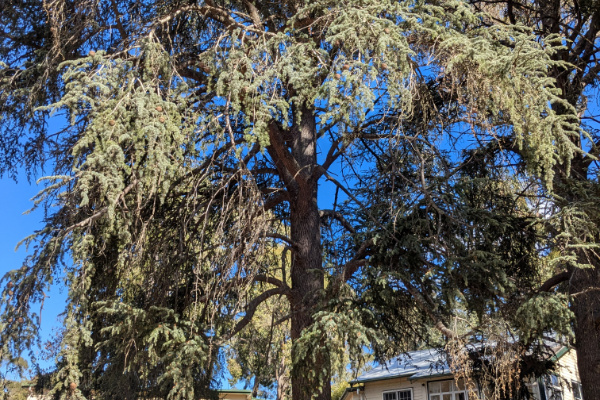
24. Cedrus atlantica (atlas cedar).
Great for timber production, it is also well suited to drought conditions. -
25. Semmens Hall.
Named after Edwin James Semmens, an accomplished field botanist, historian, active member of the community and principal of the School of Forestry 1927–1952. -
26. A.V. Galbraith House (AVG).
Named after the Chairman of the Forest Commission, the house was built in 1961 for student accommodation. -
-
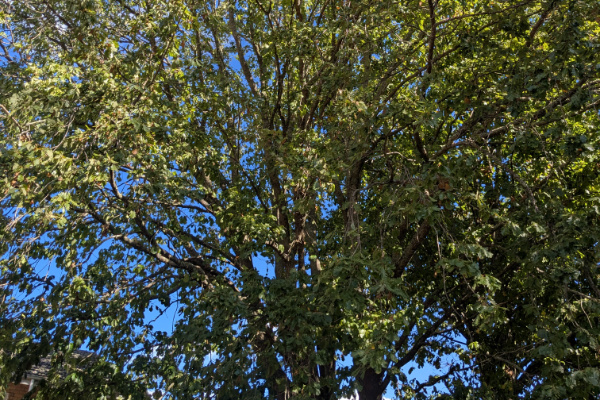
27. Quercus robur (English oak).
This area includes some of the earliest plantings in the grounds and was expanded in 1972 with plantings of an additional 12 species of Quercus. -
28. Sequoiadendron giganteum (giant redwood).
Native to California, the wood is fibrous and brittle, so not suitable for construction. The bark is soft, thick and reddish-brown in colour. -
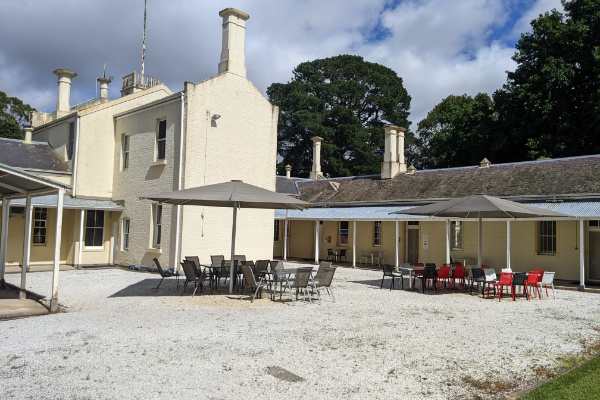
29. Post-graduate building.
Built in 1863, this building was originally used as the domestic staff quarters and later as the Victorian School of Forestry Principal’s residence. Prince Charles stayed in the building during his visit in 1974 -
-
30. Courtyard.
The campus library entry. You can also see the building’s tower and the dining area and kitchen that catered to the former hospital and now for groups staying on campus. -
-
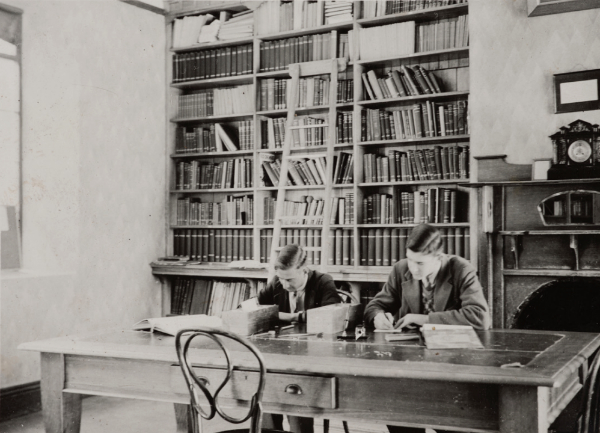
31. The Library.
Located in the main part of the old hospital building, the library houses significant forest-related collections and displays from the University’s Cultural Collections including the Wardle Wood Collection. -
32. Abies nordmanniana (Caucasian fir).
Native to the mountains west and east of the Black Sea. Given this species dislikes hot, dry summers, this is an excellent specimen. -
33. The Old Goldfields Hospital Building.
Constructed in 1863, this is the oldest building on campus. The blue stone used came from Clunes. In 1910, the Victorian State Forests Department purchased the building to house classrooms and laboratories. -
34. Chaemaecyparis lawsoniana (Lawson’s cypress).
Native to Oregon and California. -
35. Pinus brutia (lone pine).
The seedling of this pine was propagated from the original lone pine in Gallipoli. On 23 March 1975, Legacy unveiled a plaque to commemorate soldiers who fought at Gallipoli. In 1976, the top was broken off by vandals. Fortunately, it survived, however, you can see the scar tissue from that wound. -
36. Rockery.
The grounds layout was designed and landscaped in the early 1900s by Mr John Johnstone, the Superintendent of State Plantations. Admire the 100-year-old rockwork and steps. -
37. The main culvert.
River quartz was used to construct the guttering and local slate was used to construct the garden beds. -
38. Thuja plicata (western red cedar).
Native to Western USA, this tree has a distinct aroma and provides useful wood for outdoor construction and furniture. -
39. Metasequoia glyptostroboides (dawn redwood).
This tree was planted to commemorate Alf Leslie by his daughter, Leigh Leslie, on 16 October 2010. It is a Metasequoia glytostroboides (dawn redwood), a fast-growing, deciduous conifer, native to China.
-
40. ‘The Swamp’.
This area was established by William ‘Billo’ Lister during his time as Principal. Originally a wetland area for the collection of aquatic plants, the school began planting around ‘the swamp’ in 1968, adding the Cootamundra wattle and alder nearby on World Forest Day in 1974. Throughout the paddock, you can find a lovely collection of Oak trees. ‘The swamp’ is part of the original course of the Creswick Creek (straightened in the 1850s). -
41. Tennis Court.
North of the swamp area, the tennis court was
constructed by students in 1925. -
42. Podocarpus latifolius (African yellowwood).
Located on the corner of Water and Moore Streets, this beautiful conifer contains fleshy, berry-like cones, native to South African tropical and subtropical forests. -
43. Taxodium distichum (swamp cypress).
One hundred metres from the corner of Moore Street is another example of a deciduous conifer. Of great importance for its water resistant and odourless wood, this rarely-planted species is used on site for tree identification by comparing its characteristics with the dawn redwood.