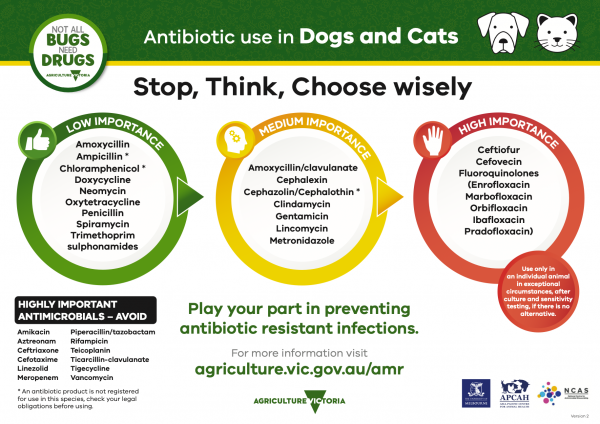
Traffic light - dogs & cats
A document that outlines via a traffic light system, the different importance level of antimicrobials for use in dogs and cats.
This page will outline guidelines for managing the following ear diseases in companion animals:
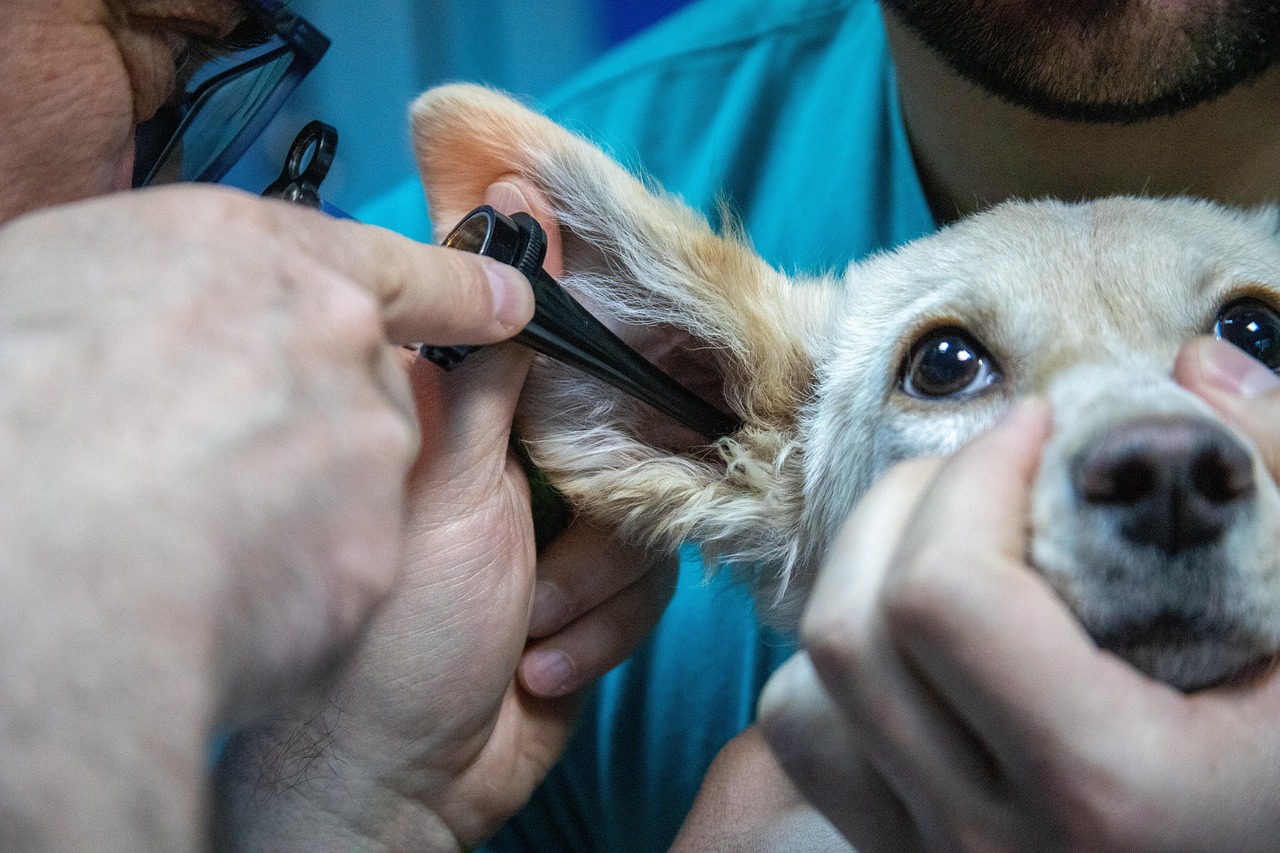
Cytology should be performed to look for bacteria and inflammatory cells. Common bacteria are S. pseudintermedius, Proteus spp., Corynebacterium spp., E. coli, Pasteurella spp., Bacillus spp., and Pseudomonas spp23,24. Culture and susceptibility testing is recommended when:
Identifying an intact tympanic membrane is important in selecting therapy and may require general anaesthesia and flushing. Collect samples for cytology and culture before flushing.
If chronic or recurrent an underlying cause should be considered. Foreign bodies (grass seeds) can be easily missed. Atopy and anatomical anomalies are also common.
Flushing of the ear canal is very important as wax and exudate reduces the efficacy of topical therapies. Flush with warmed sterile saline under controlled pressure. Systemic antimicrobials are frequently ineffective and are usually only indicated if the middle or inner ear is involved or if topical therapy is not possible due to ear canal ulceration or risk of toxicity.
Non-ototoxic agents: Chlorhexidine, Tris-EDTA
Ototoxic agents: Polymixin B, aminoglycosides (gentamicin, neomycin)
Less ototoxic antimicrobials: Fluoroquinoles
| Mild otitis externa (cocci) | Topical antibacterial cleaning agents alone or with topical antimicrobials | |
| Severe otitis externa (cocci) or mixed infection (cocci and rods) | Topical cleaning agents not sufficient alone, fucidic acid and framycetin combinations with or without gentamicin | Perforated tympanic membrane: Ear flushing and non-ototoxic cleaner, avoid topical antimicrobials |
| Otitis caused by rods (not Pseudomonas) | Topical cleaning agents not sufficient alone, polymixin B, gentamicin or enrofloxacin | Perforated tympanic membrane: Ear flushing and non-ototoxic cleaners may be sufficient, enrofloxacin if topical antimicrobials are needed. |
| Otitis caused by Pseudomonas | Can be multi-resistant, guide therapy off culture and susceptibility. Local therapy is very important. Polymixin B, gentamicin or enrofloxacin. | Perforated tympanic membrane: Ciprofloxacin |
| Otitis media | Topical antimicrobials should be avoided. Systemic antimicrobials are recommended: amoxycillin / clavulanate, cephalexin or enrofloxacin. | |
A document that outlines via a traffic light system, the different importance level of antimicrobials for use in dogs and cats.
The companion animal Australian Veterinary Prescribing Guidelines for antimicrobial use in flipbook format.

The companion animal Australian Veterinary Prescribing Guidelines poster. This document that outlines different antimicrobials for use in dogs and cats according to different diseases.
Suggest a disease, syndrome or key evidence you think we should include.