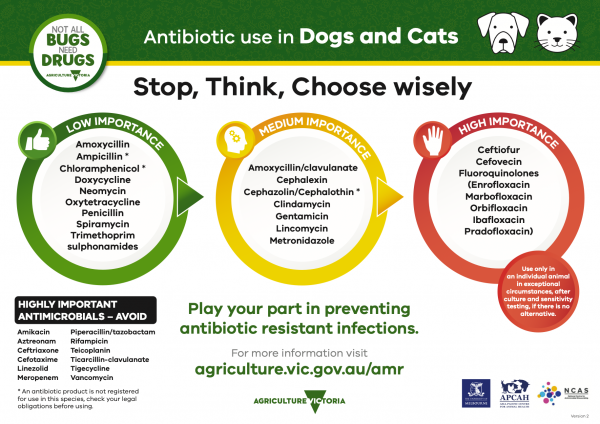
Traffic light - dogs & cats
A document that outlines via a traffic light system, the different importance level of antimicrobials for use in dogs and cats.
This page will outline guidelines for antimicrobial use when managing the following reproductive conditions in companion animals:

Juvenille vaginitis causes a yellow vaginal discharge in otherwise healthy immature bitches. The symptoms usually disappear with the first oestrus cycle, or following spey. Vaginitis in mature dogs is rarely primary and is typically secondary to strictures, foreign bodies or tumours. Investigation should focused on finding the primary disease.
Antimicrobial therapy is not indicated for juvenile vaginitis unless there is a concurrent urinary tract infection. Local therapy can be used in adults and supplemented with systemic antimicrobials based on culture and susceptibility testing if necessary.
Diagnosis is generally made based on clinical examination and results of ultrasonography.
E. coli is the dominant bacteria in dogs and cats. Medical therapy can be attempted, but salvage of reproductive potential is rare. Ovariohysterectomy is recommended. Antimicrobial prophylaxis is recommended prior to surgery. See relevant guidelines.
Diagnosis is generally made from clinical signs. Mammary secretions should be submitted for culture and susceptibility testing.
The most common bacteria isolated are E. coli and Staphylococci. Any abscesses should be opened and drained. Amoxycillin is recommended.
7-10 days52.
See urinary tract guidelines for details.
A document that outlines via a traffic light system, the different importance level of antimicrobials for use in dogs and cats.
The companion animal Australian Veterinary Prescribing Guidelines for antimicrobial use in flipbook format.

The companion animal Australian Veterinary Prescribing Guidelines poster. This document that outlines different antimicrobials for use in dogs and cats according to different diseases.
Suggest a disease, syndrome or key evidence you think we should include.